Online Reporter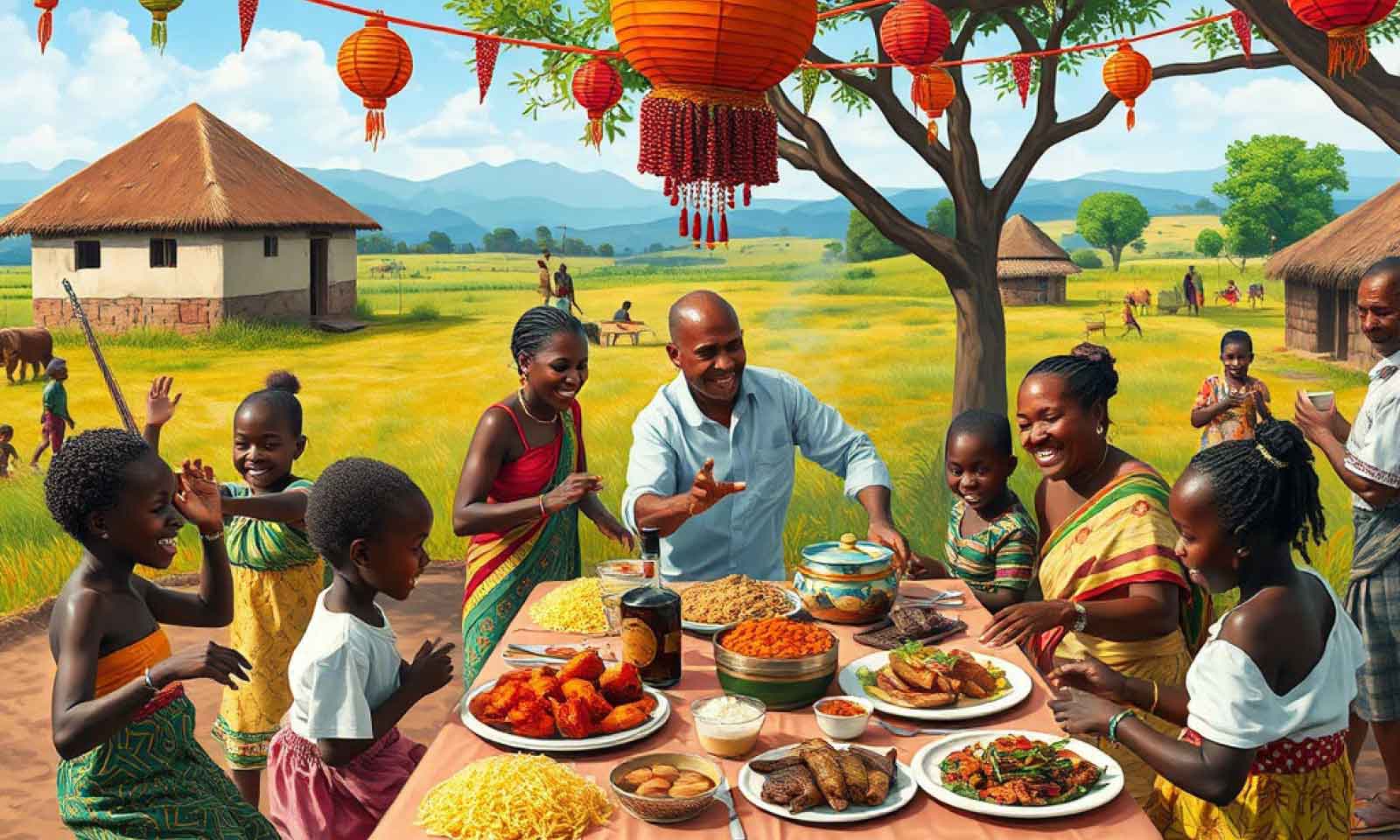
Marilyn Mutize
Festive celebrations in Zimbabwe have always carried a meaning that goes far beyond the calendar.
They are not merely a pause from work or school, nor are they just an excuse for indulgence.
For many Zimbabweans, the festive season is a cultural checkpoint, a time when families take stock of where they have come from, where they are, and what still binds them together despite the pressures of modern life.
Traditionally, the festive season is a time of return. Roads leading to rural areas become busier as people travel back to their ancestral homes, reconnecting with parents, grandparents and extended family.
This movement, often described as “going kumusha,” is deeply symbolic. It reaffirms identity in a society where urbanisation and migration have steadily loosened communal ties.
The festive period allows Zimbabweans to momentarily reverse that drift, restoring the rhythms of shared meals, storytelling, and collective responsibility.
Food sits at the heart of these celebrations.
Whether it is sadza shared from a common dish, road runners prepared for special guests, or the now-familiar Christmas braai, meals during the festive season are less about extravagance and more about togetherness.
Even in modest households, there is an unspoken determination to ensure that no one goes hungry during this time. This reflects a broader Zimbabwean value: dignity is preserved through sharing, even when resources are limited. Music and dance also play a central role.
From traditional mbira and sungura to contemporary Zimdancehall and gospel, festive celebrations are accompanied by soundtracks that mirror the country’s diversity.
These moments of joy provide emotional release after a demanding year.
They remind people that celebration itself is a form of resilience, a declaration that life, despite its challenges, remains worth honouring.
However, festive celebrations in Zimbabwe are not without contradiction.
While the season brings joy, it also exposes social pressures and inequalities. There is often an unspoken expectation to “show progress,” particularly among those returning to rural homes.
New clothes, groceries, gifts and sometimes even vehicles become markers of success.
This pressure can turn what should be a period of rest into one of anxiety, especially for young people and breadwinners navigating economic uncertainty.
The commercialisation of the festive season has also reshaped how celebrations are experienced. Advertising, social media and urban consumer culture increasingly define what a “proper” Christmas or New Year should look like.
For some, this shift risks eroding the deeper values of the season, replacing communal meaning with performative spending. The challenge for Zimbabwean society is to resist the idea that celebration must always be expensive to be valid.
Faith remains a strong anchor during the festive period. Churches across the country are filled with worshippers giving thanks for life, protection and survival through the year.
For many, Christmas is still primarily a spiritual event rather than a commercial one. This grounding offers an important counterbalance, reminding communities that gratitude, humility and compassion are central to the season’s meaning.
Festive celebrations also carry an important social responsibility. The season often sees increased road travel, social gatherings and alcohol consumption, making it a period of heightened risk.
Year after year, road accidents and preventable tragedies cast a shadow over celebrations.
This reality calls for a more mature festive culture, one where enjoyment is not separated from responsibility. Celebration should not come at the cost of life.
At the same time, the festive period has increasingly become a space for community outreach. Individuals, churches and organisations use the season to support the elderly, orphans and those facing hardship.
These acts of generosity reflect the enduring strength of Ubuntu, the belief that one’s humanity is tied to the humanity of others.
In this sense, festive celebrations are not only about receiving, but about restoring balance through giving.
For young people, the festive season is often a time of heightened freedom and expression. Schools are closed, routines are relaxed, and social life expands.
This presents both opportunity and risk. When guided well, the season allows young Zimbabweans to strengthen family bonds and cultural identity.
When neglected, it can expose them to harm. The responsibility to protect and guide young people during this time rests not only with parents, but with communities as a whole.
Ultimately, festive celebrations in Zimbabwe endure because they adapt.
They absorb new influences while retaining core values of family, respect and togetherness. Whether celebrated in a rural homestead, a high-density suburb, or the diaspora, the season remains a reminder that Zimbabwean identity is rooted in connection.
As the country gathers again to mark the festive season, there is value in stripping celebration back to its essence. It is not measured by the size of a grocery hamper or the volume of music playing, but by the quality of time shared, the safety of journeys taken, and the kindness extended to others.
In choosing meaning over excess, Zimbabweans preserve the soul of their celebrations and pass it on to future generations.
In the end, festive celebrations are not an escape from reality, but a reaffirmation of it.
They remind Zimbabweans who they are, what they value, and why community remains their greatest strength.