Online Reporter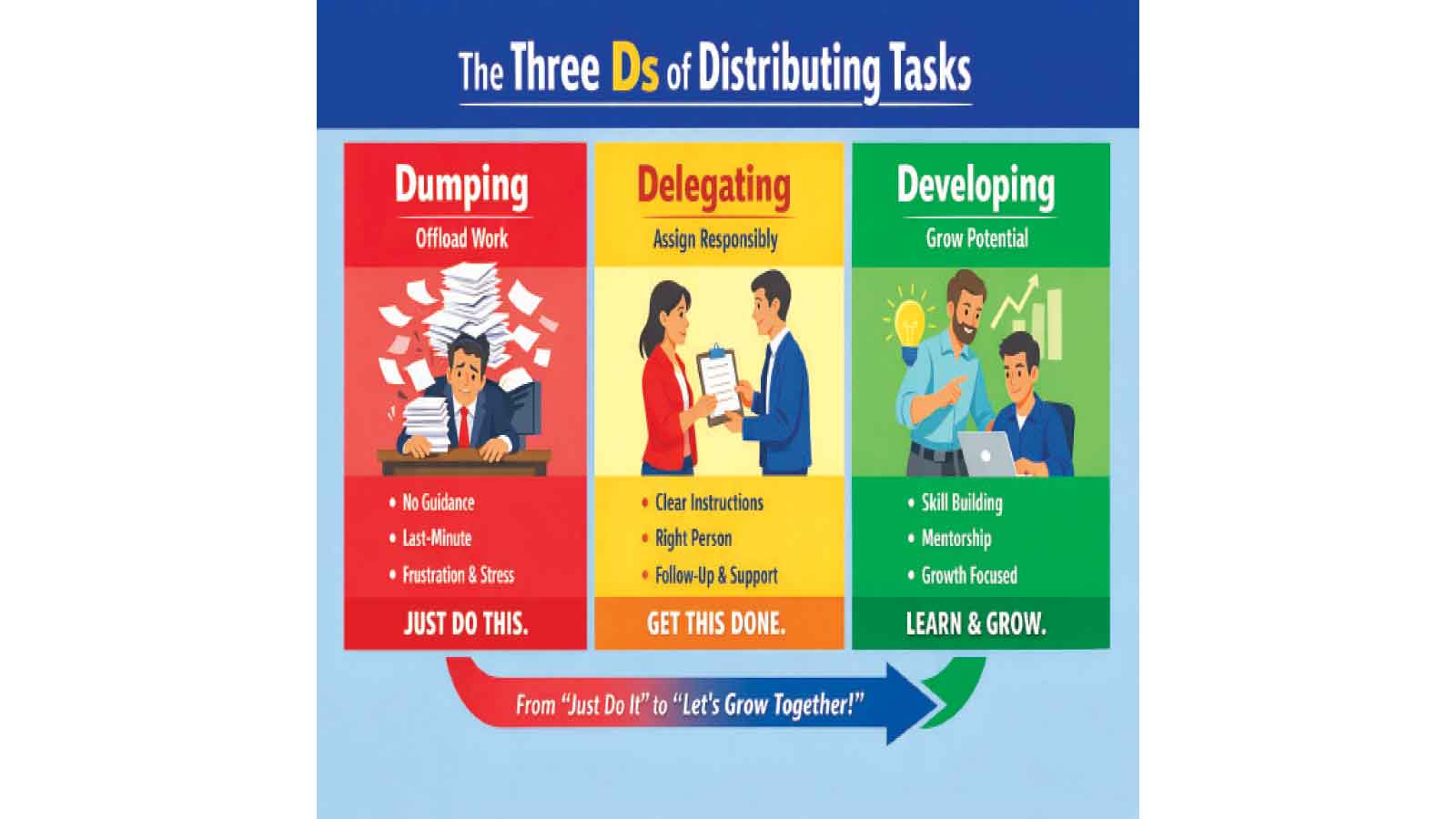
Hunt For Greatness
Milton Kamwendo
LEADERSHIP is movement. Vision must move from the leader’s mind into the hands of the team. Strategy must move from boardroom language into daily execution.
Ideas must move from inspiration into implementation.
No movement, no greatness. Organisations move forward when work is properly distributed, owned, executed, reviewed and improved. A leader who holds all the work eventually becomes the ceiling of the organisation. When everything must pass through one person, movement slows down. Decisions wait. People wait. Projects wait. Opportunities wait. The leader becomes tired. The team becomes underutilised. The organisation becomes stuck.
Charge forward the work; don’t be the choke point. To lead is to move work. To move work is to distribute responsibility. Not all work distribution is leadership.
Some leaders distribute work badly. They dump. Others distribute work functionally. They delegate. The best leaders distribute work developmentally. They develop people through the work.
John Maxwell gives a helpful distinction in the three Ds of distributing tasks: dumping, delegating and developing.
These three approaches reveal the leader’s mindset and capacity. They show whether the leader is merely trying to escape pressure, complete assignments or grow people.
If people do not grow, they go away.
1. Decide: Intentional about the work
Before dumping, delegating or developing, the leader must first decide. Decide what really needs to be done. Decide what only you must do. Decide what others can do. Decide what others must learn to do. Decide which work should be stopped, simplified, automated, shared or elevated.
Intentional leaders do not distribute work casually. They think. They diagnose. They match work to purpose, people, capacity and growth. Some leaders distribute work only when they are overwhelmed. That is not leadership. That is panic management.
They wait until deadlines are burning, pressure is high and emotions are strained. Then they throw work at people and call it delegation. Urgency without clarity produces confusion.
Before work is distributed, ask: What is the outcome required? Who is the best person to carry out this task? What authority is needed? What resources are required? What support must be provided? What learning opportunity does this create? What risks must be managed?
Movement improves when distribution begins with decision.
2. Dumping: Moving burden without moving people
Dumping is the lowest form of work distribution. It happens when leaders unload tasks simply to relieve themselves of pressure. The leader is tired, irritated, late or overwhelmed, and says: “Here, take this.”
There is little preparation, little explanation, little training and little concern for the person being given the task. Dumping may bring temporary relief to the leader, but it often creates damage in the team. The person receiving dumped work may feel used, confused, undervalued or set up to fail.
They are handed responsibility without context, accountability without authority, expectations without resources and pressure without preparation. When things go wrong, the leader may blame the person, yet the real failure was in the way the work was dump-distributed.
Dumping does not move the organisation forward. It merely moves frustration from one desk to another, from one computer to another, from one workstation to another.
The signs of dumping are clear. The leader gives unclear instructions. There is no explanation of why the work matters.
Deadlines are imposed without discussion. The person is not equipped. There is no room for questions. There is little follow-up until something fails. The leader’s dominant motive is relief, not results or growth.
Dumping damages confidence. It teaches people to fear responsibility. It makes work feel like punishment. It weakens trust between leader and team. A leader who dumps work may appear busy, but they are not building. They are transferring weight without transferring wisdom.
3. Delegating: Moving tasks to the right people
Delegating is better than dumping. In delegation, the leader prepares ahead of time and gives work to the right people. There is more thought, more structure and less damage.
The leader considers ability, availability and suitability. The work is explained. Expectations are clearer. Deadlines are agreed. Resources are provided. Delegation helps work move faster.
It creates space for others to contribute. It allows the leader to focus on higher-value responsibilities. It improves execution because work is shared across the team.
Delegation can still be limited if the leader’s primary focus is only to eliminate the task from their own list. Some people delegate because they want work off their table, not because they want people to grow. They ask, “Who can do this?” but not, “Who can grow through this?”
They focus on completion of a task, not capacity. They transfer the assignment but not always the learning.
Good delegation requires clarity. What must be done? By when? To what standard? With what authority? Using what resources? How will progress be reviewed? What does success look like? Delegation requires trust. If a leader assigns work to someone but keeps interfering, correcting every small detail and demanding that everything be done exactly as they would do it, the team does not grow. Micromanagement kills movement. It turns delegation into disguised control. Effective delegation says: “I trust you with this responsibility and I will support you to succeed.”
4. Developing: Moving work and growing people
Developing is the highest form of distributing work. In developing, leaders prepare both the work and the person.
The leader does not merely ask: “How can I get this done?” The leader also asks: “How can this work grow this person while moving the organisation forward?”
Developing turns tasks into training platforms. It turns projects into classrooms. It turns responsibility into capacity-building. It turns work into a leadership pipeline.
A developing leader thinks beyond today’s deadline. They are building tomorrow’s leaders. They know that the organisation will not move far if only one person is strong. Movement must be multiplied. Capacity must be spread. Competence must be developed. Confidence must be built. Developing requires patience. It may be slower at first, but it produces greater speed later. When people are trained, trusted, coached and stretched, they become stronger.
Stronger people carry heavier work. Heavier work carried by many capable people creates momentum.
Milton Kamwendo is a leading international transformational and motivational speaker, author and accomplished workshop facilitator. He can be reached at: [email protected], WhatsApp: +263772422634.
Developing leaders move differently and intentionally. They explain the purpose of the task. They demonstrate where necessary. They provide tools. They invite questions.
They watch progress, give feedback and allow room for learning. They do not abandon the person. They do not suffocate the person. They walk with the person until confidence and competence rise.
Developing says: “I am giving you this work because I believe there is more in you.”
This sentence changes everything.
5. Direct: Give clear direction
Work moves when direction is clear. Many tasks fail not because people are lazy, but because instructions are vague. A leader must direct without confusing, overwhelming or controlling.
Clear direction includes the desired outcome, the reason the work matters, the boundaries, the available resources, the decision rights, the deadline and the standard of excellence.
People should not have to guess what great looks like. When leaders are unclear, teams waste energy interpreting, correcting, repeating and apologising. Clarity accelerates movement. Movement generates momentum.
6. Deploy: Match people to purpose
Work distribution must consider fitness. Do not give work only to the available person. Give work to the appropriate person. Sometimes the appropriate person is already skilled.
At other times the appropriate person is ready to be stretched.
Sometimes the work must be shared among several people.
Deploy people according to strengths, growth needs and strategic priorities. A good leader knows the team. Who needs exposure? Who needs confidence? Who needs a challenge? Who needs support? Who is ready for more? When people are properly deployed, work moves with energy.
7. Debrief: Review, learn and improve
Work distribution is incomplete without review. After the task, debrief. What worked? What did not work? What did we learn? What should change next time? What support was missing? What capacity was built?
Debriefing turns experience into wisdom. Without reflection, teams repeat mistakes. With reflection, teams improve.
A developing leader does not only ask: “Was the task completed?” They also ask: “Was the person developed?”
Leadership is movement and movement requires distributed work. If the leader carries everything, the organisation crawls.
If the leader dumps work, the team suffers. If the leader delegates well, work moves. If the leader develops people through work, the organisation multiplies movement.
So, decide intentionally. Do not dump. Delegate with clarity. Develop with purpose. Direct wisely. Deploy strategically. Debrief honestly.
Move work from your hands into capable hands. Move responsibility from one person to many. Move people from spectators to contributors. Move contributors into leaders.
By distributing work in a way that builds people, strengthens teams and multiplies capacity, leaders move forward towards greatness.
* Milton Kamwendo is a leading international transformational and motivational speaker, author of more than 12 books. He is a cutting-edge strategy, team-building and organisation development facilitator and consultant. His life purpose is to inspire and promote greatness. He can be reached at: [email protected] WhatsApp: +263772422634.