Mbulelo Mpofu recently in Windhoek, Namibia
WINDHOEK-based culture and heritage enthusiast Mellisa Nonhlanhla Moyo says an educational research trip to Johannesburg, South Africa, has deepened her appreciation of Southern Africa’s interconnected histories and the transformative role creatives can play in reimagining heritage spaces.
Supported by the Africa-Europe Partnerships for Culture (AEPC), the trip allowed Moyo to explore historical landmarks and contemporary creative spaces, examining how heritage can become a tool for education, dialogue and social transformation.
Among the sites she visited was Constitution Hill, where the transition from colonial and apartheid-era imprisonment facilities to the modern Constitutional Court reflects South Africa’s complex historical journey.
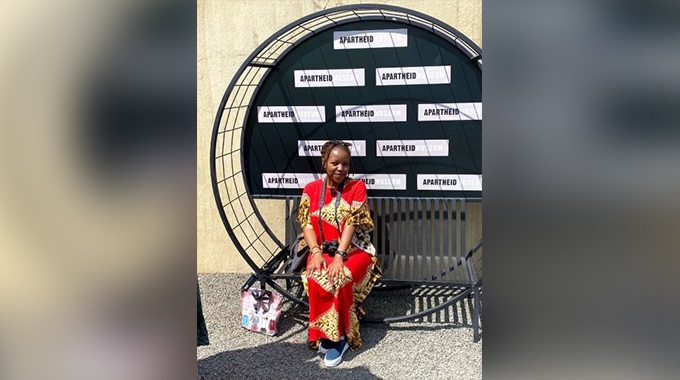
She also explored the structural history of the Apartheid Museum, gaining further insight into the importance of documenting painful histories, before visiting the Transwerk Creative Uprising Hub, an Art Deco building reclaimed by independent artists and designers.
The visits demonstrated how historical spaces can retain their significance while accommodating new forms of cultural expression and creative engagement.
However, her tour of Ponte Tower with community organisation Dlala Nje emerged as one of the most memorable experiences of the trip.
The Johannesburg skyscraper, historically associated with urban decay and neglect, has been reimagined as a community resource offering young people opportunities to learn new skills, access education and find a safe environment within their neighbourhood.
For Moyo, the initiative illustrated how places burdened by difficult histories can be transformed into spaces of possibility.
“The visit to Ponte Tower with Dlala Nje was a profoundly moving experience,” she reflected, highlighting how community-driven interventions can change perceptions of urban spaces while creating meaningful opportunities for young people.
Her experience reinforced her belief that the work of heritage professionals and artists extends beyond preserving buildings, artefacts and historical records.
Through creative resistance, artistic practice and digital media, she said, cultural practitioners can reinterpret complex histories and turn spaces associated with trauma into platforms for public engagement and social change.
The research trip also provided an opportunity to reflect on the historical connections between countries in the Southern African Development Community (SADC).
Moyo described the experience as a significant personal and professional learning curve, deepening her understanding of the common experiences and cultural connections shared by African communities across national borders.
The journey aligns with AEPC’s commitment to cross-border dialogue, artistic mobility and sustainable creative ecosystems, demonstrating how regional heritage exchange can connect physical archives with contemporary creative practice.
Moyo’s Johannesburg experience built on conversations initiated during the AEPC Southern Africa Entanglement Workshop held in Windhoek, Namibia, from 27 to 31 July.
Titled “Co-creating Future Heritage Narratives”, the five-day workshop brought together participants to explore how creatives could develop new stories that preserve local heritage and carry it forward to future generations.
Moyo attended the workshop alongside National Gallery of Zimbabwe in Bulawayo regional manager Silenkosi Moyo, with both participants engaging in discussions around heritage, creativity and the development of narratives that reflect the region’s shared experiences.
The subsequent research trip offered Moyo an opportunity to engage with these ideas in practice, exploring how historic sites and contemporary community initiatives can inform new approaches to heritage preservation and interpretation.
As part of documenting the journey, she used digital storytelling, including video reels and reflective commentary, to share her observations and bring wider visibility to the AEPC initiative.
“I am deeply grateful to have been trusted with my digital storytelling approach for this project,” she said.