


 Online Reporter
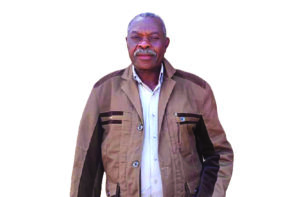
Last week, CDE TOBIAS KANYONGO, known by his Chimurenga name Cde Bomber Chimukwende, narrated how injustices against blacks drove him and his close friend Cde Matthew to join the liberation struggle. This week, Cde Kanyongo, who lost his arm during the liberation struggle, chronicles to Zimpapers’ Politics, Foreign Affairs and Opinions Editor KUDA BWITITI how he crossed into Mozambique to join the ZANLA forces.
*****************
Q: You told us that you were with your close friend when you decided to cross into Mozambique to join the liberation struggle. Can you describe the journey?
A: To give you some context, let’s rewind a bit to some time in early 1976. I took a sabbatical from my job at the vacuum company and returned to my rural home in Murewa. Coming home after city life only increased my frustration with the discriminatory treatment from white people. This period was an eye-opener; I saw firsthand how badly my relatives, childhood friends and even my own family were being treated. Resistance gradually grew because of these experiences.
Q: What were the other aggravating factors that stoked resistance?
A: One factor was that we stayed in keeps (protected villages). Another factor was that across the border, in Mozambique, FRELIMO had attained its independence from Portugal’s colonial rule in 1975. So, FRELIMO’s independence motivated many to join the war. Also, the night meetings between the povo and the comrades increased.
Q: Did this not cause an increase in patrols by the Rhodesian Security Forces, too?
A: Oh yes, indeed. In fact, they did not only grow in numbers but in brutality. One particular incident of brutality stands out. One day, comrades came and rounded us up in Nhakiwa, between Murewa and Mtawatawa. There were dozens of people, mostly the youth, who were eager to join the struggle. We listened attentively as we were given political orientation. But unbeknown to all of us, the enemy forces knew about this meeting. They launched a surprise raid, shooting wantonly. Some people died on that day.
I managed to survive that brutal raid with even more determination to cross into Mozambique to join the struggle. My colleague, Cde Matthew, and I convinced ourselves to just go and train and face the enemy head-on in combat, because if we did not do that, things would only get worse for us and our people. So, soon after that, we went back to Harare to complete some errands in Mbare, where I resided. It was in Harare that we boarded a bus, which would then take us on the route we wanted to use to get to Mozambique.
Q: Do you remember the actual date when you crossed into Mozambique?
A: I do not remember the actual date, but the bus we boarded was called Matambanadzo. We dropped off somewhere in Mutoko, which is an area we knew. There, it was easy to link up with other comrades. So, we walked, led by the trained comrades as we made the journey to Mozambique. Along the way, we were picking up other recruits.
We travelled in the bushes, avoiding roads where our leaders knew that the Rhodesian Security Forces would be stationed. The journey was arduous. But after walking for countless kilometres, we finally got to Bhinya Road.
Q: Tell us what happened when you got to Bhinya Road.
A: Bhinya Road was heavily mined, and stepping on one landmine meant death or injury. We had been told that some comrades had lost their legs whilst crossing. So, we had to be careful.
Q: So, how did you manage to cross given these circumstances?
A: To cross, we first threw our bags to the other side of the border. I then volunteered to go first, telling my friend Matthew to follow only if I made it, and to use the exact same path I took. We relied on our high jumping skills from school, essentially hopping across the road to avoid the land mines. In hindsight, our high jumping skills were truly exceptional that day. They were key to our successful crossing into Mozambique. What people should understand is that land mines are silent killers. So, we evaded these deathtraps to cross into Mozambique.
Next week, Cde Bomber Chimukwende talks about his time at Tembwe in Mozambique and the advanced military training he received at Nachingweya in Tanzania.



 Online Reporter