Chronicle Editor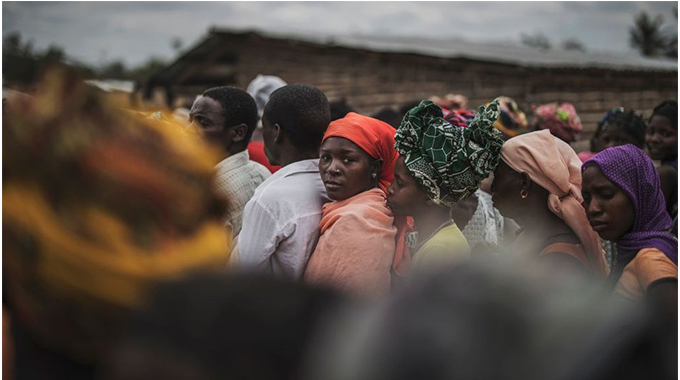
The number of civilians forced from their homes by conflict in northern Mozambique has quadrupled this year — to 420 000 — according to the United Nations.
It links the crisis in Cabo Delgado province not just to attacks by Islamist militants, but to a perceived failure to distribute vast mineral and off-shore gas revenues to the local population.
A senior UN refugee agency official visiting Cabo Delgado described the situation there as “really dire” and urged Mozambique’s neighbours and the wider international community to intervene in what she said had been, for too long, an “invisible” crisis.
“The figures are growing as days go by and this is a situation that is liable to deteriorate,” said Angèle Dikongué-Atangana, the UNHCR’s deputy director of Southern Africa, speaking to the BBC from Cabo Delgado’s provincial capital, Pemba.
Ms Dikongué-Atangana warned that the “terrorist” situation in Mozambique was beginning to resemble the long-running conflict in northern Nigeria, where the Islamist Boko Haram group has caused widespread suffering.
But as well as blaming militants affiliated to the Islamic State group who have carried out massacres and other atrocities in Cabo Delgado, Ms Dikongué-Atangana criticised the behaviour of “extractive firms” involved in gem mines and, more recently, in vast off-shore gas fields.
“If I was (born) in a place like this, which is endowed with a lot of wealth, and I see that wealth is being exploited, and I don’t see . . . a share of that wealth, I would also be disgruntled,” she said, warning that a generation of young Mozambicans with “no hope, no dreams,” might join the insurgency thinking: “If I fight, maybe I will die honourably. If I don’t fight, maybe I will still die”.
In recent months, the small port city of Pemba has been overwhelmed, its population almost doubling, as tens of thousands of people have arrived by foot or on boats, fleeing from a complex and brutal insurgency that has growing relentlessly over the past three years.
“I don’t have anything left, I only have this boat,” fisherman Adji Wazir told the AFP news agency. His wife, Aziza Falume, gave birth to a daughter at sea during their escape.
“I’m still afraid. I keep wondering when they (the jihadists) will land in Pemba and attack, or if any of them live among us,” she said.
The US State Department has now warned that Pemba “could be vulnerable to attack due to the proximity of violent extremist forces”.
Mozambique’s government — which has so far relied on military assistance from private security contractors from Russia and South Africa — is now under pressure to accept larger-scale support or intervention from its neighbours, who fear the instability is already beginning to spill over their borders.
But the negotiations appear to be faltering, as Mozambique worries about outside influence and the spotlight the crisis is bringing to its own governance failures. Meanwhile, foreign criticism of Mozambique’s handling of the crisis is also becoming sharper. – Reuters.


 Online Reporter