Online Reporter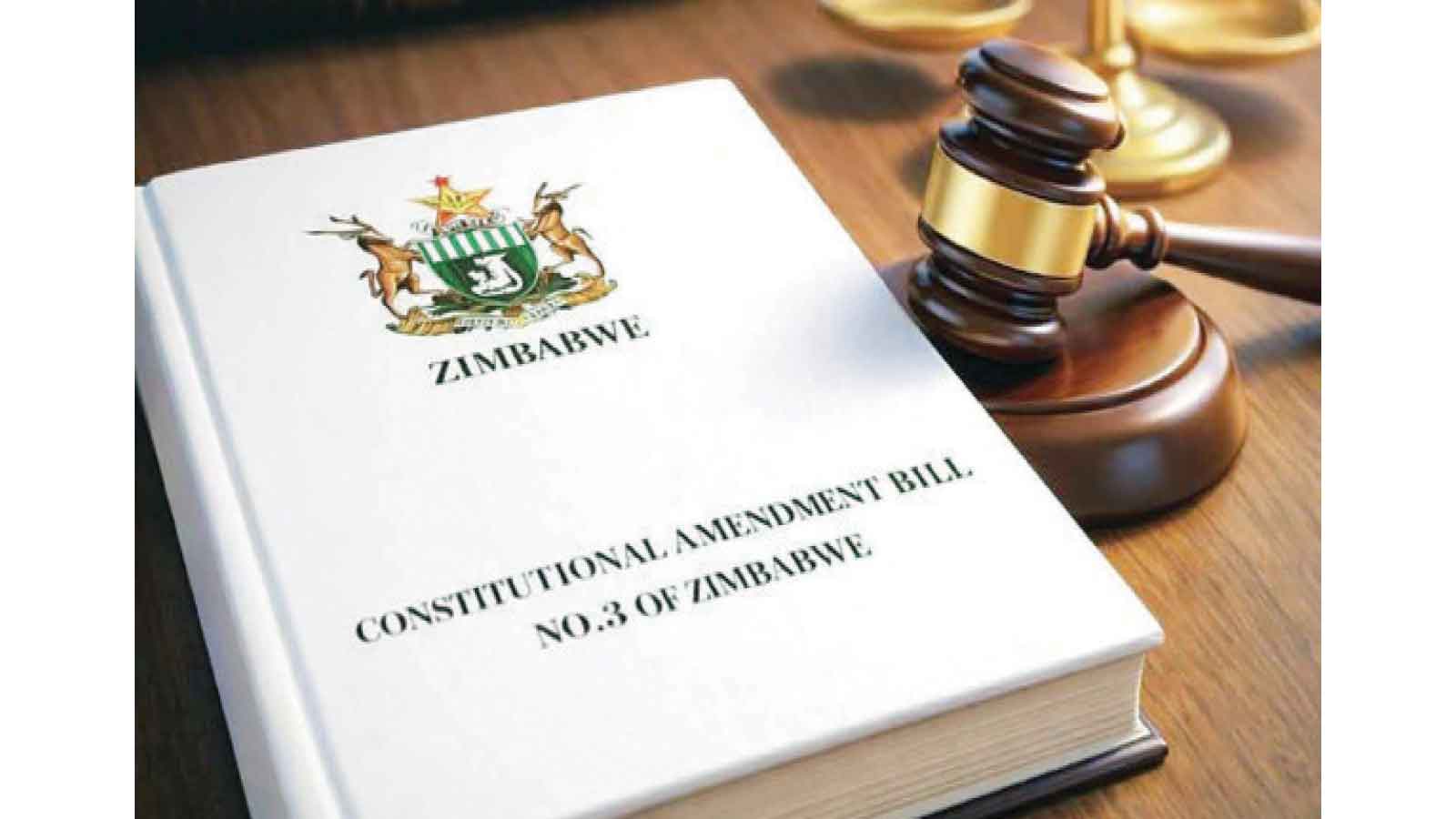
Kuda Bwititi
Politics, Foreign Affairs and Opinions Editor
A NATIONAL public opinion survey conducted by the Public Policy and Research Institute of Zimbabwe (PPRIZ) has found that a majority of Zimbabweans support several key provisions contained in the Constitution of Zimbabwe (Amendment No. 3) Bill, including extending the terms of office for the President and Parliament from five to seven years and transferring voter registration responsibilities to the Registrar-General’s Office.
The survey, conducted between April 9 and 18 this year, interviewed 1 641 respondents nationwide to gauge public attitudes towards the proposed constitutional changes before the Bill was debated in Parliament.
According to the findings, presented at a media briefing on Thursday, 51,3 percent of respondents supported the extension of presidential and parliamentary terms from five to seven years, while 41,2 percent opposed the proposal, with 7,5 percent remaining undecided.
“The survey noted that 55,4 percent of respondents also believed Zimbabwe spends too much time in election mode at the expense of governance,” reads the findings.
Support was also recorded for transferring voter registration and maintenance of the voters’ roll from the Zimbabwe Electoral Commission (ZEC) to the Registrar General, with 54,8 percent backing the proposal compared to 42,3 percent who opposed it. The survey linked this to comparatively higher public trust in the Registrar General’s Office than ZEC.
The research further found that “48,9 percent of respondents favoured replacing direct presidential elections with election by Parliament, while 41 percent opposed the proposal.”
Other amendments attracting majority support included expanding the Constitutional Court’s jurisdiction to hear matters of public importance, supported by 54,7 percent of respondents, raising the qualification threshold for the Attorney General to that of a Supreme Court judge, backed by 52,3 percent, and changing the constitutional wording governing the functions of the Defence Forces, which received 56,8 percent support.
The only opposition to the Bill was the proposal to allow traditional leaders to participate in politics, with 70,2 percent opposing the amendment. Another proposal to merge the Zimbabwe Gender Commission with the Zimbabwe Human Rights Commission also failed to gain public approval, with 52,4 percent opposing it.
The survey also found that “61,1 percent of Zimbabweans were already aware of the Constitutional Amendment No. 3 Bill, with social media, ZBC Radio, friends and relatives, and ZBC Television serving as the main sources of information.”
Awareness of Parliament’s consultation process was also relatively high, and the report notes that Parliament ultimately received more than 300 000 written submissions during the consultation.
The Constitution of Zimbabwe (Amendment No. 3) Bill proposes wide-ranging reforms to the country’s governance framework.
Among its major provisions are extending the terms of office for the President, Parliament and local authorities from five to seven years, introducing the indirect election of the President by Parliament, transferring voter registration from ZEC to the Registrar General, establishing a standalone Zimbabwe Electoral Delimitation Commission and making changes to judicial appointments and other constitutional institutions.
The Bill recently cleared Parliament after the National Assembly adopted amendments made by the Senate, paving the way for transmission to President Mnangagwa for Presidential Assent. Once assented to, it will become part of Zimbabwe’s Constitution.