admin
admin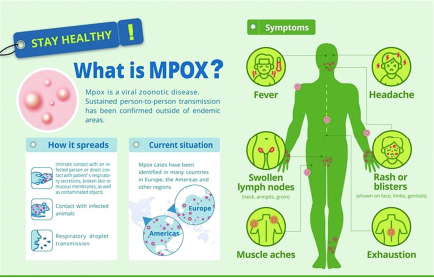
Rumbidzayi Zinyuke
Just four years ago, the world was thrown into an abyss by the emergence of the deadly Covid-19 pandemic.
The pandemic showed how Africa’s disaster risk management needed to be strengthened.
Fast forward to 2024, Africa has been hit by another epidemic — Mpox.
To date, more than 17 000 cases of Mpox have been reported in 12 countries in Central, East and Southern Africa, with 517 deaths. This is a significant increase from 7 146 cases reported in 2022 and 14 957 cases in 2023.
This prompted the Africa Centres for Disease Control and Prevention (Africa CDC) to declare the outbreak a Public Health Emergency of Continental Security (PHECS), making it the first time the agency has taken such drastic action since its formation in 2017.
Soon after that, the World Health Organisation (WHO) followed suit and declared Mpox as a Public Health Emergency of International Concern (PHEIC).
This PHEIC determination is the second in two years relating to Mpox.
This classification, the highest level of alert under international health law, underscores the gravity of the situation and the potential for a widespread outbreak.
While the immediate focus is on Africa, particularly the Democratic Republic of Congo (DRC), which has reported the bulk of the cases, the virus’s history of rapid spread necessitates a proactive and coordinated international response.
On its part, Zimbabwe is yet to report a case. But this does not mean the country should rest on its laurels and wait.
As was the case with the Covid-19 pandemic, it is critical to underscore the need for increased surveillance, awareness and understanding of this viral disease.
Anything short of that will definitely hit the nation where it hurts most.
Mpox, previously known as monkeypox, is a viral zoonotic infection that can spread from animals to humans, between humans, mainly through close contact, and occasionally from the environment to people via things and surfaces that have been touched by a person with Mpox.
Caused by an Orthopoxvirus, Mpox was first detected in humans in 1970, in the DRC. The disease is considered endemic to countries in central and west Africa.
In July 2022, the multi-country outbreak of Mpox was declared a PHEIC as it spread rapidly via sexual contact across a range of countries where the virus had not been seen before.
That PHEIC was declared over in May 2023 after there had been a sustained decline in global cases.
Mpox has been reported in the DRC for more than a decade, and the number of cases reported each year has increased steadily over that period.
The WHO has said the emergence last year and rapid spread of a new virus strain in DRC, clade 1b, which appears to be spreading mainly through sexual networks, and its detection in countries neighbouring the DRC is especially concerning, and one of the main reasons for the declaration of the PHEIC.
While some people have less severe symptoms, others may develop more serious illness.
Common symptoms of Mpox include a rash which may last for 2–4 weeks, along with fever, headache, muscle aches, back pain, low energy and swollen glands (lymph nodes).
The rash, which looks like blisters or sores, can affect the face, palms of the hands, soles of the feet, groin, genital and/or anal regions. They can also be found in the mouth, throat, or on the eyes.
In most cases, the symptoms of Mpox go away on their own within a few weeks but in some people, the illness can be severe or lead to complications and even death.
New-born babies, children, people who are pregnant and people with underlying immune deficiencies such as from advanced HIV disease may be at higher risk.
Mpox can spread through close contact of any kind, including through kissing, touching, oral and sex with someone who is infectious. Anyone who has sex with multiple or new partners are most at risk.
A well-informed public is more likely to recognise the symptoms of Mpox early on, leading to prompt medical attention and potentially preventing further spread.
It can also promote behaviour changes, such as safe sexual practices and good hygiene, which are crucial in curbing transmission.
By providing accurate information, authorities can help dispel myths and misconceptions about the disease, reducing stigma and discrimination against affected individuals and communities.
In this age of digital media, there is a risk of information overload and misinformation. It is therefore vital to ensure that messages are clear, consistent, and based on credible sources.
The Covid-19 pandemic offered invaluable insights into pandemic management. It came at a time when many countries, including the developed ones, were least prepared.
For African countries now, they can leverage these lessons to prevent Mpox from escalating into a global crisis.
Having robust surveillance systems and rapid diagnostic testing is crucial because early identification of cases allows for prompt isolation and contact tracing, preventing further spread.
There is also need for countries to continue investing in healthcare infrastructure, including workforce capacity and supply chains. As proven by the Covid pandemic, this is essential to prepare for this and any other future health emergencies.
Accelerated research and development of vaccines and treatments is also essential. Lessons learned from the Covid-19 vaccine rollout can be applied to ensure equitable access to Mpox countermeasures.
There are currently two vaccines in use for Mpox that are recommended by WHO’s Strategic Advisory Group of Experts on Immunisation, and approved by WHO-listed national regulatory authorities, as well as by individual countries including Nigeria and the DRC.
Last week, the WHO director-general Dr Tedros Ghebreyesus triggered the process for Emergency Use Listing for Mpox vaccines, which will accelerate vaccine access for lower-income countries that have not yet issued their own national regulatory approval. Emergency Use Listing also enables partners including Gavi and UNICEF to procure vaccines for distribution.
RELATED STORIES
To allow for an immediate scale up, WHO has released US$ 1.45 million from the WHO Contingency Fund for Emergencies and may need to release more in the coming days.
On its part, the Africa CDC has pledged to deliver 10 million Mpox vaccine doses by 2025, marking a significant commitment to strengthening health security across the continent. In support of this goal, Bavarian Nordic has joined forces with the agency to enhance vaccine manufacturing capabilities within Africa.
This partnership is set to play a crucial role in ensuring that up to 2 million doses are available this year, in addition to existing orders.
The declaration of Mpox as a PHEIC serves as a stark reminder of the interconnectedness of global health. While the situation in Africa is currently critical, the potential for global spread cannot be ignored.
By applying the lessons learned from the Covid-19 pandemic and taking decisive action, countries can mitigate the impact of Mpox and protect public health.
It is imperative that governments, health organisations, and communities work together to prevent Mpox from becoming the next global pandemic. Early detection, rapid response, and global collaboration are key to safeguarding public health and preventing widespread suffering.
Feedback: [email protected]



 Online Reporter