Rumbidzayi Zinyuke-Senior Reporter
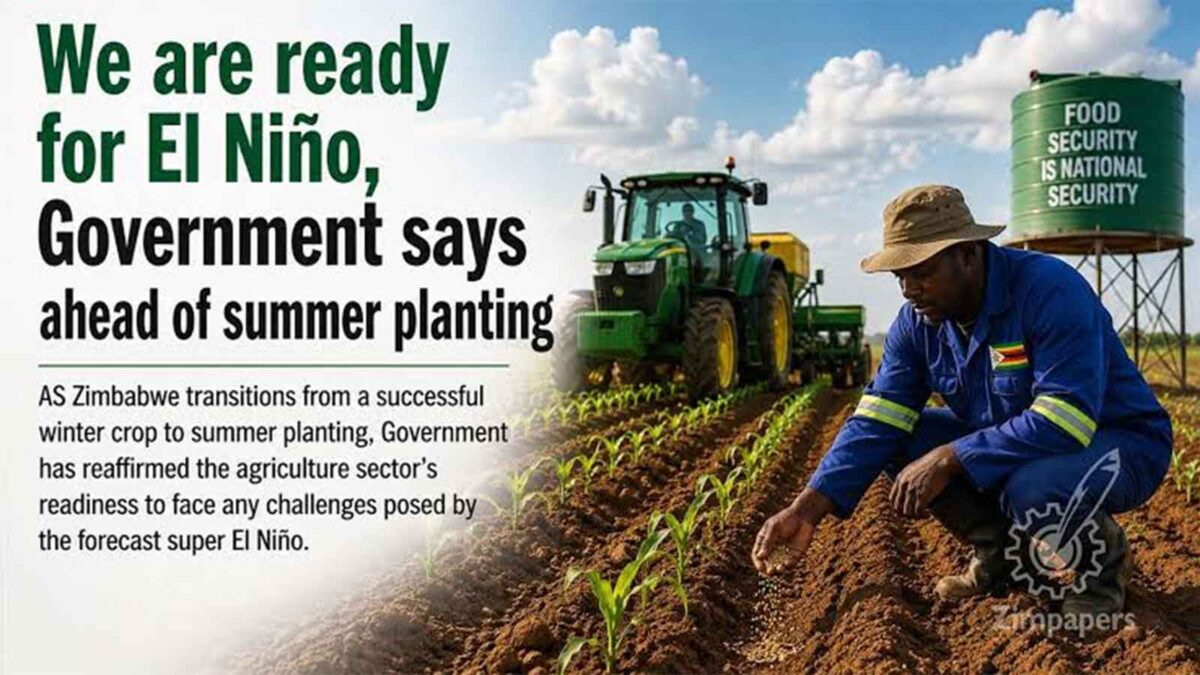
ZIMBABWE is stepping up preparations for the forecast El Niño-induced drought, with the Meteorological Services Department completing weather indices to identify vulnerable districts and guide early interventions ahead of the 2026/27 rainfall season.
Government, researchers, development partners and business representatives are developing an anticipatory action protocol to ensure communities at risk receive support before drought conditions threaten crops, livestock and livelihoods.
Speaking on the sidelines of a multi-stakeholder workshop to develop the protocol on Friday, MSD senior forecaster Mr Naboth Chaibva said the department was using satellite-derived soil moisture estimates, rainfall indicators and consecutive dry-day monitoring to assess drought risks and identify potentially affected districts.
“We combine these indicators to identify districts that may be affected and support early planning,” he said.
Executive director for research, innovation, industrialisation and enterprise development at Marondera University of Agricultural Science and Technology, Professor Leslie Macheka, said the research would help authorities target interventions more effectively.
“We are trying to characterise households that are vulnerable and likely to be impacted by this El Niño. We are also analysing secondary data from crop and livestock assessments to generate information that can help inform programming,” he said.
Ms Chipo Mahamba, representing women in business, said the workshop had equipped participants with knowledge to prepare for the anticipated challenges and share information with others.