Online Reporter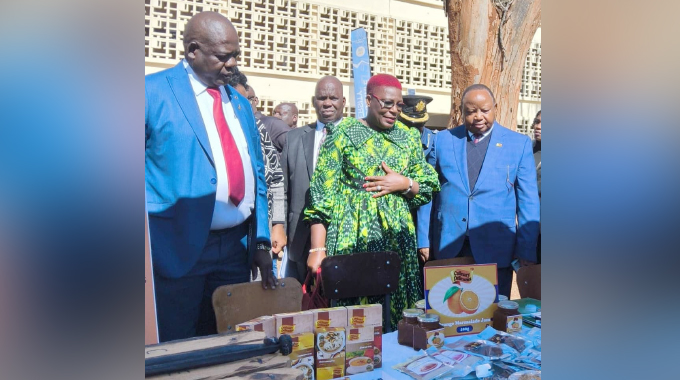
Patrick Chitumba, [email protected]
MIDLANDS STATE UNIVERSITY (MSU) is introducing coding and robotics education in prisons, aimed at transforming inmates’ lives, supporting their rehabilitation, and facilitating smooth reintegration into society.
The initiative aligns with the Second Republic’s philosophy of leaving no one and no place behind.
By offering coding and robotics education, inmates gain valuable skills that enhance their prospects for social and economic reintegration, while reducing the likelihood of re-offending.
Minister of Higher and Tertiary Education, Innovation, Science and Technology Development, Dr Fredrick Shava, made the announcement while officially opening the two-day MSU Midlands Science, Technology, Engineering and Mathematics (STEM) Leadership and Strategy Symposium at the university’s main campus in Gweru on Tuesday.
The university is collaborating with South Africa’s Nelson Mandela University (NMU) and the Worcester Institute of Technology (WIT) from the United States to host the symposium.
Addressing academics, scientists, and government officials at the event, Dr Shava said the symposium celebrates the intersection of coding, robotics, and education.
“I am delighted to acknowledge that MSU is poised to play a leading role in promoting coding and robotics education in primary and secondary schools, as well as in prison and correctional services.
“The extension of coding and robotics education to prison and correctional services is a groundbreaking initiative with the potential to transform inmates’ lives and contribute to their rehabilitation and reintegration into society,” he said.
By equipping inmates with access to coding and robotics education, the Government can provide them with essential skills, support their reintegration, and reduce recidivism.
“This initiative aligns perfectly with our Government’s vision of promoting inclusive, quality education and education for sustainable development and economic growth. This is a testament to the university’s commitment to social responsibility and its determination to positively impact learners from diverse backgrounds,” said Dr Shava.
Promoting coding and robotics education in primary and secondary schools is a vital step in developing a pipeline of talented and skilled learners prepared to thrive in an increasingly technology-driven world.
By introducing coding and robotics at an early age, Dr Shava said the ministry can nurture a culture of innovation, creativity, and problem-solving, while equipping learners with the knowledge and skills needed to pursue careers in STEM.
He reiterated the Government’s commitment to building an education system that is inclusive, equitable, and accessible to all, and that prepares learners for success in an increasingly complex and interconnected world.
The promotion of coding and robotics education is a key step towards achieving this vision, and the Government looks forward to working with MSU and other stakeholders to bring it to fruition.
“As we move forward, we will continue to collaborate with our partners, stakeholders, and the education community to ensure that our education system remains relevant, responsive, and effective in meeting the needs of our economy and society.
“We are committed to creating an education system that responds to national aspirations. In this regard, we are embracing the principles of Education 5.0, which emphasise the need for an inclusive, relevant, and effective education system that prepares our graduates for the complexities of the 21st century and future employment,” said Dr Shava.
Dr Shava said inclusiveness is a fundamental human right, and every individual deserves the opportunity to reach their full potential. He stressed that the education system must be designed to meet the diverse needs of all learners, recognising that each student brings unique experiences, perspectives, and abilities to the classroom.
“This means creating learning environments that are welcoming, supportive, and inclusive of all learners, including those with disabilities and those from marginalised communities,” he said.
Dr Shava noted that the Government acknowledges the significant barriers learners with disabilities often face in accessing quality education and affirmed the ministry’s commitment to addressing these disparities.
Also in attendance were the Minister of Primary and Secondary Education, Torerayi Moyo; the Minister of State for Midlands Provincial Affairs and Devolution, Owen Ncube; and representatives from African Community Education, Clear Mobitel, First Lego League, Micro: bit Education Foundation, World Robotics Olympiad, Massachusetts Institute of Technology, the State University of New York Polytechnic Institute, and NMU.