Chronicle Editor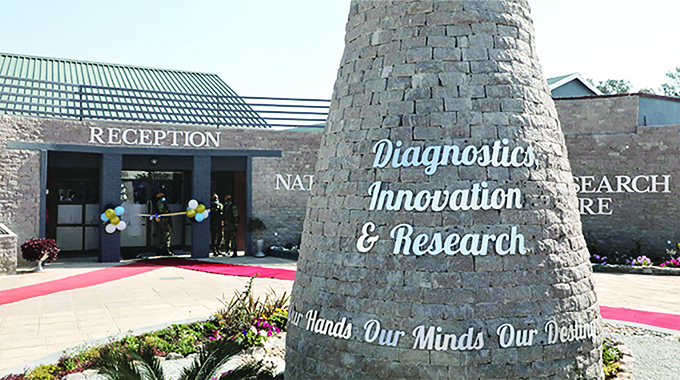
Patrick Chitumba, [email protected]
THE state-of-the-art Midlands State University (MSU) National Pathology Research and Diagnostic Centre (NPRDC) has opened its doors to medical practitioners to bring specimens from their patients for analysis to provide quality service, efficient results, and quick turnaround times to improve health delivery services.
Pathology is a medical specialty that focuses on determining the cause and nature of diseases. By examining and testing body tissues, such as biopsies, pap smears and fluids, and urine, pathology helps doctors diagnose and treat patients correctly.
The NPRDC has the certification of the laboratory by the Radiation Protection Authority of Zimbabwe and was officially commissioned by President Mnangagwa in July last year.
The opening of the NPRDC is expected to widen the provision of pathological and diagnostic services to Zimbabweans, and help attract local medical professionals who emigrated. The centre highlights the Second Republic’s determination to address the shortage of pathologists and other specialist medical professionals and services.
It is set to be the biggest disease and specimen research centre in the country.
Speaking during a cocktail party held by the MSU NPRDC for local doctors, MSU Pro-Vice Chancellor for Research, Innovation and Industrialisation, Professor Grace Mugumbate, said the institution’s collaboration with local doctors would ensure improved health delivery in the county.
She said this presents an opportunity to doctors to utilise the facilities that they offer at the centre.
“This is a national centre that is here to serve the nation and it is our desire that our services are accessible to everyone.
“Although prices of services at the centre are affordable that does not mean we compromise on quality. We focus on quality and remind each other of the quality of results we must deliver every day,” said Prof Mugumbate.
She highlighted that the engagements with local medical practitioners should result in business partnerships that benefit everyone.
“We hope we will have research collaborations and innovations that will come from our engagements with local doctors,” said Prof Mugumbate.
She said their vision is to be a regional centre of excellence in offering advanced and specialised pathology and diagnostic imaging services through innovative biomedical research and development.
“We strive to do this by supporting the national vision for the delivery of modern sustainable and accessible world-class pathology services and health care delivery through quality clinical laboratory testing services,” said Prof Mugumbate.
She said the centre boasts of highly skilled and experienced pathologists, diagnostic radiographers, medical laboratory scientists, researchers and technicians.
“As a unit, we focus on quality results that are delivered timeously and in doing that we want to make sure that all parties are satisfied.
“When doctors send their patients to this centre, we want you to have confidence that we are going to get results that will be meaningful and accurate,” said Prof Mugumbate.
Zimbabwe Medical Association Midlands president Dr Chris Ngwenya said the centre has the latest technology that would make their work easier.
“These are the things we read in our text- books during training and we were imagining that one day we would visit a certain country to see such technology, but today we are seeing it here at our own university,” he said.
MSU Vice-Chancellor Professor Victor Muzvidziwa recently said the centre is equipped with some of the best medical equipment that it will offer at affordable rates.
“Following the Radiation Protection Authority of Zimbabwe’s approval of the design of our radiology facility and the arrival of the CT scan, X-ray machine and ultrasound scan, and installation of these by local engineers working in conjunction with medical engineers in China, the centre is ready to offer one of the best medical services in the region at affordable rates,” said Prof Muzvidziwa.
The NPRDC is a unique laboratory in that it will be taking specimens for analysis. Previously, specimens were sent to laboratories in South Africa, hence patients will now be served faster.
It will also serve on the foreign currency that was being paid to laboratories in South Africa. While the country has suffered the loss of critical skills over the past years, the Second Republic is focused on fostering transformative and inclusive development in line with the aspirations of Vision 2030, which seeks to achieve an empowered upper-middle-income economy.
The new pathological facility, which is part of the university’s medical school, was built using Government resources and has been completed in record time after President Mnangagwa laid its foundation stone last year.
Further, the modern centre is expected to address the shortage of local pathologists and help trim foreign currency losses from service outsourcing by creating such specialist programmes at home.
It will also increase access to pathology and diagnostic services to a cross-section of people in the Midlands Province, across the country and regionally.


 Online Reporter