

 Online Reporter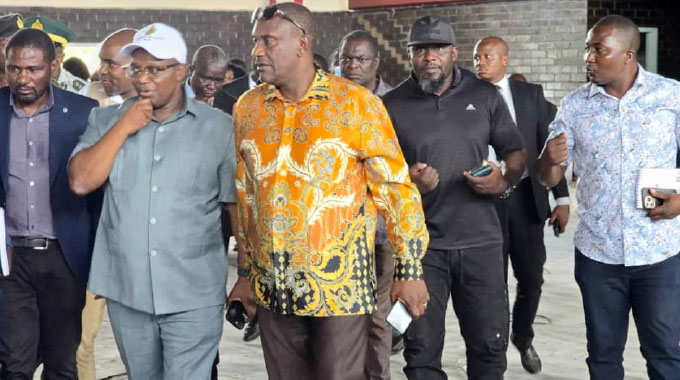
Patrick Chitumba, [email protected]
THE Government has made significant progress in transforming the historic Mtapa Hall in Gweru into a national monument as part of preparations for this year’s Independence Day celebrations.
The restoration of the hall, alongside the rehabilitation of Wha Wha and Connemara Open Prisons, is part of a broader initiative to preserve national heritage and promote pride in the country’s liberation history.
This year’s main Independence Day celebrations will take place at Mutora Business Centre in Nembudziya, Gokwe North District under the theme: “Zim @45: Devolve and Develop Together Towards Vision 2030.”
Mtapa Hall, located in Gweru’s oldest suburb, Mtapa, which is home to over 12 500 people, holds deep historical significance. It was here that the Zimbabwe African National Union (Zanu) held its first congress from May 21 to 24, 1964.
The congress resolved to initiate armed resistance against the oppressive settler regime that had dispossessed the black majority of their land and rights.
During that landmark congress, Reverend Ndabaningi Sithole, now late, was elected president of Zanu, while the late former President Robert Mugabe was elected secretary-general. President Mnangagwa also attended the congress after returning from military training in China.
Zanu was banned by the Rhodesian regime later that year. Following the congress, President Mnangagwa and fellow cadres, later known as the Crocodile Gang, launched a series of sabotage missions, including the bombing of a goods train in Masvingo, marking the beginning of a bold and defiant campaign for freedom.
Despite Zanu’s banning, Mtapa Hall remained a symbolic beacon for liberation. Speaking during a visit to the site on September 17, 2021, President Mnangagwa expressed nostalgia for the historic venue.
“The thoughts of the events, which transpired on May 24, 1964 feel like it’s just yesterday, but it has been many years. On May 24, 1964, we had just arrived from China after training and we were able to be slipped in to attend the first congress of Zanu at that hall,” he said.
As part of the run-up to the 45th Independence Day, Vice President Constantino Chiwenga launched the Independence Flame at Mtapa Hall yesterday.
On Tuesday, the Minister of Home Affairs and Cultural Heritage, Kazembe Kazembe, together with Midlands Provincial Affairs and Devolution Minister, Owen Ncube, toured Mtapa Hall to assess progress on renovations.
Speaking during the visit, Minister Kazembe emphasised the historical importance of the hall, saying it symbolised the country’s journey to self-rule.
“The transformation of the historical hall into a national monument has brought about positive change to Mtapa suburb,” he said.
Minister Kazembe said the hall has undergone major renovations, and a solar-powered borehole has been installed to provide clean water to the local community.
“The President’s mantra that no one and no place should be left behind in national development is visible here.
Decentralising Independence Day celebrations is helping to transform the Midlands. President Mnangagwa is a visionary leader,” said Minister Kazembe.
Minister Ncube said the hall will now serve as a living monument that captures the spirit of resistance and national rebirth.
“It was right here where the foundations of our armed struggle were laid. The roadmap to freedom was crafted in this building. We thank our President for transforming it. Hosting the main Independence celebrations has brought visible development to our province,” he said.
Veteran nationalist, Cde Parwaringira Matiki, said that after the 1964 congress, the hall became a no-go zone as the Rhodesian regime sought to stifle political mobilisation. Activists resorted to secret meetings in homes and other hideouts.
“It was here where the real resistance against the white settlers was felt. The roadmap was crafted here. We want to thank our President for transforming this place. As Midlands province, we have just witnessed several development projects due to hosting this independence,” he said.
“I came to Gweru in 1969. By then, we were forced to meet inside people’s homes. One comrade would keep watch from the roof, and when police were spotted approaching, we would fall silent. After 1964, the hall was mainly used for boxing.”
War veteran, Cde Joseph Bvura (74) shared similar recollections, noting how the hall fell under heavy surveillance after the congress.
“After the congress, the colonialists tightened their grip. When I tried to cross into Mozambique, I was stopped. In Gweru, we could no longer openly say we were looking for Zanu,” he said.
“We operated under the name ‘The People’s Movement’ and met secretly near Gweru River or in homes. We only started using this hall again freely after independence. That’s when we resumed hosting public meetings here.”


