admin
admin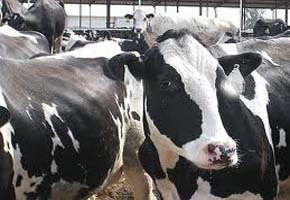
aimed at resuscitating the dairy industry in the country through the importation of 2 000 dairy cows from South Africa.
The seven-year project will see the giant milk processing company spending 6,5 million Swiss francs (about US$7 million) on importing dairy cows for indigenous commercial dairy farmers. Each beast costs US$1 700.
Already, 218 beasts imported from South Africa’s Eastern Cape Province are in the country at a farm in Kwekwe, heralding the resuscitation of the dairy sector in earnest.
Briefing journalists at the official handover of 100 dairy cows to indigenous dairy farmers at Dendairy Farm in Kwekwe, Nestle Zimbabwe managing director Mr Kumbirayi Katsande said his company was capacitating indigenous dairy farmers because they have been supporting Nestle Zimbabwe for many years.
“This is a seven-year-project aimed at reviving the dairy sector. We are planning to import 2 000 dairy cows in support of both the existing contracted dairy farmers and also identified farmers and institutions interested in taking up commercial dairy farming,” said Mr Katsande.
“Nestle Zimbabwe is presently getting all its milk from indigenous dairy farmers. Our programme of contracting farmers came about around 2003. In the 1990s, the farmers were able to supply us with milk but they began struggling around 2003. Nestle then started assisting the farmers with inputs. We then decided to embark on this national project aimed at resuscitating the country’s dairy industry,” he said. At yesterday’s event, Nestle Zimbabwe handed over 30 beasts each to three Mashonaland East indigenous commercial farmers who have been contracted by the company.
Mr Katsande said the other 100 dairy cows would be distributed among small-scale farmers in resettlement areas at a later date.
The company would again spend 6,5 million Swiss francs for the small-scale farmers’ dairy project.
“We will give two cows per family, one local and one imported to small-scale farmers. Some of the cows will be bought from some of the local farmers whose herd would have increased then,” he said.
Mr Katsande said Nestle Zimbabwe was working in partnership with the Kwekwe-based Dendairy Farm in empowering indigenous commercial dairy farmers.
Under the programme, Dendairy Farm imports the dairy cows from South Africa and takes them to their Kwekwe farm to allow the beasts to acclimatise and to be quarantined.
Nestle Zimbabwe provides funding for the project.
Mr Katsande said other partners would be identified in due course for the company’s various projects to be launched soon.
He said the broader objective of their joint-schemes was to increase eightfold the country’s annual milk production, which stands at 50 million litres a year.
“These cows are 100 percent natural as they are hormone free. We decided to import as opposed to breeding because the latter takes a long time. Importing will definitely expedite growth of the dairy industry. Breeding will take about two decades. Importing will take us about seven years for us to get to the numbers we are targeting.
Dairy farming can be revived in Zimbabwe to the greater heights of yesteryears when national milk production was 260 million litres a year compared to the present 50 million litres. The country had more than 200 000 dairy cows compared to today’s less than 40 000,” he said.
Mr Katsande said Nestle Zimbabwe’s nationwide dairy development scheme targeting small-scale farmers would establish milk production and collection centres throughout the country.
The director of Dendairy Farm, Mr Herman Venture, said the cows imported from Eastern Cape were a unique breed that was not prone to diseases.
He said the cows were about 15 months old and were first quarantined in Port Elizabeth for quite a while.
“We have pure jersey, friesland and a few crossbreed. The ideal time to milk them is when they are 24 months old. These cows can each produce between 17 and 23 litres of milk per day. We opted for this breed because they require less feed compared to traditional breeds we have and they appeared disease resistant,” said Mr Venture.
He said they have not lost any beast to diseases since 2009.
“Farmers should keep the cows vaccinated and well fed,” said Mr Venture.
Nestle Zimbabwe products are exported to regional markets such as Zambia, Mozambique, South Africa, Malawi and DRC.



 Online Reporter