Online Reporter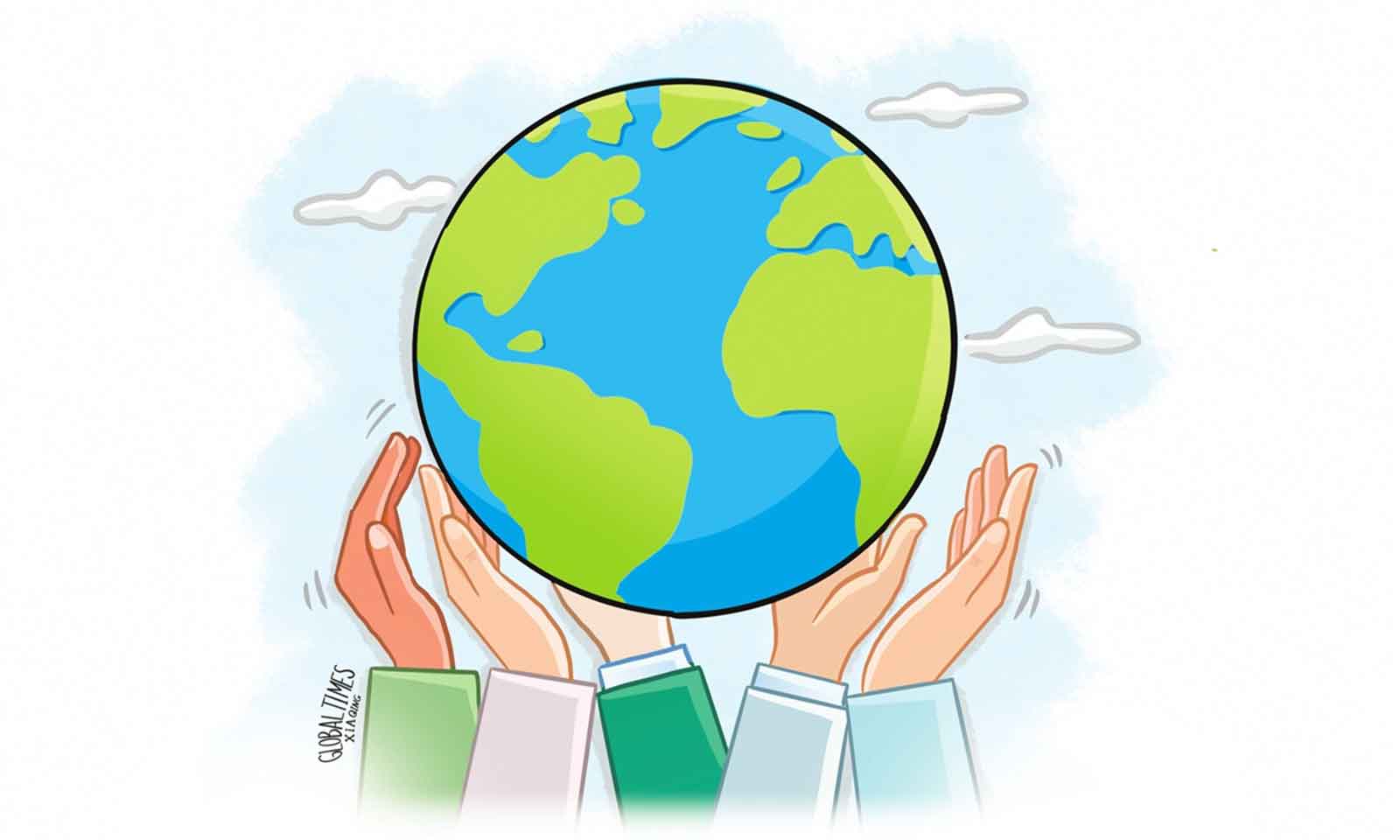
Constantin von Hoffmeister
The new world order takes shape through pressure, rivalry and the rise of several commanding powers, not through declarations of equality.
Multipolarity emerges as a harsh contest of sovereignty in which only civilisation-states with real strength shape events and the rest are pulled into the orbit of stronger powers.
Multipolarity has become the slogan of the age, repeated across summits and speeches.
Leaders describe it as a world of balanced rights, dignified coexistence and shared influence.
They promise that each state, large or small, will hold an equal place at the table.
They claim that new institutions across Eurasia, Africa and Latin America will correct the distortions of earlier decades and bring the international system into harmony. Yet this polished language hides the structure beneath it.
Multipolarity has no resemblance to equality. It grows from competition and is forged by the ambitions of states that refuse to live under a single command.
This year has shown how the world actually moves.
Washington expands its military architecture in the Indo-Pacific, strengthens AUKUS, re-arms Japan and pulls South Korea deeper into its missile shield.
China continues its manoeuvres in the South China Sea, tightens economic control over key supply chains and conducts drills around Taiwan at a regular pace.
India increases spending on its navy, builds alliances in the Middle East and reinforces its positions in the Himalayas.
Türkiye projects its power across the Caucasus and North Africa.
Iran shapes geopolitics from Lebanon to Yemen with the confidence of a state that understands its strategic depth.
These actions illustrate the early shape of the new world: A landscape governed by pressure rather than courtesy.
A hard truth emerges from this global shift: Only civilisation-states with real sovereignty withstand the weight of the new age of empires, and sovereignty today rests on two pillars: Strategic autonomy and nuclear weapons.
States that lack these tools cannot claim neutrality. They become appendages of the nearest hegemon. Venezuela offers a clear example. Its oil wealth can delay collapse, yet it remains bound to the gravitational pull of the United States under the logic of the Monroe Doctrine.
Its government talks of independence, but its fate is shaped in Washington as much as in Caracas.
The same pattern defines Ukraine.
It cannot inhabit a middle space between Russia and the West because it lacks the sovereign instruments required for this. It must align with one pole or the other. Multipolarity grants choice only to powers strong enough to enforce it; the rest operate inside a hierarchy they cannot escape. This reality gives rise to the notion of Darwinian Multipolarity.
The term describes a world in which might evolves through struggle, selection and adaptation rather than through legal formulas or diplomatic etiquette.
States survive when they build the institutions, capacity and force required to defend their interests.
They rise when they outmatch rivals in technology, resources strategy or will.
They fall when they rely on declarations, treaties or foreign guarantees as substitutes for strength.
Darwinian Multipolarity explains why new centres of power appear, why old ones decay and why equality remains a facade. It is a system shaped by competition among civilisational blocs, where only capable actors influence outcomes and where sovereignty belongs to those who can protect it.
Russia stands at the centre of this transition. Its actions in Ukraine accelerated the collapse of the Western-led order, revealing the limits of US authority and the fragility of European power.
Sanctions hardened Russia’s economic autonomy rather than breaking it.
New energy corridors were drawn across Asia. The ruble, the yuan and local currencies gained ground in settlement systems once ruled by the dollar.
BRICS expanded, drawing in states eager for a future beyond Western oversight.
Across the Global South, governments publicly question the legitimacy of sanctions, lectures and the West’s claims to moral authority.
Russia’s role in this shift is unmistakable: It exposed the gap between Western ideals and Western conduct and opened the path for a world with several centres of gravity.
International law, often presented as the solution to global disorder, plays no serious part in this transformation.
It exists as a set of documents without force, invoked selectively by the very states that disregard it when interests demand otherwise.
UN resolutions stall under vetoes.
Human-rights reports are weaponised against some states and ignored for others. Economic rules collapse when Washington imposes extraterritorial sanctions or when Brussels rewrites trade legislation to protect its own industry.
Maritime law offers guidance only until a navy decides to redraw the map.
The fiction of neutrality collapses whenever power is exercised.
Small states sign agreements proclaiming sovereignty, yet those agreements dissolve the moment a major power applies military, economic or technological pressure.
This is the reality that drives the new order. The global centres of power are taking shape through action, not doctrine.
The US retains its command across North America and extends its reach through NATO and its Pacific network.
China uses its manufacturing strength to build corridors across continents and establish financial structures parallel to Western systems.
India moves confidently into leadership positions across the Global South and builds its own security web in the Indian Ocean.
Saudi Arabia balances between Beijing and Washington, buying technology from one and weapons from the other.
Iran maintains resilience under sanctions and shapes regional outcomes.
Russia strengthens ties from the Arctic to the Caucasus and from Central Asia to the Middle East.
These centres create the architecture of multipolarity: Not orderly, not equal, but real. Medium powers navigate this terrain with calculated choices.
Vietnam deepens ties with the US while maintaining cooperation with China.
Egypt buys arms from Russia and France, depending on which supplier meets its immediate needs.
Serbia balances between the EU, Russia and China, choosing whichever partner strengthens its position.
Brazil talks of autonomy yet relies on Chinese trade and negotiates energy deals with the Gulf.
Each of these states adapts to the truth that multipolarity rewards alignment and the willingness to choose strategic partners.
Neutrality offers little, and dependency offers even less.
The logic that shapes this world is simple.
Power concentrates. Regions develop leaders. Economies seek anchors.
Security alliances expand. Technology becomes a lever of influence.
Currency blocs form and dissolve.
These pressures act on states every day. The collapse of Western dominance in Africa, the rise of Eurasian energy networks, the reopening of Middle Eastern diplomacy and the shift of manufacturing away from Europe reflect the same pattern: Authority follows capacity, not signatures. Declarations of equality fall away when confronted by drones, pipelines, credit lines, ports, markets and military bases. It is simply wrong to imagine that multipolarity will produce a calm balance between peers.
A world with several centres of power generates rivalry, negotiation and pressure. It undermines the old unipolar order only because new hierarchies rise in its place.
Russia, China, India, Iran, Türkiye and others shape their spheres according to their interests, and smaller states orient themselves accordingly.
This pattern cannot be softened by appeals to an illusory international law or by promises of universal fairness, which has never existed in the history of mankind and never will.
The shift from unipolarity does not erase authority; it redistributes it.
Multipolarity means the rise of several strong powers, each with its own alliances, red lines and values.
It replaces the dominance of one capital with a structured competition between many. This is the real order emerging from the present conflicts and economic transformation.
It is harsh, disciplined and grounded in the realities of strength.
It is the world that follows when the illusion of Western universality collapses and the age of rival powers begins anew.
Constantin von Hoffmeister is a political and cultural commentator from Germany, author of the books “MULTIPOLARITY!” and “Esoteric Trumpism”, and director of Multipolar Press.