


 Online Reporter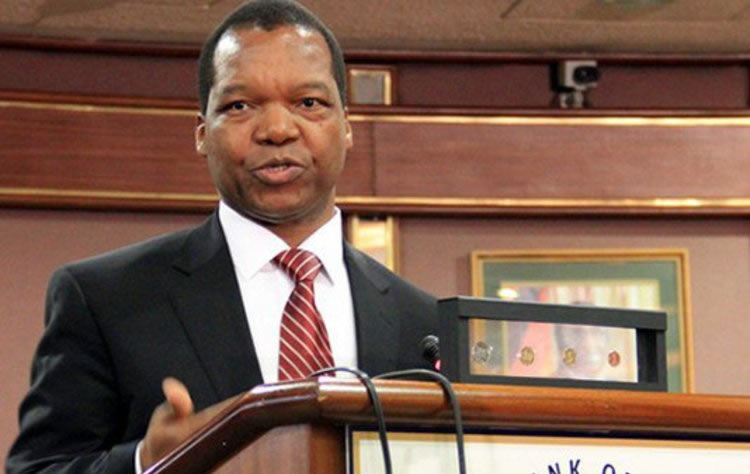
Business Reporter
ZIMBABWE’S sovereign wealth fund plans to capitalise and refurbish the country’s key fertiliser assets, including Zimphos, Dorowa Minerals and Zimbabwe Fertiliser Company (ZFC), to bolster domestic supply security and guarantee affordable pricing for farmers.
Mutapa Investment Fund (MIF) chief executive Dr John Mangudya revealed this at the inaugural public lecture organised by Zimpapers in partnership with the Harare Institute of Technology (HIT) and MIF in Harare.
The public lecture was sponsored by Zesa Holdings; NetOne; AFC Insurance; AFC Leasing; CABS; POSB; TelOne; Air Zimbabwe; FBC Holdings; BDO; Petrotrade; Willowvale Motor Industries; Homelink; Printing and Minting Company of Zimbabwe; and the Export Credit Guarantee Corporation of Zimbabwe.
Dr Mangudya said the recapitalisation initiative was meant to rebuild Zimbabwe’s fertiliser value chain to buttress agricultural productivity and national food security.
Agriculture is the backbone of Zimbabwe’s economy, crucial for livelihoods, food security and exports, employing 60-70 percent of the population and supplying most of the raw materials to industries.
While its direct contribution to the gross domestic product varies (around 11-15 percent), its influence is far greater through linkages with other sectors.
Mutapa’s agriculture and industrial cluster is a US$1,4 billion portfolio designed to drive Zimbabwe’s food security, industrialisation and export growth.
It includes State-owned enterprises (SOEs) such as Cottco, Arda Seeds and the Cold Storage Company, focusing on sustainable commercial farming and value addition
Dr Mangudya said this would strengthen Zimbabwe’s fertiliser value chain by boosting domestic production of basal fertilisers, a key input in agriculture.
Basal fertilisers, which are used at the planting stage, are crucial for strong crop yields.
According to MIF, funding is required to modernise fertiliser plants, blending facilities and distribution networks, taking advantage of local raw materials such as phosphates and ammonia gas.
“We are capitalising and refurbishing Dorowa, Zimphos and ZFC so that at least we can produce basal fertilisers in this country. Fertiliser is a very important input in agriculture,” Dr Mangudya said.
“For food security, we need enough well-priced fertiliser.”
He said local production will shield farmers from supply disruptions and volatile import prices, while improving affordability.
Beyond basal fertilisers, MIF wants to revamp domestic ammonium nitrate production facilities.
The fund is working with private firm Masawara Investments at Sable Chemical Industries to acquire a majority stake and strengthen ammonium nitrate (AN) production capacity.
MIF holds a significant, but non-controlling interest in Sable Chemical Industries via its 100 percent subsidiary, the Industrial Development Corporation (IDC).
“At Sable Chemicals, we are working with Masawara to ensure that Mutapa becomes the major shareholder through a rights issue, so that we also have the fertiliser value chain of AN and top dressing,” he said.
Zimbabwe’s fertiliser ecosystem is anchored by two main product categories, basal fertilisers and ammonium nitrate, essential to consistent yields.
As such, Dr Mangudya said, securing both ends of the value chain is critical to national food security.
“When you look at this value chain, we have two major fertilisers, the basals and the AN.
“You can have rains, as they are coming right now, but if you do not have fertilisers, you are not very good,” he said.
Dr Mangudya said MIF will restructure IDC, which operates Dorowa and Zimphos, to improve efficiency and cut bureaucracy.
“We are reorganising IDC so that we do not have too many layers of bureaucracy,” he said.
“IDC is a group, Chemplex is a holding company, and it has many other subsidiaries, which makes it complicated. We want simplicity.”
The revival of fertiliser assets is part of Mutapa’s broader mandate to restore strategic national assets, reduce import dependence, support key sectors of the economy and boost national food security.
Zimbabwe’s medium-term blueprint, the National Development Strategy 2 (NDS2, 2026-2030), seeks to cut Zimbabwe’s heavy reliance on imports.
The country spent about US$2 billion during NDS1 to meet its fertiliser demand of 400 000 tonnes of basal and 380 000 tonnes of top-dressing fertilisers annually.
“Such investment will reduce the country’s dependency on fertiliser imports, while laying a strong foundation for increased productivity across the agricultural sector,” according to NDS2.
Targeted major projects include the Shawa Hills all-in-one phosphate and basal fertiliser plant, which will produce over 3,6 million tonnes annually.
The revival will also include coal-to-fertiliser facilities in Mkwasine and Chiredzi, and new plants in Mazowe and Kwekwe.
The investments are expected to create more than 5 000 direct and indirect jobs.
Economist Mr Tinevimbo Shava said fertiliser self-sufficiency will be beneficial for the Zimbabwean economy, considering that agriculture is its mainstay.
“Zimbabwe is currently importing over 75 percent of its basal fertiliser requirements, gobbling the economy with an avoidable foreign currency requirement of over US$400 million annually.
“This is not something good for our economy. We need to value add our natural endowments, supply our own farmers and earn more from exports if possible,” said Mr Shava.
Mutapa is Zimbabwe’s sovereign wealth fund, rebranded in September 2023 from the Sovereign Wealth Fund of Zimbabwe.
It manages a portfolio of over 30 SOEs and strategic assets to generate wealth, improve public infrastructure and foster economic growth, with a focus on sectors such as mining, energy and finance.



