Online Reporter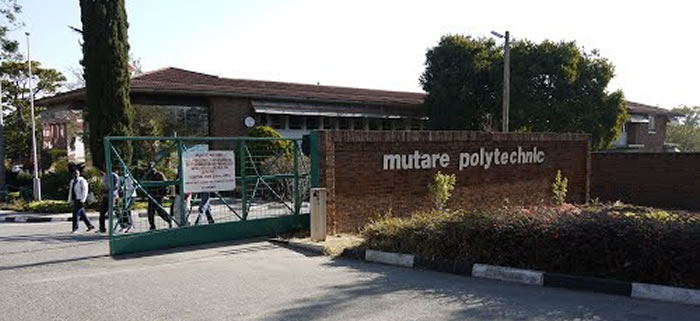
Liberty Dube
Post Correspondent
ECONOMIC empowerment and Technical and Vocational Education and Training (TVET) approach lie at the heart of employment creation, poverty reduction, and national development, and can only be achieved by harnessing locally available resources, a Cabinet Minister has said.
Higher and Tertiary Education, Innovation, Science and Technology Development Minister, Dr Fredrick Shava said this during the 34th graduation ceremony at Mutare Polytechnic last Friday.
He was represented by his deputy, Honourable Silelisizwe Sibanda.
Minister Shava commended Mutare Polytechnic’s infrastructural achievements as a demonstration of the transformative power of Education 5.0.
“I am particularly pleased that the programmes at Mutare Polytechnic are designed to leverage the rich natural endowments of Manicaland, fostering innovation and skills development that will contribute meaningfully our nation’s growth. The economic empowerment and TVETisation lie at the heart of employment creation, poverty reduction, national development, and this can only be achieved if we harness our locally available resources. I am particularly pleased that the programmes at Mutare Polytechnic are designed to leverage the rich natural endowments of the Manicaland, fostering innovation and skills development that will contribute meaningfully our nation’s growth,” he said. About 3 325 graduates from the college’s three distinct Technical and Vocational Education and Training (TVET) training programmes graduated, with 1 767 students from the conventional streams, 660 from the transformative Integrated Skills Expansion Outreach Programme (ISEOP) and 898 from our impactful Short Courses. The graduation ran under the theme: Economic Empowerment and Growth Through Heritage Based Education.
Minister Shava lauded Mutare Poly’s immense contribution to community development, saying Government is supportive of exchange programme initiatives with institutions from other countries.
“It is with immense pride that I highlight Mutare Polytechnic’s outstanding contributions to, both community development and education transformation. In a remarkable display of skill and service, the institution’s Construction Department collaborated with the Zimbabwe Republic Police (ZRP) Dangamvura to rebuild a fire-damaged police station, a project where students applied their classroom knowledge under expert supervision, demonstrating the real-world impact of hands-on learning through community engagements.
“The institution’s expertise is further evident in its participation in the construction of three auditoriums at Chinhoyi University, with the first already completed, and work progressing on the achievements are remaining two.
These are a testament to our commitment to advancing education and empowering our students with the skills necessary for a productive future. Government is supportive of exchange programme initiatives with institutions from friendly countries, fostering international academic collaboration. In line with this vision, Mutare Polytechnic has partnered with Guangdong Polytechnic of Water Resources and Electric Engineering (GPWE) to send 30 students to China this
September for specialised training in Water Resources and Irrigation Engineering and Electrical Power Engineering They will then spend 12 months at GPWE in a fully funded programme that provides dual certification from both institutions, enhancing their academic and professional prospects,” he added.
Mutare Poly principal, Mrs Poniso Watema said the institution remains committed to foster global collaborations in technology and knowledge transfer.
“As part of this vision, thirty students embarked on a transformative academic journey in China this September under a landmark partnership between Mutare Polytechnic and Guangdong Polytechnic of Water Resources and Electric Engineering (GPWE),” she said.
Engineering (GPWE). This initiative, established through a Memorandum of Agreement (MoA) signed in September 2023, will provide specialised training in Water Resources and Irrigation Engineering and Electrical Power Engineering, strengthening Zimbabwe’s technical skills base. Having completed Mandarin language training in Zimbabwe, these students will spend twelve months at GPWE under a fully funded program, earning dual certification from both institutions. Additionally, four of our students from Civil, Mechanical and Tourism and Hospitality departments, recently joined more than 100 participants
from the EAEU states, China, Pakistan at the VI Republican Competition of Professional Skills ‘ProfSkills Belarus,” she said.