Online Reporter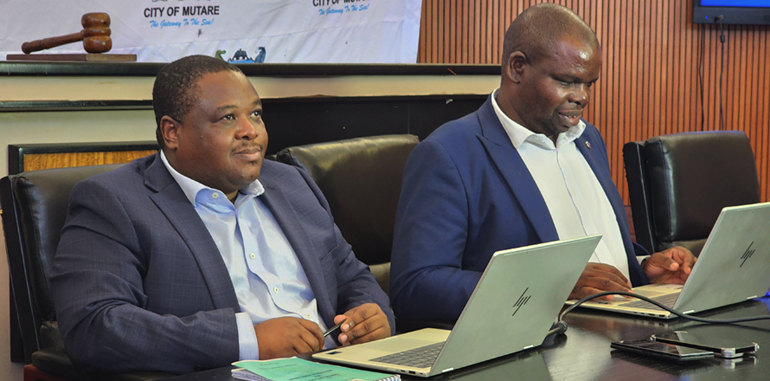
Tendai Gukutikwa
Health Reporter
CITY of Mutare has placed water security at the centre of its 2026 budget, committing to sustain an average of 22 hours of reliable water supply per day across its municipal jurisdiction as part of efforts to improve public health and sanitation.
Addressing journalists on Monday, Mutare Town Clerk, Mr Blessing Chafesuka, said the move is a deliberate public health intervention aimed at reducing waterborne diseases and ensure broader access to clean and safe water.
“We want to maintain an average of 22 hours of water supply across the city. Reliable access to safe water is, not just a service delivery issue, but a public health issue that directly affects hygiene, sanitation and disease prevention,” said Mr Chafesuka.
He said the 2026 budget, which underpins the water supply programme, was approved by Local Government and Public Works Minister, Honourable Daniel Garwe on January 29, 2026.
The approved budget amounts to ZiG2,5 billion, translating to approximately US$100 million.
Mr Chafesuka said the council is already implementing resolutions aimed at addressing chronic water shortages, particularly in high-density areas and informal settlements, where residents have been struggling to access clean water for years. One such area is Mahalape, an informal settlement located between Chikanga and Sakubva, which is not connected to the municipal piped water network.
To address the situation, council has resolved to install water kiosks in strategic locations, including areas where water losses and illegal connections have been recorded.
“Council resolved on Friday to install water kiosks in areas such as Federation, where we have been losing water through illegal connections. Some individuals were drawing water from these points and selling it to areas without piped water, including Mahalape,” said Mr Chafesuka, adding that the intervention was intended to curb illegal water vending, while ensuring equitable access to safe water for all residents.
“We want to stop the emergence of informal water markets and water barons. Even in areas without direct connections, residents must be able to access clean and safe water without it becoming a commercial commodity.
“Water is a basic human right, and should not be exploited at the expense of public health,” he said, adding that the water kiosk project is expected to be completed this year.
“Our target is that by the end of the year, there should be no area in Mutare where people completely lack access to clean and safe water,” he said.
For residents of Mahalape, the announcement brings hope after years of reliance on unsafe water sources and expensive informal supplies. With no piped water infrastructure, many households in the settlement have depended on water drawn from the Sakubva River, particularly during prolonged shortages.
Health experts have repeatedly warned that untreated river water poses serious health risks, including diarrhoeal diseases such as cholera, typhoid and dysentery.
In addition, residents have relied on water barons who ferry water from areas with supply and sell it at exorbitant prices. A single 20-litre bucket of water costs US$5, a price many residents say is unaffordable.
“We do not have access to clean water and have to depend on these water barons or nearby suburbs like Chikanga and Sakubva. When there is no money, we fetch water from the river even though we know it is not safe. But when children need to bathe or you need to cook, you have no choice,” said Mahalape resident, Ms Rudo Muchengeti.
Another resident, Mr Simbarashe Danda, said the cost of buying water has become unsustainable.
“Five dollars for a bucket is too much for most families here. Many of us are not formally employed. Water kiosks will reduce disease and restore dignity, because water should not be a luxury,” he said.
Mr Chafesuka said the city’s water supply will also help lessen the burden of water barons, who fetch water from undesignated points like Federation in Dangamvura illegally, for free, and then sell it to areas like Mahalape.
“As council, we had water losses in areas like Federation because there are water barons getting water from these points and selling to areas with no water,” he said, adding that the budget also provides for maintenance and upgrading of water infrastructure to reduce losses, improve efficiency and ensure sustainability.
While welcoming the approval of the 2026 budget, Mr Chafesuka acknowledged that its successful implementation requires cooperation from residents.
“We are committed to deliver these services, but residents also have a responsibility to protect infrastructure and pay for services where applicable. That partnership is essential for sustainability,” he said.
The World Health Organisation (WHO), in its overall findings on work on water, sanitation, and urban health, states that improved access to safe water is critical in reducing disease outbreaks in densely populated urban settlements, especially as climate change and population growth continue to strain existing infrastructure.