

 Chronicle Editor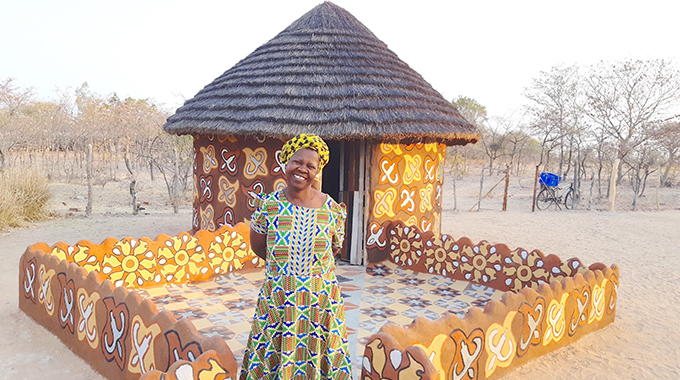
Mbulelo Mpofu, [email protected]
THIS Friday, the cultural landscape of Zimbabwe will reach a significant milestone as we celebrate the 10th anniversary of the “My Beautiful Home” (MBH) clay-painted hut competition at the Amagugu International Heritage Centre.
Founded by French geologist Veronique Attala, Zimbabwean historian Pathisa Nyathi and John Knight, this annual event has become a powerful platform for women in the Matobo region. By showcasing their artistic talents through beautifully painted huts, these women are not only contributing to their local communities but also preserving their cultural heritage.
The competition began in 2014 with just 30 participants but has since blossomed into a vibrant celebration of creativity, attracting 860 entrants by 2022.

Women are set to lock horns in a battle for supremacy titled “Bhudaza” (Traditional painted face competition).
Keynote speeches will be delivered by the Minister of Energy and Power Development Edgar Moyo who is also the local legislator, Bulawayo Mayor David Coltart, the United States Ambassador to Zimbabwe, Mrs Pamela Tremont, as well as the German Ambassador to Zimbabwe and guest of honour at the event, Mr Udo Volz.
To entertain the audience, Whitewater School students, Soneni and the Tortoise, as well as Lewis Ndlovu, will be on hand, while a film made by the German Embassy on pots and huts painted by the Matobo women plucked from the MBH competition will be shown.
The growth of MBH over the years has not only spotlighted traditional hut painting but has also significantly transformed the lives of many women, allowing them to express their cultural heritage and artistry.
Veronique Attala, the founder and chairlady of Ekhaya GAIA, an NGO that supports community development, shared her reflections on the competition’s inception.

“Imagine walking through the parched landscape of the Matobo, discovering the beauty in abandoned clay huts adorned with faded flowers and welcoming inscriptions. It was here, amid the stark beauty of nature, that the idea for this competition was born,” she recounted.
The competition has become a beacon of hope and resilience for women who have historically been marginalised. Through their artistic expressions, these women have not only reclaimed their narratives but have also established their roles as invaluable contributors to their families and communities.
Attala noted, “These artists needed no formal education; their talent grew from a deep love for their people and landscape. Over the years, they have unearthed their artistic brilliance and found strength in self-expression.”
Over the years, the impact of “My Beautiful Home” has extended far beyond aesthetics.
The competition has instilled a sense of pride and recognition among participants, shedding light on the traditional art forms often overlooked in a patriarchal society.
In a region where men frequently migrate for work, women have stepped up to manage households and maintain the land, often dealing with significant hardships, including water scarcity.
However, the competition has enabled women to contribute to their families while staying rooted in their communities.
“Bingo! By an unexpected twist of fate, women are now able to address the needs of their families, combining art and development,” Attala exclaimed.

Initiatives introduced through the competition, such as solar energy and rainwater harvesting, have begun to improve living conditions while respecting traditional practices.
This year’s event promises to showcase the stunning artistry of the painted huts, which have become emblematic of the community’s resilience and creativity. Each painted hut tells a story, reflecting the rich cultural heritage of the San (Bushmen) rock art and the vibrant narratives of contemporary women.
With the involvement of local artisans, the competition is evolving to include new skills, such as painted pots and fabrics, which mirror the energy and enthusiasm of the participants.

The competition not only rewards artistic talent but also provides practical tools for rural living, enhancing the daily lives of the women involved.
Attala emphasised the vision for sustainability, aiming to establish commercial activities that will ensure the competition’s longevity.
“Our ultimate aim is to create a self-sustaining model that empowers women while preserving our rich traditions,” she stated.
Follow on X @MbuleloMpofu



 Online Reporter