

 admin
admin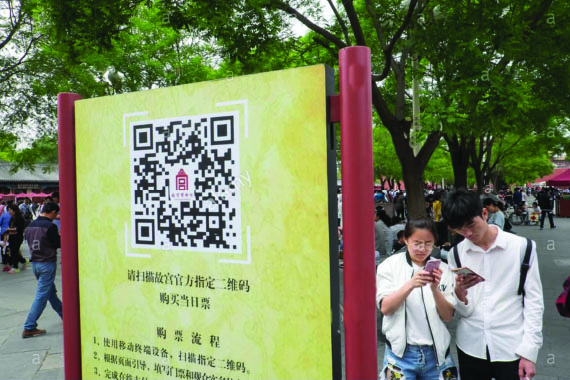
Ms G
My dear readers,
It has been almost three months since I last wrote for you. During the interval, I went on a long-awaited holiday back in China to see my family and also to catch up with the latest trends at home, which proved exciting and sometimes bordering on daunting.
As you may be aware, China is changing by the day. Even staying out of it for months will make you feel like a dinosaur. For someone like me who has not been back for a couple of years, being brought up to speed was like a crash course. Here’s what happened on one of my mind-boggling days in Beijing.
Within 48 hours of the takeoff of my flight back to my beloved Harare, I had to take a PCR test. I had already booked a doctor’s appointment on my phone a fortnight ago using WeChat, which told me I was expected between 8:45 and 9:15 that morning. Early that day, I grabbed a quick breakfast in a convenience store, paid from my Wechat wallet and swiped my way into the subway with a QR code generated by my Alipay account, which I had just learned to do the day before.
Arriving at the hospital, I found that COVID-19 had complicated every simple matter we used to take for granted, such as walking into the hall of a hospital. I was asked to scan a QR code, supply my personal and health information and travel history and wait for a green code to appear on my phone in order to be allowed in. After one busy and chaotic hour of queuing up for different things, I finally got my throat swabbed.
Lunch time.
I had made a date with some friends in a restaurant nearby. So I hopped on a bus and scanned my phone on a machine to pay the bus fare. At the restaurant, I needed to first produce my green code granted by the local health authorities based on my health status and travel history.
Once inside, I was handed an iPad where I could find all the dishes and add what I like to my order. Yes, ordering a meal in China these days has gone digital as well. After a happy get-together, my friends and I each paid our share of the bill through a “group payment” function on Wechat and parted our ways.
As I had learned on Wechat, my PRC test rest was ready for collection. I cycled to the nearest subway station, having paid for the rental bicycle by scanning its QR code, and went to the hospital. The report was printed on a machine and the payment made with my phone.
It had been a long day. I needed to get back home soon to pack. So I took out my phone again, clicked on the Wechat ride-hiring function, and ordered carpool service. Just about 10 seconds later, a nearby driver picked up the order. I could see on my app the color, plate number, and exact position and real-time movement of his car as well as his phone number. I could also see at exactly what time he picked up the other passenger sharing the ride and whom he was going to drop off first.
As you can see, my smart phone was absolutely essential to my day in the city. Such frequent use means your battery would probably die before the middle of the day. So what has become equally essential is a good portable charger. But if you are willing to pay, many places offer phone charging services.
While it all sounds very fast and convenient, I cannot help but feeling a bit anxious. What if my battery dies exactly the moment I need it and there is no place nearby to charge it? What if the Internet is down? How difficult it would be if I were an old lady who could not read clearly the tiny characters on the phone or was simply not good with the technical stuff?
Development does come with questions. But lack of development brings problems. I guess we must be brave to embrace the questions. After all, isn’t life just a process of solving one question after another?



 Online Reporter