

 admin
admin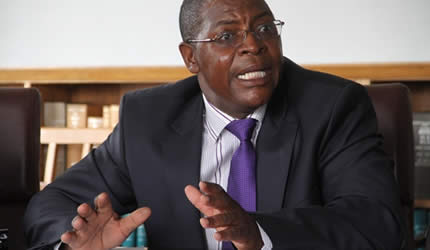
 Cletus Mushanawani Manica Post News Editor
It is now five months after Zanu-PF romped to an emphatic victory during the July 31 harmonised elections. At the just-ended Zanu-PF conference in Chinhoyi, President Mugabe described the opposition parties as dead and buried. President Mugabe’s sentiments come on the backdrop of resignation of senior opposition members especially from the MDC which is led by Professor Welshman Ncube. Last week, our Manica Post News Editor Cletus Mushawani (CM) spoke one-on-one with the party’s former national secretary for International Relations and External Structures, Mr Sondon Stalin Mugaradziko (SSM) to find out the future of opposition parties in the country and the internal opposition political dynamics. Below is the full interview as published in the Manica Post of December 20, 2013;
CM: By the way, which position did you hold in the MDC formation?
SSM: I was the Secretary for International Relations and External Structures. I sat in the MDC’s Standing Committee. I was also a member of the MDC national executive. I was also a member of the National Council, the highest decision making body in between congresses. Finally, I was one of the three Manicaland National Representatives, and by proxy, I was the most senior MDC member in Manicaland Province.
CM: The MDC led by Prof Ncube has been hit by massive resignation of members after the harmonised elections including you; may you tell us the reason behind the sudden exodus of members?
SSM: I obviously cannot speak on behalf of others. They have not appointed me their spokesperson. But it is true that the MDC has been hit by a massive exodus of senior membership. I left because what I thought was represented by MDC was not. When I joined the MDC, it was after carefully reading their beautiful constitution. It is beautiful in all respects. So when I joined, I thought I was joining a social democratic party. A party that was characterized by collective decision making; a party that was driven by values that embrace empowerment of the people through participation in democratic structures which operate on the basis of transparency and accountability; a political party which was all inclusive. I was wrong because theory and practice are two distinct animals in politics, so I later on learnt. Against the thinking of even that of the MDC President, Professor Welshman Ncube, there are some within the MDC leadership who would trample on the constitution with impunity, who think they are the owners of the party; who have no grain of respect for other members within the leadership of the party. Provincial executives are reduced to mere spectators in their own game. Against the hyper-marketed concept of devolution, everything in the MDC is shockingly centralised, including provincial manpower and vehicles. They are controlled from a central point. There is no flexibility of thought.
There is discretion suppression. Portfolio secretaries were reduced to mere space holders without initiative. Even appointments and secondment of members to various positions became the prerogative of one person and were done clandestinely. Friends and relatives were anointed into political positions ahead of deserving politicians. Talk of JOMIC, COPAC and government commissions. Before elections, we held several rallies throughout the country and resources were abundant. Towards elections, resources became scarce and the allocation of the scarce resources became selective, depending on your relationship with those who controlled the resources. All candidates from the province I represent, Manicaland, went unsponsored. Most candidates in Manicaland, from council to House of Assembly had neither posters nor fliers to market their candidature. Most would come to me and cry for help. This is despite the fact that MDC was getting financing from government under the Political Parties (Finance) Act [Chapter 2:11]. And incidentally, Manicaland, with no resources, voted for Professor Ncube more than any other province. So these are some of the reasons I felt that a good visitor is the one who knows when to leave.
CM: All the opposition parties performed dismally during the July 31 elections, from your own view what led to this?
SSM: Both MDCs concentrated on non-issues. Zanu-PF concentrated on real issues. Issues to do with empowerment and emphasis being on indigenisation and employment. The issues, which if implemented, would bring food on the table of the voter. MDCs were too academic. Even though the MDC manifesto was good, very good indeed, it was too academic. It was divorced from reality to appeal to the ordinary man in the street. Again Zanu-PF was on the ground. They really campaigned for their victory. Out of every three people you would meet in the street, two would be donning Zanu PF regalia. From the opposition, there was none. For example, I only distributed 10 zambia cloths in the whole of Mutare Central constituency, which I had gotten courtesy of my position. And you expect to win an election? Coming to the selection of candidates, Zanu-PF was more transparent and democratic than the opposition. Some Zanu-PF heavy weights fell during their primaries. And it was allowed to stand. Compare that with the so-called confirmation exercise by the MDC-T; Look at Chikanga/Dangamvura debacle, Mutasa South constituency; it was a sham. When it comes to the MDC led by Professor Ncube, it was a matter of not attracting quality candidates because of the in-house centralisation of activities and poor resource management.
CM: There is talk in the political corridors that there is so much dictatorship in opposition politics resulting in Priscilla Misihairabwi-Mushonga using her position to benefit from a Parliamentary seat which she does not deserve, what is your take on that?
SSM: To be honest with you, Professor Welshman Ncube is not a dictator. But those close to him are. Like I said earlier on, the centralisation of power in itself is an act of dictatorship. The provision of collective decision making as espoused by the MDC constitution is not practiced and the opposite of collective decision making is dictatorship. On Priscilla’s issue, all I can say is that the leadership of Matabeleland South are no cheats and are not that cunning to the extent of trying to change an agreed position after the fact. I think the issue of candidates; especially those on proportional representation should have been fully interrogated and debated by provincial leadership, which was not the case because of the centralisation of activities I highlighted earlier. Sometimes it doesn’t make much sense to be nominated to the party’s top brass by one province and when national elections come, you purport to represent yet another province.
CM: What is your take that the Prof Ncube-led MDC was more like a tribal project?
SSM: The party is not a tribal project at all. The fact that the leader carries a Ndebele name does not make the party tribal. The outlook of the national council, the national executive and the standing committee was national in stature. All the provinces were equally represented in these bodies. So to suggest the MDC is tribal is being mischievous. Having said that, it doesn’t mean that there were no elements within the MDC who were tribal. Like any other party, there are overzealous elements who would try to take advantage of the leadership’s proximity to their tribe but it never found takers. Something that tells you the MDC was not a tribal project is the number of votes garnered by Professor Ncube in the Mashonaland provinces versus those that he got from the Ndebele speaking regions. I would not have stayed a minute longer if it was a tribal project.
CM: From your own opinion, do you think the country has credible opposition parties, or it is made up of chancers who will be pursuing their own selfish agendas?
SSM: Until such a time that the opposition does what it preaches, the credibility of opposition parties in Zimbabwe remains far-fetched. The opposition in Zimbabwe says one thing and acts the other. Most of the opposition leaders are fly-by night politicians who are looking for self-serving opportunities.
CM: The nasty split between Profs Ncube and Mutambara; did it contribute much to the confusion that rocked this MDC formation and its total failure to make an impact during the July 31 elections.
SSM: A point of correction, there was no split at 2011 MDC congress. Professor Mutambara lost to Professor Ncube. There was leadership renewal and leadership replacement. If the MDC had not changed leadership, it was going to perform even worse than it did.
CM: Do you see any of these opposition parties posing a strong challenge to Zanu-PF in future or President Mugabe is right when he says the opposition is dead and buried in Zimbabwe?
SSM: In the near future, no. Until such a time that opposition in Zimbabwe becomes truly Zimbabwean and home grown, there is no challenge to Zanu-PF. The scare of losing an election in 2008 woke Zanu-PF up. They then realised their mistake of taking the party away from the masses and returned it to the rightful owners; the people. Political parties belong to the people; not leaders. President Mugabe is different from the opposition leaders in that what he said yesterday is what he says today and is what he will say tomorrow. This principled stance is what is lacking in most opposition leaders. Being principled is the mark of a leadership.
CM: There is talk of sanctions affecting the economy, yet the opposition says they are targeted measures, what is your take on that?
SSM: If there was anything that MDC agreed with Zanu-PF, is the fact that there are sanctions in this country. I am sure there is nowhere you have heard a member of the MDC saying sanctions are non-existent. I remember even when Professor Ncube assumed the presidency of the MDC in 2011, in his inaugural speech he said something like the single most pervasive threat we face on the road towards the re-construction of Zimbabwe today is the sanction regimes. Whatever the original intentions of imposing sanctions might have been, it is not working for the good of the people of Zimbabwe. Sanctions are undermining our ability to move forward as a country. Some in the opposition say they are targeted, but there is nowhere you say this CEO of this company is not creditworthy and expect that company to survive. Technically you have made everyone in that company unworthy. Therefore it is a fact that Zimbabwe is under illegal sanctions because the legality of sanctions must come through the United Nations and not by individual countries. So whosoever says there are no sanctions in Zimbabwe has actually lost touch with reality in pursuit of ill-gotten power.
CM: Now that Mr Mugaradziko has resigned from the party, what has the future in store for him?
SSM: The fact that I have resigned from the MDC is not the end of life. I still believe I can contribute meaningfully to Zimbabwe. Even when I was in the MDC, I sincerely believe I played my patriotic role as a Zimbabwean. I was part of the constitution making process from inception up until the referendum. At referendum, I was part of a team that went around advocating for a yes vote. I played a role in preaching and acting peace amongst Zimbabweans. I remember during the first days of the constitution outreach programme, the Zanu-PF and the MDC-T team leaders would always be at each other’s throats, and I would play the moderator’s role and made sure they found each other again. I know I still have a role to play in making sure Zimbabwe moves ahead. That role might no longer be political, but there are so many areas that I can contribute meaningfully to the development of my country, socially or economically.
CM: Are we going to see you being active in politics or it is the end of your political career?
SSM: Sometimes our lives are the work of destiny. They are controlled from above. When God gives me an assignment, who am I to say no.



 Online Reporter