Online Reporter
Mbulelo Mpofu, [email protected]
THE glittering facade of the 24th National Arts Merit Awards (Nama), held last Saturday at the cavernous Harare International Conference Centre (HICC), has crumbled under the weight of its own contradictions.
What was marketed as a celebration of “Fearless Creativity” instead revealed a troubling disregard for artistic integrity and a lingering inability to genuinely represent the nation it claims to honour.
Beneath the dazzling choreography and vibrant performances lies an awards ceremony in quiet crisis.
In 2024, Nama awarded music diva Tahle Wedzinza the “Outstanding Music Video” gong for the video of the song Damage — a video that, astonishingly, is still not publicly available.
This was among several controversies that have haunted the awards in recent years. But in this year’s edition, the most glaring misstep was the blatant disregard for intellectual property (IP) rights, turning the national stage into a site of alleged artistic appropriation.
Hip-hop luminary Stunner erupted on social media after watching BaShupi perform his seminal hit, Godo, without consultation, permission or even a simple acknowledgment.
Stunner’s blistering post cut deep: “Nama painofonera munhu asiri muridzi we song chiiko chinenge chichimboitika . . . Guy couldn’t even shout out Stunner pa-song yausina kana kunyora.”
His point was painfully clear: national platforms should demand respect, not the casual IP theft often tolerated in smaller venues.
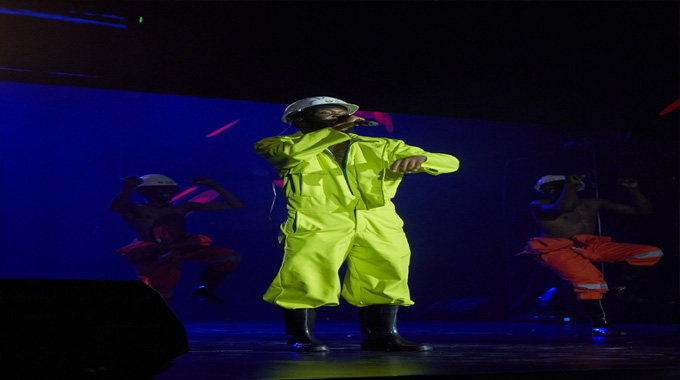
“A little respect on others’ intellectual property is required,” he insisted — a fundamental principle seemingly ignored by both Nama organisers and performers.
And this was far from an isolated incident.
Gary Tight, son of contemporary artiste Willom Tight, publicly criticised Dino Mudondo and Nama for erasing his father’s legacy during a performance of their collaborative classic Chirangano Chedu.
Mudondo hit back, saying: “Chirangano is my song. I featured three artistes; I can perform it ndega (alone).”
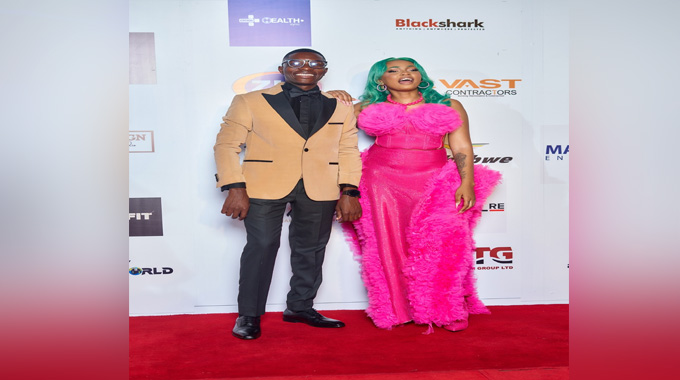
His response raises a crucial question for the National Arts Council of Zimbabwe (NACZ): does technical ownership grant an artiste the right to erase collaborative history on what is meant to be the apex stage of Zimbabwean arts?
The silence from organisers regarding their vetting process is deafening — and damning.
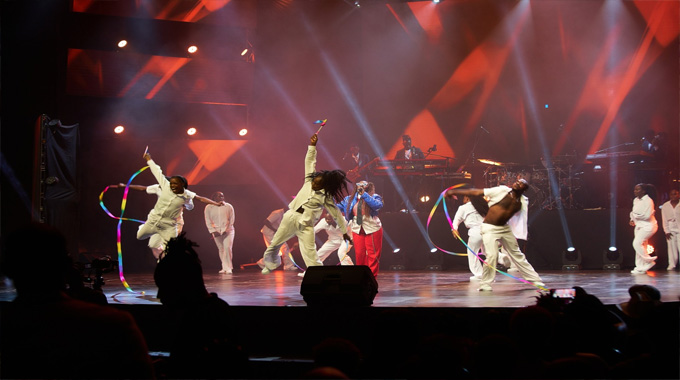
While Events Evolution and Scarlet Studios delivered vibrant performances and commendable inclusivity (especially the impressive sign language interpretation, a true highlight), the core production was plagued by glaring mismanagement.
The credibility of the ceremony took a severe knock as the supposedly robust adjudication system — which NACZ Executive Director Napoleon Nyanhi said involved two months of deliberation — appeared to fall apart in front of a live audience.
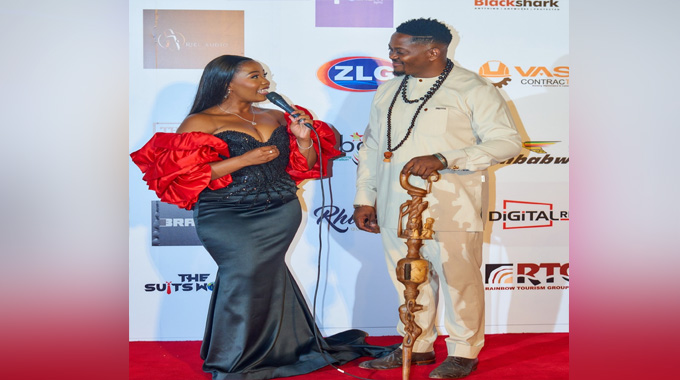
Presenters repeatedly stumbled while announcing winners, pausing for awkward, drawn-out moments that sparked murmurs of “rigging” from the floor.
The teleprompter, which should have smoothed proceedings, instead exposed confusion, with lines appearing to be edited mid-presentation. The hesitation and visible uncertainty fuelled speculation that some results were being altered onstage, despite claims that judging had long been concluded.
Compounding the chaos was poor time management, which stretched the ceremony far beyond reasonable limits. Lengthy speeches, unexplained pauses and ongoing teleprompter issues all contributed to a frustratingly slow programme. The audience’s response — booing, sarcastic clapping and restless murmurs — said everything about the organisers’ failure to respect attendees’ time.
Equally baffling was the absence of nominee visuals during category announcements — a basic staple of modern awards production. Instead of a polished visual package, audiences were left staring at a bare stage, stripping nominees of their moment and draining energy from the room. In an era where presentation is everything, this omission made the event feel amateur rather than aspirational.
Nama continues to wear the “national” label like ill-fitting borrowed robes.

Despite Nyanhi’s assurances, the awards remain stubbornly centralised, dominated by creatives from Harare and Bulawayo. Hosting cities never rotate. Yet Zimbabwe has ten provinces overflowing with artistic talent. This continued narrowness is not merely an oversight — it is a glaring failure of the NACZ’s mandate. Nama remains a Harare event with national ambitions, not a truly national celebration.
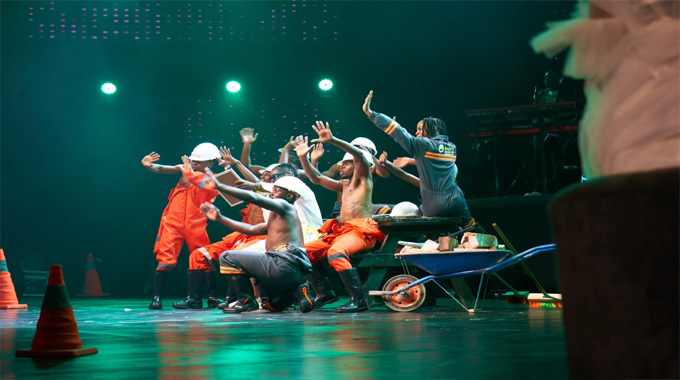
To be fair, excellence was present on the stage. Performances were largely exceptional. The choreography was, indeed, “crown-worthy,” bursting with creativity and precision. The nostalgic return of Urban Grooves pioneers reminded the nation of a musical era that shaped a generation. New categories such as Fashion and Podcasts added freshness, and the sign language interpretation was nothing short of exemplary.
Performers like Sku, Bling4 and the choreographers dazzled, while the varied musical line-up — from gospel giants to the unstoppable Chillspot Family — offered energy and range. Even the audience rose to the “Fearless Creativity” theme with bold, imaginative attire.
Yet the contradictions remained impossible to ignore.
The 24th Namas delivered moments of brilliance, inclusivity and artistic pride — alongside serious ethical lapses, organisational shortcomings and a persistent provincial bias.
The IP scandals are not mere gossip; they expose a glaring disrespect for creators. The suspicious pauses and teleprompter confusion chip away at trust. The lack of national representation continues to be an embarrassing blind spot.
The NACZ and organisers cannot shield themselves with glitter, nostalgia or new categories. Until they implement transparent protocols for performances, enforce strict timekeeping, guarantee technical competence, decentralise the awards, and — above all — uphold artistic rights, Nama will remain a beautifully adorned but deeply compromised institution.
Zimbabwe’s artistes and audiences deserve far more than a gilded farce.
Next year’s Nama must not simply aim to be bigger — it must be better, fairer, and genuinely national. The spotlight is now firmly on the NACZ to act. – Follow on X @MbuleloMpofu