Online Reporter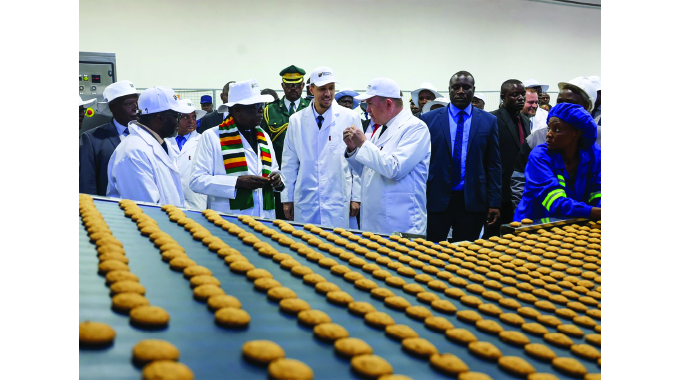
Business Reporter
NATIONAL Foods (NatFoods) says the recent commissioning of pasta, biscuits, and cereals manufacturing plants represents a significant step in the company’s drive to add value to its milled products made from locally grown maize, wheat and soya beans.
Zimbabwe’s largest food manufacturer commissioned three plants in May, enabling the company to move up the value chain across its range of basic food products.
The new plants were established at a combined investment of US$22,7 million and herald a new chapter for National Foods.
From a national perspective, the investments in the new lines is essential for import substitution.
According to statistics, Zimbabwe currently imports pasta worth around US$40 million per year. The country can now produce the product locally.
After establishing the plant, NatFoods now produces about 1 200 tonnes of pasta per month, against a demand of around 3 500 tonnes. There is also an influx of biscuit imports from South Africa and Zambia.
NatFoods has since invested in local capacity to curb the imports after the commissioning of its biscuit line.
According to NatFoods, local consumers’ demand for biscuits, pasta and cereals continues to grow robustly and will likely increase in the future.
The firm’s goal is to produce quality, affordable and nutritious foods for the people of Zimbabwe.
Group chief executive Mr Michael Lashbrook said his company had invested significantly in new plant capacity and expected to invest more going forward.
“Commissioning of the new pasta, biscuit and cereal plants represents a significant and bold step by National Foods as we embark on a journey to move up the value chain from our current basket of basic food products.
“These new investments see us adding further value to our milled products, in turn resulting in an increase in the market for locally grown maize, wheat and soya beans.
“National Foods has undertaken significant capital investment into both its existing and new plants.
“By the middle of this year, our capital investment over the last five years will reach US$50 million,” said Mr Lashbrook.
He added that the company is confident in the Government policies and believes that these investments will be successful.
Mr Lashbrook noted that the company’s agenda is to replace products that were previously imported, saving much-needed foreign currency in the process.
“To us, it seems logical that an agricultural nation such as ours should be producing its own maize, wheat and soya adding value to these grains.
“As an example, corn flakes are primarily made from maize, yet much of the corn flakes consumed locally are imported.
“Similarly, pasta is essentially made up of flour and water, so it does not make sense to us that this would be imported when, as a nation, we grow large volumes of wheat,” said Mr Lashbrook.
This comes as National Foods recently made significant investments to upgrade infrastructure and expand production capabilities.
These include US$4,4 million spent on a cereal extrusion plant and US$6 million on the flour milling plant replacement in Bulawayo.