Andrew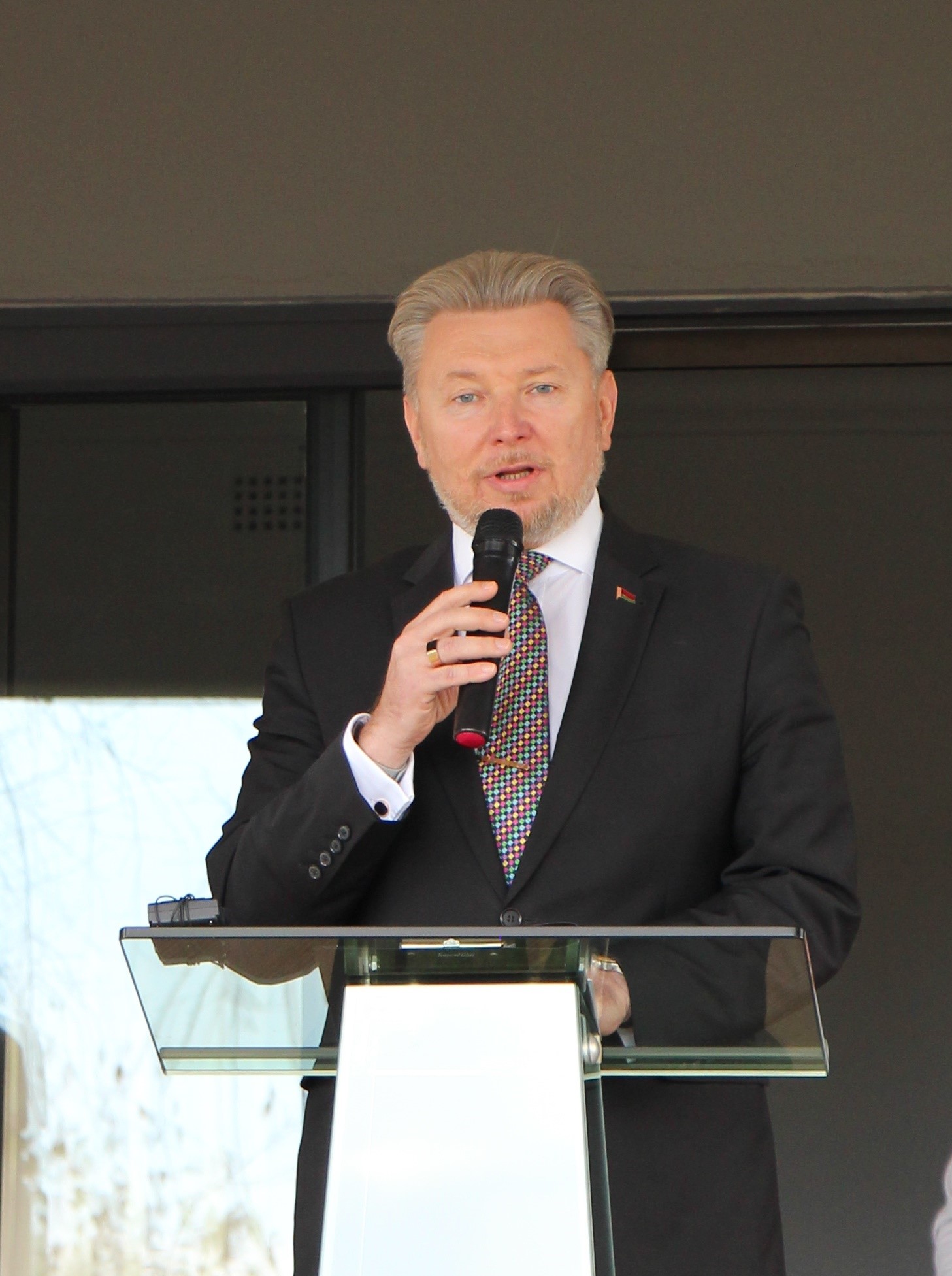
Leroy Dzenga
Senior Reporter
The advent of the Second Republic saw the Government set out on a path to engage new partners and re-engage former allies in mutually beneficial political, economic and social relations.
Guided by economic diplomacy, Zimbabwe’s foreign policy is premised on the philosophy of being a friend to all and an enemy to none.
Among the countries that have embraced Zimbabwe is Belarus.
In January 2019, President Mnangagwa signed eight agreements with his Belarusian counterpart, President Alexander Lukashenko, which have already begun to have a positive impact on the economy.
In essence, Belarus is a renowned manufacturer of heavy-duty equipment, tractors, semi-conductors and microchips, among critical industrial equipment.
It is, therefore, a handy ally as the country embarks on a modernisation and industrialisation drive that is meant to achieve an upper middle-income economy within the next eight years.
Last week’s visit by a high-level delegation led by Belarusian Deputy Prime Minister (DPM) Piotr Parkhomchik symbolises deepening relations between Harare and Minsk.
The delegation held a series of meetings with President Mnangagwa, Cabinet ministers, captains of industry and other high-ranking officials.
Speaking at a dinner hosted for him on October 12 in Harare, DPM Parkhomchik said: “The first time I was in Zimbabwe was in 2002. During these 20 years, I have noted how your country has developed. There is desire for development and I am happy that Belarus is playing an active role in assisting Zimbabwe realise its aspirations,” said DPM Parkhomchik.
Over the past four years, he said, trade volumes between the two countries have grown four-fold, with scope for further progress.
Belarus has been a major supplier of agricultural equipment that is critically needed to improve both farm production and productivity.
One of the flagship areas has been farm mechanisation, where Belarus has become a major supplier of agricultural equipment. The scheme is divided into three phases.
“The first phase was finalised by 2020, when we supplied 850 different kinds of equipment. These were tractors, combine harvesters, implements for trucks and tractors,” added DPM Parkhomchik.
The third phase is set to be finalised by year-end.
“We will supply 1 500 different kinds of agricultural equipment. We have reached agreements to continue this cooperation and increase our partnerships through the third phase.
“We are planning to bring twice as much equipment than we did in the second phase.”
Owing to its mechanisation drive, the country increased its combine-harvesting capacity by more than 100 000 hectares during the ongoing winter wheat harvesting season, in which it is expecting a record harvest of more than 380 000 tonnes of the cereal.
In addition to agricultural equipment, 131 fire tenders are also expected from the Eurasian country.
The equipment comes with technical training on how to use, operate and maintain it.
Support from Belarus has also been telling in mining, where equipment sourced for Hwange Colliery Company saw production progressively increase from 50 000 tonnes to 250 000 tonnes of coal per month.
The Zimbabwe Mining Development Corporation is currently producing 400 000 carats per month, and Belarus has played a part in accomplishing that feat.
Timber concern Allied Timbers has benefitted as well through machinery worth US$13 million.
Public transport system
While Zimbabwe has been buying buses from Belarus to establish a reliable and efficient mass public transport system, the two parties are in the process of setting up a bus assembly plant.
“We are finalising a contract that will see Zimbabwe have a bus assembly plant,” confirmed DPM Parkhomchik last week.
But these major projects are considered just the beginning of fruitful long-term relations.
President Lukashenko is expected in Zimbabwe in December for a State visit, setting the stage for Harare and Minsk to explore further areas of cooperation.
On its part, Belarus has since expressed interest in the country’s tobacco and cotton.
Acting Minister of Foreign Affairs and International Trade Dr Jenfan Muswere said “the solid relationship between Zimbabwe and Belarus is because of the relationship between our two Heads of State”.
“The envisaged visit by President Lukashenko will deepen the already strong ties,” he added.
“Our legal experts are going to expedite all the necessary paperwork so that we build on the momentum made in these discussions.”
Official trade statistics indicate that Zimbabwe’s exports to Belarus have been rising.
In 2020, the country imported goods worth US$30,8 million but did not make any notable exports to its trade partner. But in 2021, exports grew to US$2,5 million, while imports stood at US$23 million.
There is optimism trade volumes will continue growing.
With Vision 2030 being heavily reliant on industrialisation and mechanisation of agriculture, as well as mining, Zimbabwe will no doubt find its blossoming relations with Belarus productive.



 Online Reporter