Online Reporter
Wallace Ruzvidzo in New York, USA
ZIMBABWE hogged the limelight at the United Nations on Thursday, with Vice-President of the 81st Session of the UN General Assembly and Permanent Representative of Zimbabwe to the United Nations, Ambassador Taonga Mushayavanhu, opening the third day of the General Debate, while President Mnangagwa used the high-profile platform to pitch the country’s AI-driven, mineral beneficiation and industrialisation agenda.
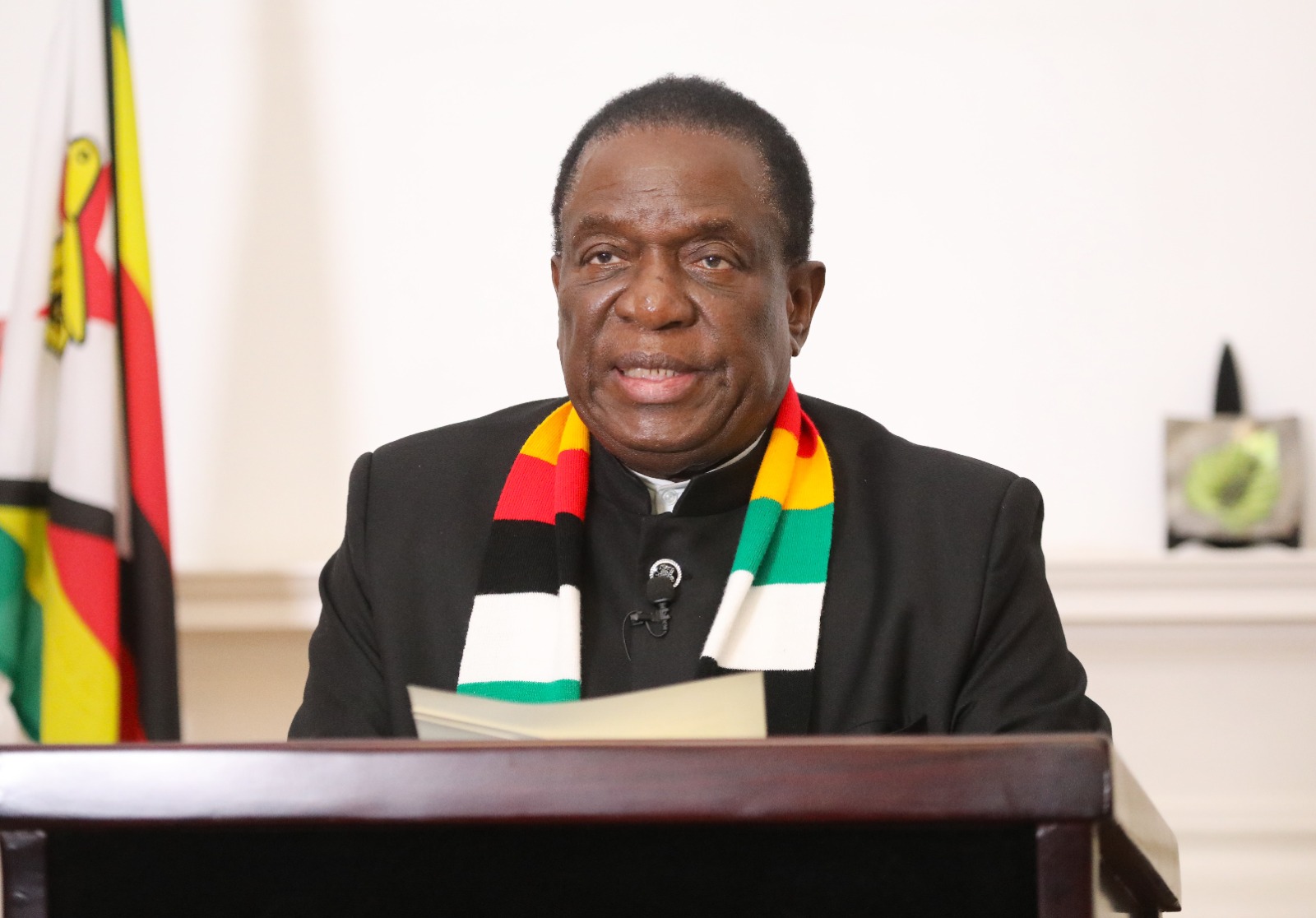
Addressing the 81st Session of the United Nations General Assembly (UNGA81) here, President Mnangagwa said Zimbabwe was positioning itself to harness emerging technologies and its vast natural resource endowments to accelerate industrialisation and inclusive development.
He said artificial intelligence was central to the country’s industrialisation agenda, while critical minerals were being leveraged for value addition and beneficiation rather than the export of raw minerals.
“Zimbabwe’s National Artificial Intelligence Strategy 2026-2030 promotes human-centred, ethical and responsible innovation.
“Artificial intelligence must narrow development gaps, while its military use, including in nuclear command and control, must remain subject to human judgement, accountability and international law.
“Regrettably, however, my country’s national development initiatives have continued to be undermined by unilateral coercive measures imposed by some Western countries.
“We call for their immediate and unconditional removal. I reiterate that “Zimbabwe is a friend to all and an enemy to none”,” said President Mnangagwa.
The President’s technology message dovetailed with Zimbabwe’s broader push to transform its resource endowment into higher-value economic activity, particularly in the critical minerals sector.
Zimbabwe has more than 40 critical and rare earth minerals and, President Mnangagwa said, the country had made bold decisions towards a mutually beneficial extractive industry.
“This has seen us dispatch the first export of locally produced lithium sulphate during the second quarter of the year, demonstrating that retaining value at the source is possible for shared prosperity,” said President Mnangagwa.
He said critical minerals must become a foundation for inclusive development, with value addition and beneficiation at source, alongside the development of regional value chains, being highly prioritised.
President Mnangagwa said Zimbabwe also welcomed the recommendations of the Secretary-General’s Panel on Critical Energy Transition Minerals and the Country Support Mechanism.
The President said the mineral beneficiation drive was being complemented by stronger linkages between mining and agriculture, which were helping drive growth in the manufacturing sector towards Vision 2030.
“Zimbabwe is continuously strengthening its capacity to mobilise domestic resources, enhance public financial management, and foster a favourable environment for productive investment.
“Under our national Vision 2030, we are strengthening the important linkage between mining and agriculture, which is driving growth in Zimbabwe’s manufacturing sector.
“Bold reforms and other macroeconomic policies have resulted in a three-fold growth in our GDP since 2017. Zimbabwe is indeed “Open for Business”,” he said.
The President said Government was also pursuing food and nutrition security and climate-smart
agriculture through rural industrialisation and increased investment in agro-processing.
“Through our rural industrialisation agenda and the “Invest Rural” policy, we are directing investment towards rural infrastructure, manufacturing hubs and agro-processing facilities.
“More women and youth continue to enter value chain industries for both our local and regional markets.
“As droughts, floods and declining productivity threaten water, food and energy security, developed countries are called upon to honour their climate-finance commitments, in line with common but differentiated responsibilities,” he said.
President Mnangagwa said access to affordable development finance remained critical to enabling developing countries to pursue their economic transformation ambitions.
“Peace cannot endure without development. With less than four years to implement the 2030 Agenda, only 36 percent of the Sustainable Development Goals are on track or showing moderate progress, while developing countries face an annual financing gap exceeding US$4 trillion.
“The Sevilla Commitment must now be implemented through greater affordable, long-term and concessional finance; timely, development-oriented debt treatment; and more effective channelling of Special Drawing Rights.
“Development cannot flourish when its financing is prohibitively expensive. “Reform must decisively address Africa’s excessive risk premiums and borrowing costs,” said the President.
He said developing countries also needed a stronger voice in global financial institutions, while measures to curb illicit financial flows and tax abuse and secure fair returns from natural resources remained critical.
The economic and technology message formed the core of President Mnangagwa’s address, as he also turned to Zimbabwe’s forthcoming role on the United Nations Security Council (UNSC) and the country’s wider contribution to global peace and security.
Zimbabwe was elected to the UNSC for the 2027-2028 term, with President Mnangagwa pledging that the country would use the position to promote peace and development while amplifying the voice of developing countries in global decision-making.
“Zimbabwe is grateful for the confidence placed in us through our election to the Security Council for the 2027-2028 term.
“My country will assume this responsibility in January 2027 with humility, independence, and a readiness to serve, guided by our foreign policy of being “a friend to all and an enemy to none”,: said the President.
President Mnangagwa said Zimbabwe’s Security Council tenure would focus on preventive diplomacy, mediation and peaceful dispute resolution; stronger cooperation between the UN and regional organisations; using natural resources and heritage to advance industrialisation and the green agenda; and ensuring women and young people shape peace-building from the outset.
“Firstly, the promotion of preventive diplomacy, mediation and peaceful dispute resolution, while tackling the underlying causes of insecurity.
“Secondly, we shall advocate for the strengthening of cooperation between the United Nations and regional organisations, such as the African union and its Peace and Security Council. In this respect, we call for the full implementation of Resolution 2719 to ensure predictable, adequate and sustainable financing for authorised African Union-led peace support operations.
“Thirdly, our nation believes that our rich heritage and natural resource advance endowments must advance industrialisation, modernisation and the green agenda for the prosperity of all and not finance conflict. “As such, Zimbabwe shall support Africa’s Silencing the Guns Agenda and stronger action against terrorism, organised crime, illicit arms flows and illegal resource trafficking.
“Finally, Women and young people must shape peace from the outset. The support of Zimbabwe will also be extended to the Women and Youth Peace and Security agendas,” he said.
Restoring confidence in collective security, said President Mnangagwa, required reforms to the Security Council to reflect contemporary geopolitical realities.
He said Africa’s long-standing position, as outlined in the Ezulwini Consensus and Sirte Declaration, should be granted.
“Africa is united, sovereign and independent. “Africa is rising; the horse and rider mentality has no place in contemporary international discourse,” he said.
President Mnangagwa also called for a multilateral system anchored on equal application of international law and sovereign equality.
“Trust will be restored when conflicts are prevented, international law is applied equally, development commitments are fulfilled, and all nations are fairly represented in global institutions,” he said.
President Mnangagwa said Zimbabwe would approach its Security Council tenure as a responsibility to the international community rather than a diplomatic badge.
“We will serve with balance and integrity, defend the sovereign equality of States, advance Africa’s priorities, and work constructively with all regions.
“Let this 81st Session be recorded as the session that closed the gap between the promises of the Charter and the realities of daily life.
“Zimbabwe is ready to play its part in building the future we all want,” he said.
Several Cabinet Ministers and other senior Government officials attended the UNGA81 General Debate, held under the theme, “Restoring trust, managing transformation: A United Nations that delivers for all.”