admin
admin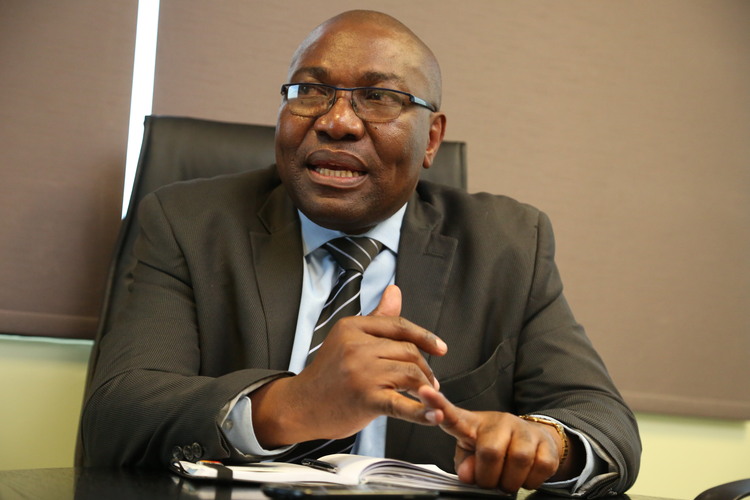
LAST week, the National Social Security Authority launched the National Building Society (NBS). In a market where the shortage of long-term investment funds has seriously affected construction, a building society that is controlled by a statutory body that holds long-term social security funds is widely expected to make a difference.
The Sunday Mail Business Reporter Africa Moyo last week sat down with NBS managing director Mr Ken Chitando to get some insights on their game plan.
Q: Does the NBS have sufficient capital to underwrite the projects it plans to undertake?
A: We are fully capitalised in terms of Reserve Bank requirements; that’s why we have the licence to operate because they have ensured that we are adequately capitalised as a building society.
Q: Immediately after NBS was launched, there was a lot of interest from the market. How many bank accounts have been opened so far?
A: There is a lot of interest which has been created both from the media and also from the (advertising) . . . So that has created so much interest and people want to know the types of accounts that they can open. They want to know the loans that they can access and so forth.
So there has been quite a lot of interest and at this point in time I may not be able to give exact numbers. But the interest has been immense.
Q: At 9,5 percent interest on mortgage for first-time home owners, is it a fair rate in your view given that some people could be paying monthly instalments of US$500?
A: How did you get the US$500 repayment? What is the basis of the US$500 repayment? At approximately 10 percent, if you are getting US$20 000, you will be paying plus or minus US$200 per month.
Okay, that’s for US$20 000. So, if you get about US$40 000 you will be, approximately, paying US$400. So, the amount you get is a reflection of your affordability.
So the more the amount you can afford, the higher the instalment.
Obviously we are operating within the prescribed debt servicing ratios which don’t exceed 40 percent of your salary.
Q: What is the interest rate for those who are not first-time home buyers
A: What we are doing is that we have a primary focus to assist people that have hitherto not been able to access funding. So we believe that our primary focus is the lower end of the market and, therefore, we will give preferential treatment to them; firstly, in terms of pricing, but also in terms of access to the funding itself.
We have got to make sure that those people that have not been privileged to access loans before are the ones that benefit most.
Q: What measures are in place to ensure first-time home buyers are the ones that benefit from the mortgages and the project does not end up being dominated by those with financial muscle?
A: For starters we will work with local councils. So, we will be in a position where we can ascertain a person’s property portfolio and that we guard against the rich profiteering from the limited stocks that we will have.
Q: Are you also going to cater for SMEs?
A: Well, we have to be sensitive to their circumstances. Obviously as we get to understand our clients, know their patterns, their trends and we know if they are temporary or permanent in that situation. So we work with them to see how best we can navigate through their challenges.
Q: Let’s say one opens an account with NBS today, how long will it take to qualify for mortgage financing?
A: We have to ensure that we adhere to sound credit lending practices. So what we would need to do first and foremost, is to ensure that a person has a steady income. If they are employed, we would need the salary to come through the building society for a period not less than three months.
If they are working, self-employed, similarly, we would want to see proof of his earnings for a period of three months. And the credit vetting would go beyond just getting the salary in, we also want to understand the company that a person works for; whether it’s a sound company that can continue to pay salaries.
Q: It might seem as if a lot of people might be excluded from the scheme through that criteria since many companies are not performing satisfactorily. How then do you achieve your primary objective of assisting the historically disadvantaged groups to get housing?
A: Well, I guess you have to appreciate that we are using depositors’ funds, we are using public funds and we have got to be prudent in the way that we approach it. We have got to satisfy at the points that we are extending credit that there is capacity to repay the credit because we need, at the end of the day, to have the loans being repaid so that we can create a pool from which further loans can be created.
Q: Of late, there has been a tendency by banks to extend loans to individuals and not productive sectors. What will be NBS’s stance on loans?
A: As an institution we will not be undertaking corporate loans at this point in time. It’s a market that we have stayed away from because our primary focus is on the individual client segment.
Q: What strategies will you use to ensure that most of the loans that will be advanced by NBS will not under-perform?
A: Well, non-performing loans, it’s an issue: one, of the economy; two, of the cost of money.
So what we have done is firstly, I think we have lowered down (interest rates) and therefore lowered the burden of the cost of money so we feel that it is a lever that will enable us to manage bad loans. Secondly, there is a Credit Reference Bureau that is coming into effect fairly shortly.
What that would do is that it will enable us to have a lot more information on applicants so we can accurately ascertain the capacity of an individual to repay whatever amounts they are looking to borrow.
And thirdly, by and large, we would like to work with schemes; we would like to work with entities where we can see that there is continued sustainable employment.
That’s going to be the third cut but that does not mean we will not look at the man in the street; we will certainly do so but guided by certain aids that enable us to accurately assess the credit worthiness of our applicants. So in respect of loans, I think the interest rates will come in lower than 18 percent.



 Online Reporter