Chronicle Editor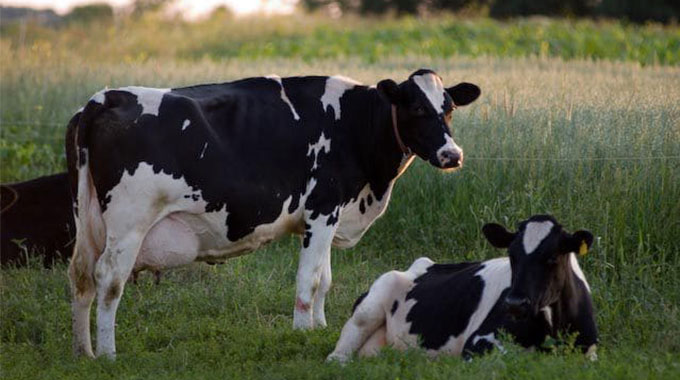
Senior Business Reporter
THE national dairy herd grew by 11,3 percent from 47 845 in 2021 to 53 250 in 2022 as Zimbabwe thrives to boost its milk output in line with the import substitution drive.
The dairy industry plays a critical role in the Zimbabwean economy through its positive exploitation of the forward and backward linkages between the agricultural and manufacturing sectors.
Value chain players in the sector include input suppliers, milk producers, transporters, processors, wholesalers, retailers, and regulators, among other service providers.
The growth in the number of dairy cattle has resulted in a steady increase in annual milk production, a Crop, Livestock and Fisheries Assessment Report (Pre-harvest) CLAFA-1 2022/23 Summer Season report indicates.
“Total dairy herd continued in a positive trend recording an 11,3 percent growth from 47 845 in 2021 to 53 250 dairy animals in 2022.
“This has resulted in a steady increase in annual milk production. The milking herd grew to 35 100 cows (milking and dry cows) producing 91,4 million litres of milk,” reads part of the report.
It further notes that the number of registered dairy entities increased from 238 in 2021 to 244 in 2022. In 2022, milk production levels opened the year at 7,3 million litres, a 14 percent increase from the corresponding period of 6,4 million litres in 2021.
Despite a slight dip in February to 6,7 million litres, production peaked and closed December at 8,3 million litres.
There are 36 smallholder milk collection centres (MCCs) around the country of which 24 are operational, four are under construction and eight have been closed because of low milk volumes.
The assessment revealed that the good rain season has increased river flow rates, water levels and reservoirs. That has resulted in good and improved availability of graze.
“Drinking water for livestock was sufficient at the time of assessment with trekking distance for livestock in most areas being less than 1km. Poor soil conservation practices continue to affect the water-holding capacity of water sources as a result of siltation and this will affect livestock as the season progresses and water sources quickly get depleted,” reads the report.
On livestock dipping situations, it indicates that cattle dipping has greatly improved with all farmers sampled reporting that they are dipping their cattle. It noted that 68 percent of the wards reported dipping to be adequate to cater for dipping at least once per week while 32 percent reported inadequate dipping.
Regular cattle dipping has greatly reduced the number of tick-borne diseases, especially Theileriosis (January disease). However, small ruminant dipping (sheep and goats) is not a common practice by many farmers.
Cattle mortality decreased by three percent from nine percent in 2021 to six percent in 2022. Different animal diseases were the major causes of beef cattle mortalities accounting for 83 percent of deaths from sampled beef cattle owners.
“The decreased cattle mortalities are attributed to improved animal health management especially control of tick-borne diseases in hotspot areas with improved dipping regime and introduction of the intensive 5-5-4 dipping cycle,” reads the report.



 Online Reporter