Online Reporter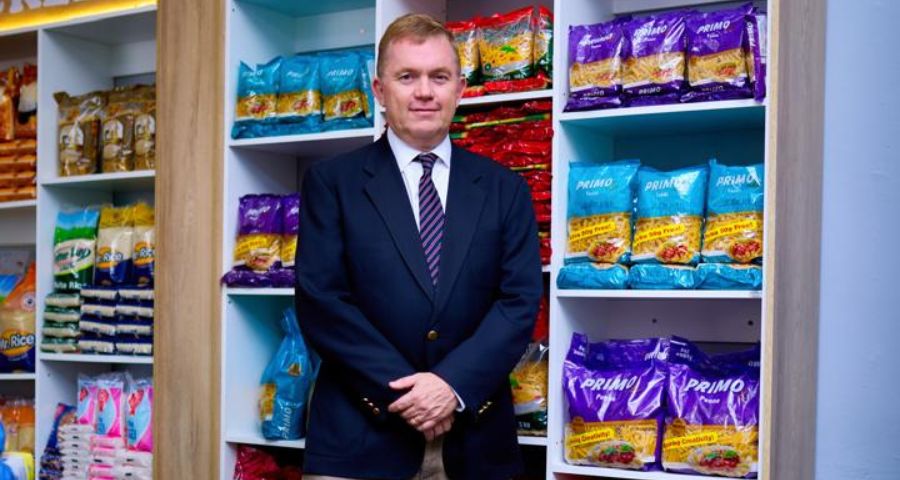
Martin Kadzere
National Foods Ltd has delivered a major vote of confidence in Zimbabwe’s increasingly predictable economic environment after announcing multi-million-dollar investments earmarked for the near future.
The fresh capital deployment follows a highly successful US$22,5 million expansion into value-added portfolios that has already achieved near-maximum capacity utilisation in just over a year.
Speaking to journalists on Thursday following a media tour of the company’s extensive processing facilities in the Workington industrial area, chief executive Mr Mike Lashbrook revealed that the company’s aggressive capital expenditure was a direct response to a robust domestic economic trajectory, strengthening consumer purchasing power and predictable policy frameworks.
The tour served as a strategic curtain-raiser for the upcoming Zimbabwe Industrialisation Conference and Expo (ZICE 2026), scheduled to take place in Harare from July 23–24.
The event is aimed at highlighting the private sector’s front-facing role in driving the country’s industrialisation and import-substitution agendas.
It is being organised by the Ministry of Industry and Commerce in partnership with regional think tank Africa Economic Development Strategies (AEDS) and national trade promotion body ZimTrade.
The validation mirrors positive sentiment from Delta Corporation, the country’s largest beverage maker, which also credited prevailing macroeconomic policies with unlocking new avenues for investment and industrial expansion.
Taken together, these sentiments represent a significant vote of confidence from the heavyweights of Zimbabwe’s private sector.
Mr Lashbrook noted the massive capital outlays were a calculated vote of confidence in the underlying fundamentals of the economy, which continues to be anchored by strong performances in the mining and agricultural sectors as well as a stable local currency, Zimbabwe Gold (ZiG).
“We are very positive about what we see. The economy is in a robust state and we are experiencing strong growth that is directly feeding into consumer spending power,” Mr Lashbrook said.
“We don’t see that stopping. These are big, long-term investments for the future and we wouldn’t be committing this scale of capital if we didn’t have total confidence in local economic policies and the resilience of our consumers.”
At the centre of the next investment phase is a US$25 million state-of-the-art flour mill.
Given the highly technical nature of fabricating, shipping, and installing the equipment, the project is structured over a two-year horizon, Mr Lashbrook explained.
Additionally, within the next few months, the agro-processing giant expects to finalise research and greenlight a second biscuit manufacturing line to meet growing local retail demand.
These planned investments build upon the group’s highly successful US$22,5 million investment into three new high-margin categories: pasta, biscuits and breakfast cereals.
Commissioned by President Mnangagwa last year, the facilities have rapidly transformed the dynamics of the local fast-moving consumer goods market.
In just over 12 months, these lines have successfully replaced vast volumes of previously imported processed foods, saving foreign currency for the country.
While the bulk of the company’s basket remains dominated by high-volume traditional commodities such as industrial flour, rice, maize meal, salt and stockfeeds, the newly established value-added segment is expanding aggressively.
“The value-add section is growing quite robustly and outgrowing our traditional categories. While it is currently a modest portion of our overall basket, we expect the balance of our revenue mix to shift significantly over the next three to four years,” said Mr Lashbrook.
With domestic demand firmly secured as the primary focus, NatFoods is preparing to target regional export markets.
“Our next phase is looking at the region seriously,” Mr Lashbrook noted.
“Because these new products carry higher margins compared to our traditional portfolio, we can comfortably look at export opportunities in the year ahead.
“In the future, exports will become a highly meaningful contributor to our top-line revenue.”
As part of its long-term operational sustainability plan, National Foods is progressively insulating its processing facilities from energy disruptions through an aggressive rollout of rooftop solar installations.
The group has already commissioned a 3-megawatt solar project at its Aspindale site.
Operationalised in August 2025, the plant successfully powers the entire industrial site during peak daylight hours.
Mr Lashbrook confirmed that engineers are currently installing a similar solar at the Workington facility, which is earmarked for commissioning later this year, with subsequent rollouts planned for all Harare and Bulawayo operations over the next 24 months.
Endorsing the upcoming conference and expo, Mr Lashbrook said:
“It’s a significant event to the extent that we are seeing very positive economic growth in our country now, alongside extensive developments in industry . . . to be able to gather, share notes and interact across all stakeholders – including Government and industry – (this) makes this a very worthwhile event.”