admin
admin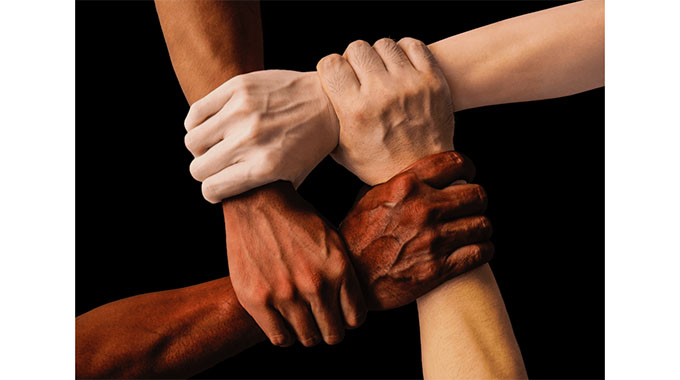
Today is Unity Day. This public holiday deserves to be treated seriously, both to commemorate what happened in 1987 when national unity was cemented and to make sure that we maintain our unity in its essentials, the fact we all Zimbabweans and have to live in the same country.
National unity does not mean we are some sort of walled off place where we all agree on everything. That would not only be wrong and impractical, but would also stifle our rights and would negate our creativity.
But it does mean that we recognise what essentially unites us as citizens of Zimbabwe. We start off with the symbols: one national flag and one national anthem, although we probably still need formal translations into all official languages, not just three, so we can celebrate our diversity within a single unity.
Then there is the Constitution, that basic law that we all helped draw up during 2012 and 2013 and approved in 2013, both in Parliament and through a referendum with huge majorities in both cases.
This near consensus was again important, since a Constitution should not be imposed by a bare majority in Parliament, or even a political deal like our first 1980 effort, but rather because the rights we have, and way we want to be governed, need general agreement.
That Constitution entrenches our sovereignty and democracy, and importantly entrenches our unity, since we are all citizens by right, not by favour, and we all share the sovereignty of Zimbabwe.
We all have the right to vote, at least once we have reached 18, for those who represent us.
That Constitution is the practical document that seals our unity. It creates our Parliament, our Government and our Judiciary, and so the way we run the country, the way we make law, the way we choose who we want to govern ourselves.
One critical point is that it also means we accept the results of applying the Constitution, and in particular giving legitimacy to those who win elections.
One important point in the unity driven by the Constitution is that everyone who is elected, as a councillor for a ward, a Member of the National Assembly for a constituency or a province, a Senator for a province, or the President for the whole country is then forbidden to be selective about who they represent in that ward, constituency, province or nation.
They cannot say, or act, as if they only represent those who chose them or voted for them, although the practicality is that a majority within each electoral division did this.
But once elected they have to treat everyone the same, and represent them all, equally and in unity, regardless of who might agree or disagree with what they do or say.
Voting is just a way to select these representatives at all levels, but once we vote we are back into the unity our Constitution demands and we are all equal citizens at all levels and entitled to the same services and the same treatment.
This is the practical unity we enjoy, and we need to ensure we maintain it and those who win the elections need to remember this, and act in accordance with this. It is only when we, or those we elect, forget this that we start moving off the rails.
At the top end, President Mnangagwa has gone to great lengths to ensure that the Government is everyone’s Government, regardless of whether they agree with the Government or voted for the Government.
His doctrine that no one and no place must be left behind, or that is even the possibility of someone or some place being left behind, reflects that determination to act out the unity we now enjoy, and turn all the symbols and the systems into something that is the norm.
This becomes important. Just because someone voted for someone else, or some area voted for someone else, does not mean that they should, or can, be left behind.
This is reflected in those practical programmes, to take one of the most expensive, the Gwayi-Shangani Dam and the pipeline to Bulawayo.
A lot of areas that the pipeline passes through, and the city where it ends up, did not give a majority vote to the President in the last election. But so what.
That was just the voting. He is still their President and they are entitled to hold him to his promises and to his duty. This is the sort of thing that unity means in practice as well as in theory.
We need to remember that unity does mean we all agree, or that we all speak the same language or go to the same church or support the same political party.
What it does mean is that we are all Zimbabweans and put Zimbabwe first.
But then we must all accept our diversity in so many ways and see that this united nation is made up of a rich fabric of diversity.
The many threads weave together to create that single cloth, and with so many threads the final cloth is something rather special.
We can, and must, debate and push forward our own views, since creating the Zimbabwe we want, in the way we want, is very important and it would be wrong to just leave it to someone else.
So we will often disagree, but again so what.
We have systems in place so that we can reach decisions and our Constitution creates the systems for doing this, and limits just how far we can push those disagreements.
The rest of our law, as statute law, common law and customary law, fleshes out the Constitution but nothing in this legal system can go beyond the Constitution or defy the Constitution.
So when, in unity, we agreed how we would settle our differences, or at least work out how to reach decisions, we then created the systems of how we do this, as a united nation.
National Unity Day commemorates all of this, as well as reminding us of just what happened when we forgot.
This it stresses that we need to keep moving forward as a united nation, and never forget that we can only move forward if we are a united nation, and that no one and no community is ever again left behind.



 Online Reporter