Chronicle Editor
Pathisa Nyathi
In the last article we saw how ZAPU, after the internal strife, picked the pieces, rebuilt the movement and ramped the war effort.
On the ZANU side, the same ramping was taking place. It was a situation that gave the West anxious moments against the background of the Cold War contestations. The real driver of events then and beyond was economic interests of the opposing global alliances, the Warsaw Pact bloc versus NATO. The independence of both Mozambique and Angola in 1975 changed the political permutations.
Between the alliances, the one between them, was bound to be outmanoeuvred. Whatever political developments took place after the reorganisation of ZAPU in exile, they ought to be analyzed, assessed and interpreted against the background of the stiff dog eat dog competition between the East and the West. Some players within the nationalist and liberation movement did so without full consciousness of what essentially was happening in the future-making corridors of power. It was a situation that was played unwittingly by proxies and would extend beyond independence in 1980.
The responses on both sides were quick in coming with the West having the upper hand, from the beginning to the end. Détente was ushered in when US Secretary of State Dr Henry Kissinger lurched into the political fray. The ramping war of liberation was to be curtailed. It must be realized that the advances were being effected by the two fighting wings in their separate and distinct existence, efforts and operations. The history of animosity between the two was well known. Efforts were soon instituted to bring the two movements together with the full knowledge and expectation that there would be tensions and contradictions that would apply brakes to the war effort exacerbate existing tensions and mistrust.

An experimental thrust of bringing the two movements together was instituted. The Zimbabwe People’s Army (ZIPA) was created in 1975 which brought together ZPRA and ZANLA, whose High Command was constituted through equal numbers, nine each, by the two fighting liberation movements. The new organisation was being constituted at a time when the Tongogara group was under incarceration in Zambia following the death, itself a Détente creation, of Herbert Chitepo the Chairman of ZANU. More importantly, Josiah Magama Tongogara’s sidelining and ultimate elimination and substitution were on the cards. As is well known, the new military arrangement faced a still birth. There were bloody clashes at both Mgagao and Morogoro which were deemed to be the two military training camps while incursions were going to use Mozambique as the spring board. The formation of ZIPA itself, coming hot on the heels of the death of Chitepo, raises eyebrows.
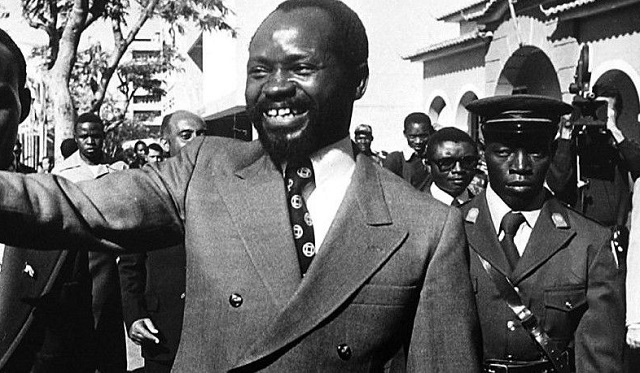
Significantly, the military arrangements were an imposition. One of the key architects was Mozambican President Samora Machel. He thought their own situation was going to work equally well in the Zimbabwean situation. The fighters in Mozambique moved from the bush straight to the offices. The OAU facilitated the new arrangements whose costs were high in human lives and political attitudes and animosities. The ZPRA cadres already in Mozambique faced hard times with some having to enter Rhodesia and travel through to Botswana and back to Zambia. Others found their way to the Tete Province and sneaked through the border back into Zambia. Others were killed, notably Tommy Ndebele, among others.
The process of elimination was also in progress. After Chitepo, it was JZ Moyo in 1977. In both cases, the deaths were capitalised on to cause strife within the political movements. It was perceived, in some quarters, as struggles within the struggle, quite some convenience that detracted attention away from the real political actors. In both cases once again, the deaths created a vacuum that ushered in another dimension in the unfolding deadly drama. No sooner had Chitepo died than Robert Mugabe moved out to Mozambique where he was followed and surrounded by many people of diverse interests and orientations.
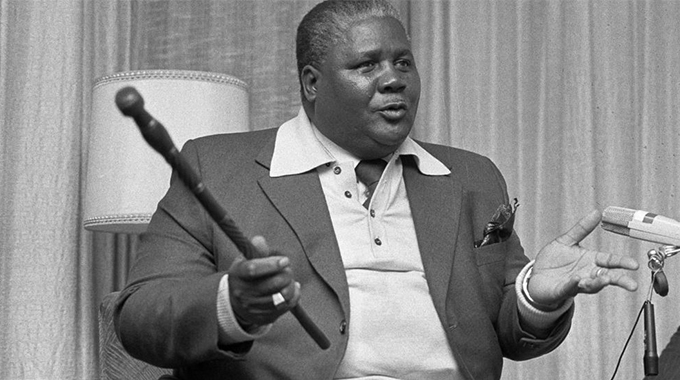
On the other side, Joshua Nkomo too went out to base himself in Lusaka and take charge of the struggle. He too, in comparable manner, brought with him a coterie of officials but, in his case, they were mostly fellow former detainees. In Mugabe’s case, it was a mix that included externals, probably being the more powerful component from 1977 when the conference that formalised Mugabe’s leadership of ZANU was held. Some of the externals were coming from universities in western countries and of course with others that were in incarceration with him inside Rhodesia.
Efforts to arrive at a negotiated resolution of the Rhodesian constitutional impasse were continued. In 1976 constitutional talks were held in Geneva. They yielded no positive results. A few more were held including the Malta Talks, again yielding no tangible results. In the minds of some guerrilla fighters the end to the struggle was going to be through outright military victory. No wonder, when the Lancaster House Talks and their successful conclusion were announced, there were cadres, at least on the ZAPU/ZPRA side, who abandoned everything when they felt it was all a sellout. They became totally disgruntled. That was even before going to assembly points. It was immense disappointment on their part.
By 1977 the number of volunteers availing themselves to the struggle had reached a threshold where some began to undergo regular army training in Luso and Boma in Angola. There were some more being trained at Mulungushi and Kohima for the officer cadets, in Zambia. It was part of the Turning Point Strategy. A Brigade was created that was going to be supported by Mig 17 jets, motorised and tank divisions for the final push. It was a strategy that remains to be critically analyzed and assessed whether it was going to succeed or not. It was some kind of daring to storm the heavens as Jeremy Brickhill puts it.
The question is whether the heavens were going to release the rains or brimstone.
However, the emphasis and thrust of this article is to focus the spotlight on changes that were instituted when detainees got to Zambia as part of a strategy to consolidate their hold on power by wrestling it from the allies of JZ Moyo who had since died in 1977. There was shifting to positions to accommodate new arrivals. The people who had held fort in Zambia , notably George Silundika and Edward Ndlovu, had their positions either altered or modified. For example, education was removed from Silundika. Willie Musarurwa took over Information and Publicity while Kotsho Dube replaced Saul Gwakuba Ndlovu as head of communications. Like many who were in Zambia from the 1960s, he was posted on a diplomatic mission as Party Representative.
Some might see the move as streamlining the Party and seeking to achieve more operational efficiency, others see it as consolidation of power by former detainees. The postings affected both civilian and military components. Related to and, as facilitation and implementation of the dilution of JZ Moyo influences, the Military Intelligence(MI) was abolished when all intelligence fell under a newly constituted National Security and Order(NSO) under the directorship of Dumiso Dabengwa. Tapson Nkomani (Gordon Munyanyi, the “Terror Man”) had been posted to Libya and succeeded briefly by Abel Mazinyane who himself was assigned elsewhere overseas.
The army was no longer screening persons intending to join the liberation struggle. Hitherto, officials from MI visited Nampundwe Transit Camp to weed out individuals being infiltrated by the Selous Scouts. The party was now more involved in that process with clearance being done by the Party at branch level. Some suspected persons who had been identified, and detained at Mboroma, were released and taken back to Rhodesia during one of the raids Rhodesians into Zambia.
In this article there is reference to the adoption of the Turning Point Strategy which was premised on the regular army as the king pin. A brigade with no less than four battalions was already constituted and ready to march on Rhodesia. However, what we wish to point out here is that the existence of the regular army and infiltration of some of its units, particularly towards the end of the war in late 1978 and 1979, demonstrated the existence and effects of two divergent and mutually conflicting military traditions. Regular training in Zambia was conducted by Zambian officers. Missing from the training curriculum was the Marxist-Leninist ideology that had a strong presence in the training curriculum for guerrillas.
British military traditions were being followed in Mulungushi and Kohima. At the time of integration to create the new Zimbabwe National Army(ZMA) these officers had an upper hand over guerrilla-trained cadres being integrated into the new army. For example, the first battalion to be integrated was commanded by Smile Madubeko Moyo, himself a product of regular training in Zambia.
The manner of marching and saluting were in line with British traditions. The regular army in Angola, at both Luso and Boma, were being trained by Cubans under the guidance and supervision of the Soviets. There were contradictions within the regular army itself and between both the regular-trained cadres and guerrilla-trained cadres. This effectively had the result of bringing closer home, within ZAPU’s fighting forces, the conflicting and contradictory dimensions of the Cold War. This is another way of saying ZAPU domesticated the Cold War.
The Ideological Concept and Political Program that was given emphasis to when ZAPU reorganized was thrown overboard. Thereafter, emphasis was on military striking capability by individuals who were not necessarily armed politicians. A regular army does not march on ideology. Rather, it is composed of individuals who are career soldiers under instructions of a political authority. It is not the same when it comes to a guerrilla who will ask why, when instructed to jump. A career soldier does not enjoy the liberty to ask, other than to ask, how high?
The changes that were taking place in Zambia and within the arena of ideology, were felt in the operational fields within Rhodesia. A regular army commander does not see himself as a leader among equals. He is above his soldiers and his needs are attended to by a batman. The changes in thrust and ideology instituted following the takeover by nationalists have had a lasting and telling legacy and palpable tensions and contradictions to this day. There are some who hold the view that the struggle was lost at the time when Nikita Mangena died and the influences of JZ Moyo were negated. A friend always asks what Mangena meant when he was dying, “Kanti ngifelani?” If indeed he asked that question, the answer lies in the complex maze and jigsaw puzzle of political intrigues and shenanigans he probably did not fully comprehend.
The Soviet Union sensed the changes that were taking place and were beginning to have serious doubts about the direction and clarity of ZAPU and, from then on, they began to accommodate ZANU something which they had not been doing before. Many other countries supporting the struggle were becoming ambivalent. The Soviets were the ultimate losers, so was ZAPU and ZPRA. However, the final scene in the final act of the scintillating and captivating drama lay beyond independence.


 Online Reporter