Chronicle Editor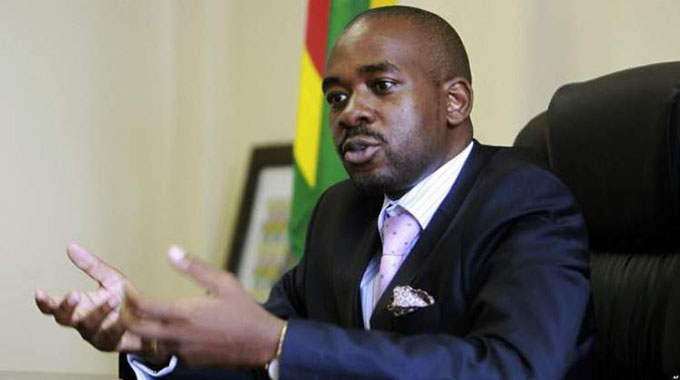
Marshall Rufura Ndlela, [email protected]
A fundamental challenge confronting Zimbabwe’s opposition lies in its struggle to maintain consistency in its approach. Frequently, political parties have shifted their stances for reasons of convenience rather than principled beliefs. This inconsistency corrodes public trust in the opposition’s capacity to offer a viable alternative to the ruling party.
Moreover, instances of double standards in both actions and rhetoric further erode the opposition’s credibility, leaving a substantial portion of the Zimbabwean population skeptical about their intentions and their commitment to the foundational principles of democracy.
Compounding these challenges are weak organisational structures that plague the opposition’s effectiveness. The credibility of any political entity relies heavily on well-structured frameworks capable of engaging citizens effectively, articulating coherent policies, and ensuring seamless functioning of party mechanisms. Regrettably, Zimbabwe’s opposition has grappled with establishing robust organisational systems, giving rise to internal conflicts, factionalism, and a consequent inability to present a unified front against the ruling party, Zanu-PF. This disarray has ultimately impeded their ability to amass widespread support from the citizenry.
Zooming in on the leadership of Mr Nelson Chamisa, the figurehead of the opposition Citizens Coalition for Change (CCC), criticisms have surfaced regarding various aspects of his leadership style. Accusations of endorsing incitement to violence and his perceived failure in orchestrating peaceful protests have sparked concerns about his dedication to the principle of non-violent political engagement. Such actions run the risk of alienating potential supporters who are vested in a stable political environment.
Further challenging the democratic process is Mr Chamisa’s outright rejection of election results, coupled with his appeals for international intervention to organise fresh elections. While challenging election outcomes is a legitimate facet of democratic discourse, the situation takes a problematic turn when it undermines established national institutions, laws, and the very sovereignty of the nation. Zimbabwe’s journey towards democratic maturity hinges on a commitment to upholding the rule of law and respecting established institutions that maintain the democratic fabric of the nation.
These challenges bear significant implications for Zimbabwe’s democracy and overall stability. The fragmentation within the opposition, coupled with its internal disarray, has compromised its effectiveness as a legitimate counterbalance to the ruling party’s authority. This weakened opposition not only disrupts the democratic process but also raises grave concerns about political stability and effective governance. The absence of a robust alternative can breed voter apathy, corroding citizens’ faith in the political system at large.
While examining opposition leadership’s role in other nations, Venezuela’s political turmoil serves as a pertinent example of how opposition actions can inadvertently contribute to destabilisation. In Venezuela, the political crisis has been further exacerbated by the actions of opposition leaders. While the opposition undoubtedly plays a crucial role in any democracy, instances of unrest, street protests, and even violence following disputed election results have collectively contributed to the destabilisation of the nation. The divisions within the opposition itself have rendered it incapable of presenting a united front, often leading to a lack of coherence in challenging the ruling party. This internal discord has weakened its overall effectiveness.
A striking characteristic of opposition leaders’ actions in various instances, including those in Venezuela, is the tendency to call for international intervention. Such appeals, while motivated by the desire to challenge existing power structures, can inadvertently lead to clashes and uncertainty, directly impacting the nation’s stability and governance. Zimbabwe is at the mercy of illegal sanctions thanks to the opposition. These actions underscore the complex dynamics in which opposition leaders find themselves, as their efforts to challenge power can sometimes unknowingly contribute to destructive dynamics and political instability.

Drawing parallels, the Orange Revolution (2004) in Ukraine serves as a vivid example of opposition leaders rallying against election results amid allegations of fraud. The intention behind this movement was to usher in democratic change; however, the extended protests and subsequent political deadlock created an atmosphere of uncertainty, inevitably affecting the nation’s economic stability and progress. Thailand, on the other hand, experienced a series of protests led by opposition groups advocating for political reform. Though initially peaceful, some of these protests escalated into violent clashes with security forces, perpetuating a cycle of instability and disruption.
Similarly, Kenya faced a wave of post-election violence in 2007 after opposition leaders called for protests against alleged electoral fraud. Unfortunately, these protests devolved into widespread violence, leading to ethnic tensions, destruction, and tragic loss of lives. Lebanon’s political landscape is characterised by numerous opposition groups challenging the ruling coalition, resulting in fragmentation that has paralysed the political process and left the nation in a constant state of uncertainty.
Lastly, the Rose Revolution in Georgia (2003), while successful in overthrowing a corrupt government, encountered challenges in the aftermath. Internal infighting among opposition leaders and accusations of authoritarian tendencies within their ranks led to unforeseen political instability. In Egypt, the Arab Spring movement brought a glimmer of hope for democratic transformation; however, the removal of the ruling regime led to a vacuum of power, escalating internal conflicts among opposition factions and perpetuating ongoing instability.
Collectively, these examples shed light on the intricate dynamics that opposition leadership can introduce to a nation’s political landscape. While opposition is a cornerstone of democratic societies, the actions of opposition leaders, driven by the desire to challenge power, can inadvertently generate destabilising consequences. This underscores the delicate balance that opposition leaders must strike in their pursuit of change, taking into consideration the potential repercussions their actions may trigger within their respective nations.
In a nutshell, the struggles faced by Zimbabwe’s opposition in forging credibility, fairness, and consistency are intricate and wide-ranging, with ramifications that extend deeply into the nation’s democratic trajectory. Constructing a credible and potent opposition necessitates a steadfast commitment to democratic values, coupled with transparency and an unwavering focus on the well-being and interests of the populace. It is through these concerted efforts that Zimbabwe’s opposition parties can aspire to foster a political landscape that is both accountable and democratic, thereby serving the diverse needs of the nation’s citizens.
Marshall Ndlela is a Zimbabwean based in South Africa. He is a holder of a Master’s Degree in Finance and Accounting from the University of Chichester, England. He can be contacted on [email protected].



 derick.khumalo