Chronicle Editor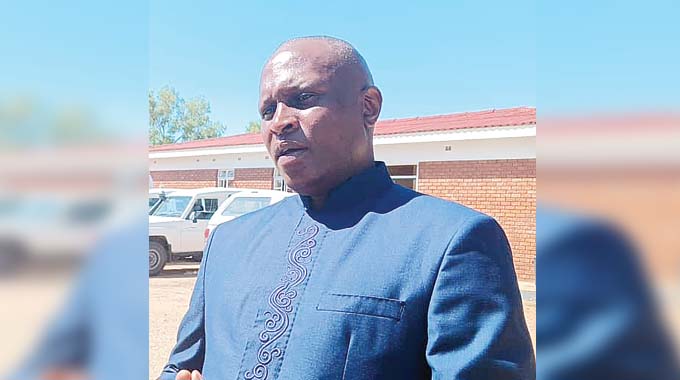
Robin Muchetu, Senior Reporter
ZIMBABWE has launched its Neglected Tropical Diseases Master Plan (2023-2027) which is aimed at ensuring the complete elimination of the four problematic diseases that keep resurfacing over periods of time.
The Master Plan outlines the Ministry of Health and Child Care’s strategy to tackle lymphatic filariasis (elephantiasis), intestinal worms such as tapeworms and hookworms, bilharzia and blinding trachoma.
Other NTDs of importance in Zimbabwe are sleeping sickness, rabies, leprosy, scabies and taeniasis.
NTDs have over the years received limited funding and also coverage from various media platforms making them get less attention while they pose a significant health risk.
Speaking during the launch of the Master Plan in Bulawayo, Deputy Minister of Health and Child Care, Sleiman Kwidini said it will be used by the Ministry to deal with the diseases and put into practice its provisions to eliminate the diseases.
“NTDs affect millions of people worldwide, disproportionately affecting the most vulnerable, remote and hard to reach populations. Here in Zimbabwe, it is not only threatening individual lives but also hinders economic development and exacerbates the chain of poverty.
“Our commitment to eliminate NTDs is not just a health imperative but a social and economic right. This is evidenced by the great strides being made by the mass treatment of affected populations and strategic interventions being carried out,” said Deputy Minister Kwidini.
The Deputy Minister said a multi-faceted approach is required to ensure these diseases are eradicated, with focusing on prevention, treatment, research and community engagement being key.
He revealed that the ministry has made tremendous strides in working with the National Institute of Research.
“Zimbabwe has offered over 49 million for the treatments against bilharzia and intestinal worms for trachoma. The NTD programme with support from Sight Savers has conducted 7 000 eye surgeries in averting blindness to the most vulnerable people in our society,” he said.
Sight Savers has been supporting blinding Trachoma interventions since 2014 saying they have treated over four million patients in endemic areas and various surgeries have taken place in the country to correct the effects of blinding trachoma.
Various partners like World Vision, Higher Life Foundation, Sight Savers, WHO, and Unicef have also supported the Government to eliminate NTDs through the development of the Master Plan.
The Deputy Minister said the inputs of development partners dovetails with calls by the President, of living no one and no place behind as the country moves towards attaining Vision 2030 by availing universal health coverage.
Speaking at the launch, National Institute of Health Research director, Professor Nicholas Midzi said Zimbabwe has been able to conduct research to establish the distribution of NTDs that are specified by WHO for elimination as a public health problem namely schistosomiasis (bilharzia), blinding trachoma as well as elephantiasis.
“For trachoma we have been able to map the whole country, showing the distribution of the districts that were found to be endemic for the blinding disease in which we implemented mass drug administration of infected populations.
“We did map in 59 districts and 31 were declared endemic and we have been able to treat the people informed by results from the mapping exercise. We are moving to impact assessment to assess the effects of the mass drug administration,” said Prof Midzi.
Another reassessment survey was conducted in 2021 following the advent of Covid-19 and that saw the suspension of all mass drug administration programmes as all resources were directed to containing the pandemic.
In 2021 following the suspension of the mass drug administration due to Covid-19 there was a slight increase of the prevalence of Bilharzia from about 8 percent to 10,2 percent.
“This year we however, manage to do the mass drug administration which was informed by the new mathematical modelling where mathematics is used to predict the spread of the disease in the community.
“We have been able to predict the prevalence of bilharzia at ward level as is now recommended by WHO that intervention strategies must be done at sub-district level, which is the ward in Zimbabwe,” said Prof Midzi.
WHO Country Representative Dr Desta Tiruneh, in a speech read on his behalf by Dr Tsitsi Siwela said tropical and vector borne diseases continue to significantly contribute to the burden of communicable diseases in the African region accounting for 40 percent of the global burden of NTDs.
As of 2024, WHO highlighted that 11 member states have eliminated at least one NTD. — @NyembeziMu


 Online Reporter