Remember Deketeke
Herald Correspondent
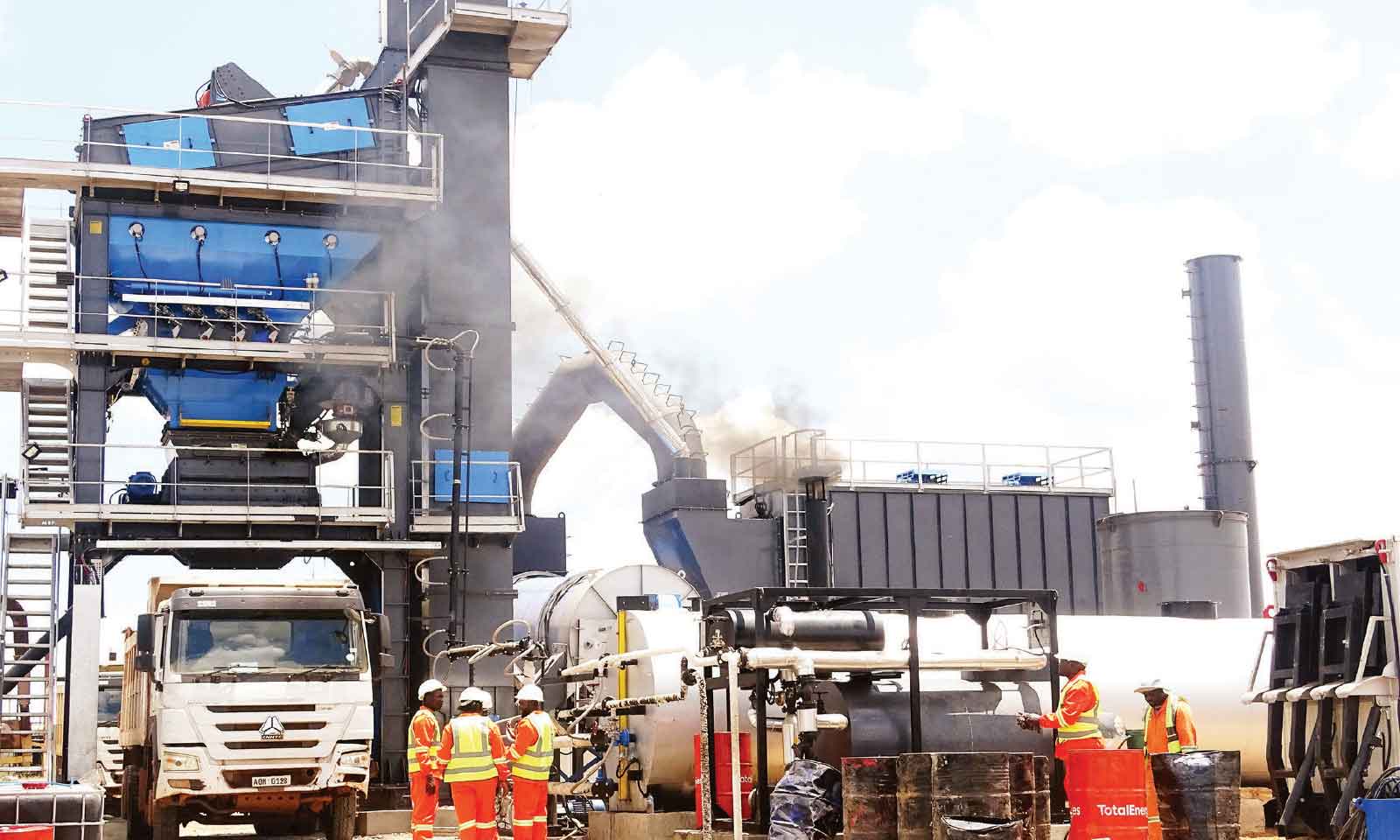
IN a major boost for the country’s road infrastructure development, Government yesterday commissioned a 120-tonne capacity Skyline Asphalt Plant that will service all 92 local authorities across Zimbabwe, ending years of reliance on expensive private contractors for road rehabilitation.
The newly commissioned plant, located just outside Harare at Skyline, represents a strategic shift in road maintenance approach, with Government now positioned to directly provide asphalt products to urban and rural councils nationwide.
The facility will enable local authorities to access affordable tar for roadworks, addressing a critical challenge that has hampered infrastructure development at the municipal level for decades.
Speaking at the commissioning ceremony in Harare yesterday, Transport and Infrastructural Development Minister Felix Mhona said the plant would enable the ministry, through the Department of Roads, to produce its own asphalt products and respond swiftly to damaged road sections across all provinces.
“The most important factor today (yesterday) is that we are commissioning an asphalt plant,” he said. “This is the plant that will have us in a position to produce our own bituminous products. We now have our own tower as a ministry and the Department of Roads, and we are ready to work.”
To facilitate the distribution of asphalt to all corners of the country, the ministry has acquired 30 trucks that will transport the tar from the Skyline Asphalt Plant to different designated destinations, ensuring that even remote local authorities benefit from the facility.
Minister Mhona said producing asphalt in-house would reduce costs associated with outsourcing and ease pressure on the fiscus, ultimately translating to more roads being rehabilitated across all local authority areas.
“In order for us to outsource, we would incur additional costs. Now we will be in a position to make sure that we use our own product vis-à-vis going out to tender. This is going to reduce the burden on the fiscus,” he said.
The minister added that precise figures relating to the plant’s cost would be provided after a full technical briefing.
Minister Mhona said the new facility would significantly improve turnaround times in attending to potholes and damaged sections, particularly in Harare, where road infrastructure has suffered major deterioration.
“As we see this plant, we will be picking the product straight to the road. We are collaborating with the City of Harare and other local authorities so that we pick up the tar and attend to potholes within the city with speed,” he said.
Last year, the Government announced plans to acquire two new asphalt plants for Harare and Bulawayo as part of a strategic initiative to build internal capacity and reduce the high costs of outsourcing road maintenance work.
Furthermore, there are plans to deploy at least one asphalt plant in each of the country’s 10 provinces and recapitalise the Department of Roads to enhance road construction and maintenance efforts nationwide.
Meanwhile, Minister Mhona commissioned the dualised extension of Harare Drive as part of ongoing efforts to decongest the capital and improve traffic flow.
He said the project was aimed at promoting trafficability and enhancing connectivity along the city’s north-south corridor.
“The essence of this project is to make sure that we promote the trafficability of our people in the great city,” Minister Mhona said. “We are trying to decongest our cities. You have seen that we have enlarged the roundabout and we are gravitating towards the north. This is another key corridor connecting Beitbridge Road to Chirundu Road.”
He acknowledged that many of Harare’s roads were in a deteriorated state but emphasised that Government had taken a deliberate decision to focus on rehabilitation rather than apportion blame.
“We have seen that most of our roads are in a sorry state. It was under local authorities, yes, but it is not the time to continue pointing fingers. We need to make sure that we rehabilitate our roads,” Minister Mhona said.