malvernmugadzikwa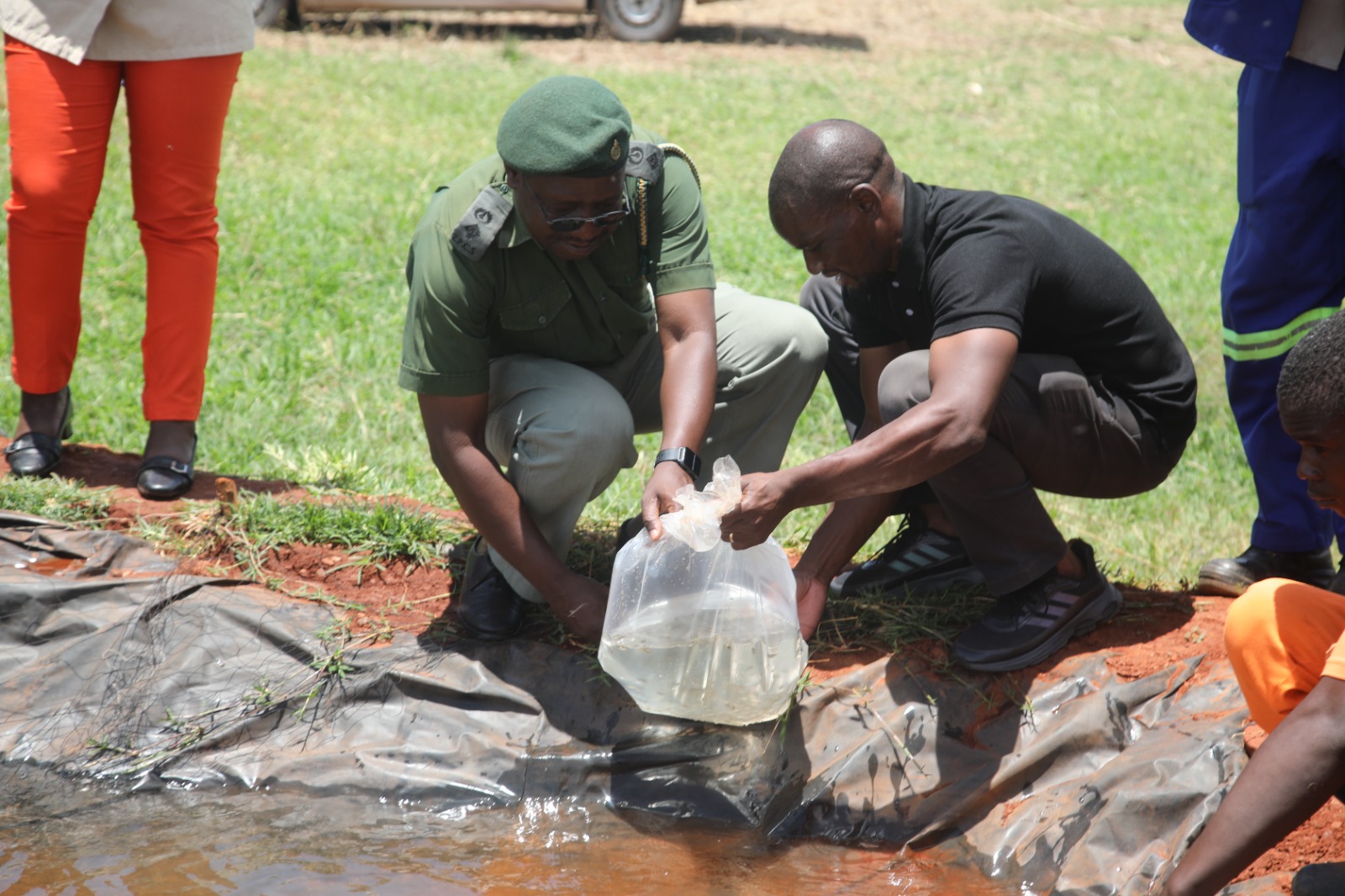
Theseus Shambare
THE path to reintegration into society can be a daunting one for ex-convicts.
Finding employment often proves to be a significant hurdle, with many employers hesitant to hire individuals with criminal records.
This reality forces many to explore self-employment as a means of securing their livelihoods.
Recognising the challenges faced by former inmates, the Zimbabwe Prisons and Correctional Service (ZPCS) has placed a strong emphasis on rehabilitation and reintegration programmes.

These initiatives aim to equip inmates with the necessary skills and support to successfully re-enter society as law-abiding citizens.
On Thursday morning, a significant step towards this goal was taken when the Fisheries and Aquaculture Department (FARD) donated 26 000 fish fingerlings to inmates engaged in fish farming at Chikurubi Prison Farm in Harare.
During the handover ceremony, officer in charge for the farm, Chief Superintendent Charles Nyamasoka said the partnership with the department offers the much-needed life skills to inmates.
“This collaboration aligns perfectly with our focus on Production, Innovation and Entrepreneurship.
“By equipping inmates with practical skills in fish farming, we empower them with the knowledge and experience to establish sustainable livelihoods upon their release.
“This does not only benefit the prison community, but also contributes to the broader fish production sector in the country,” said Chief Superintendent Nyamasoka.
FARD director, Mr Milton Makumbe, said the donation of fish fingerlings underscores the growing partnership between ZPCS and the department.
“Our relationship with ZPCS is strong.
“Inmates have been instrumental in assisting us in developing hatchery sites at Henderson, Matobo and Makoholi Research Stations, while simultaneously gaining valuable skills in aquaculture,” said Mr Makumbe.
Mr Makumbe emphasised the reciprocal nature of this collaboration.
“Today, we are here to offer them, to give back the outputs of their efforts.
“These fish fingerlings, sourced from the Henderson Research Institute, will contribute to the nutritional needs of the inmates and provide them with a tangible asset to utilise upon their release,” he said.
Boreman Chipfumbu, who will be released in 2026 after serving a 37-year sentence for three-counts of rape, said serving time has helped him realise his potential.
“I have acquired a lot of life-changing skills during my jail time.
“I regret having done wrong but I now know how to live with others in society,” said Chipfumbu.
Feedback:X@TheseusShambare



 Online Reporter