
Trust Freddy
FOR years, many Zimbabweans have carried a painful belief that when serious illness strikes, survival may depend on leaving the country.
India, South Africa, Turkey and Dubai have become familiar destinations for patients seeking specialised medical treatment.
In many cases, families are forced to sell property, mobilise relatives and launch public fundraising appeals to meet the costs of treatment abroad.
Yet, in some cases, the expertise and facilities needed to treat these conditions have been available within Zimbabwe’s own healthcare system.
What has often been missing is public awareness.
For decades, restrictions on healthcare advertising meant that local medical practitioners and institutions had limited opportunities to publicly communicate the services they offered, their areas of specialisation and the facilities available to patients.
Foreign hospitals, meanwhile, could market their services aggressively, giving Zimbabweans greater exposure to treatment options outside the country than those available at home.
They harnessed the power of modern communications to great effect.
On October 23, the long silence that handicapped local medical professionals was broken.
The Government gazetted the Health Professions (Advertising) Regulations, 2026, under Statutory Instrument 170 of 2026.
The new regulations allowed local health practitioners and institutions to advertise their professional services within a regulated framework.
Those changes could now have far-reaching implications for patients, healthcare providers and the country’s economy, particularly at a time when medical tourism continues to contribute to the massive outflow of foreign currency.
Access
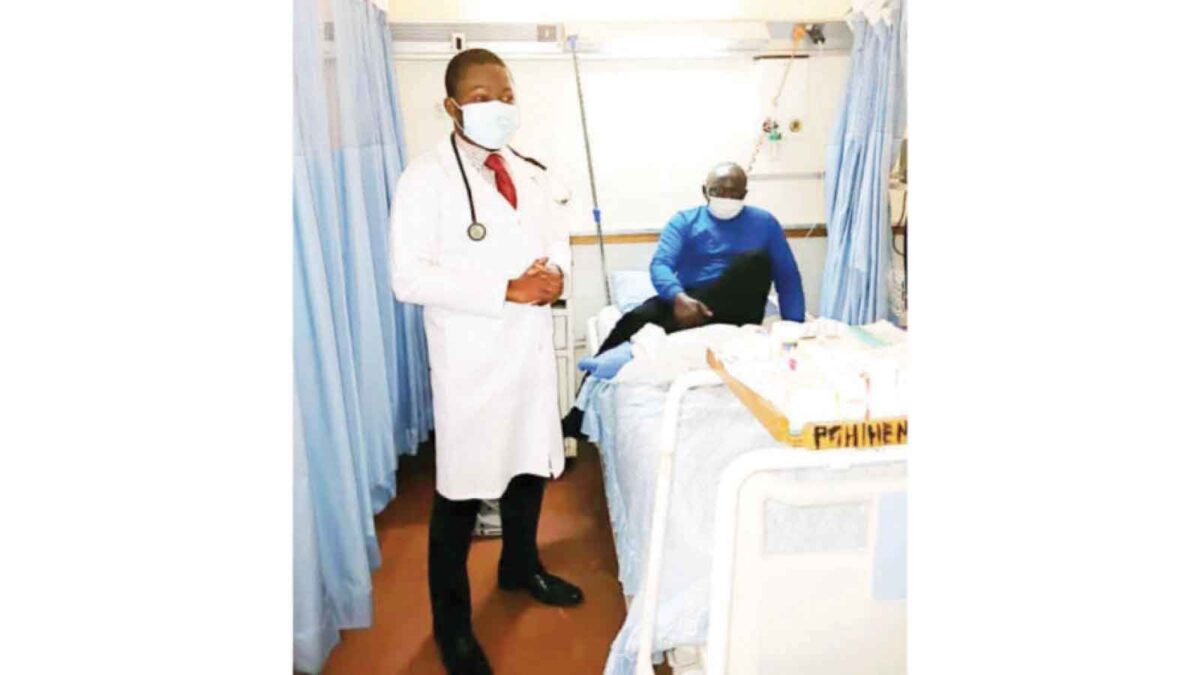
For 55-year-old Mr Clifford Munemo of Marondera, the importance of having access to information about local medical capabilities became clear when he was diagnosed with multiple myeloma, a cancer affecting plasma cells in the bone marrow.
His treatment required a stem cell transplant, a procedure that has historically forced many Zimbabweans to seek assistance abroad.
Treatment costs in India were estimated at between US$23 000 and US$40 000, while the bill in South Africa could reach US$70 000.
Unable to meet the anticipated costs, Mr Munemo launched an online fundraising appeal, but the campaign fell short of its target.
What he did not know was that Parirenyatwa Group of Hospitals was developing the capacity to perform the procedure locally.
In August, he became the first Zimbabwean to undergo a bone marrow transplant performed in the country.
The procedure was conducted by a local medical team led by consultant haematologist Dr Moses Chatambudza, using specialised equipment donated by the National AIDS Council, including the Spectra Optia Apheresis System for harvesting stem cells.
“It was nowhere near US$23 000, nor US$40 000. It was way cheaper,” Mr Munemo said.
His medical aid covered much of the bill. His experience raises an important question: How many Zimbabweans continue to seek expensive treatment abroad simply because they are unaware that some of the services they need are available locally?
Disadvantage
For Trauma Centre Borrowdale founder Dr Vivek Solanki, the new regulations address a longstanding information gap that has disadvantaged local healthcare providers.
“We are now in a global world and competing on even standards. Zimbabweans knew more about health facilities in India, Turkey, Dubai and South Africa than they knew about those in Zimbabwe,” he said.
Local specialists, he said, were already performing complex procedures, including open-heart surgery, neurosurgery, orthopaedic implants and reconstructive plastic surgery.
He argued that travelling abroad for procedures available locally exposed patients to unnecessary travel expenses and post-operative risks.
“Seeking treatment overseas comes with massive travel expenses and dangerous post-operative risks, when the same procedures are being done right here at home,” he said.
The Zimbabwe Dental Association (ZIDA) has also highlighted cases of patients travelling as far as Turkey for dental procedures that are available in local clinics. Greater visibility of local services could help patients make more informed decisions while improving business prospects for private practices, the association said.
“Greater visibility will improve patient flow for private practices while ensuring communities discover quality dental care closer to home,” ZIDA said in response to questions from The Sunday Mail.
For Harare-based practitioner Dr Walter Tendi, the regulations could also improve access to information in an increasingly digital society.
“In a world driven by social media, it is prudent for healthcare seekers to have wide choices of healthcare providers who meet their preferences,” he said.
The implications extend beyond individual patients.
Drain
Every Zimbabwean who travels abroad for medical treatment potentially takes foreign currency out of the country, money that could otherwise support local hospitals, purchase medical equipment, finance training and sustain specialist services.
Industry estimates indicate that millions of dollars are spent annually on treatment abroad for procedures that are already available locally.
Experts say allowing healthcare institutions to communicate their capabilities could help improve patient volumes, generating revenue that can be reinvested in infrastructure, equipment and specialist skills.
Parirenyatwa’s bone marrow transplant programme offers an illustration of what increased capacity could achieve.
Dr Chatambudza’s team plans to perform approximately 30 transplants over the next 12 months, with the target rising to more than 100 annually by 2030.
However, such expansion will depend not only on medical expertise and equipment but also on patients knowing that the service exists.
The new advertising framework could, therefore, become an important component of efforts to strengthen the country’s healthcare system and reduce reliance on foreign medical facilities.
Restrictions
But the Government has not opened the door to unrestricted commercial promotion of medical services.
The regulations require all advertisements to be factual, accurate and capable of substantiation, while prohibiting misleading claims, exaggerated treatment outcomes and guarantees of cures.
Practitioners and institutions are also prohibited from using patient testimonials, celebrity endorsements, discounts, gifts, competitions and financial inducements to attract patients.
They cannot directly or indirectly solicit or tout for patients, while the payment or receipt of commissions for referring patients to other practitioners or institutions is prohibited.
Social media and websites may be used to communicate professional qualifications, registered specialties, services offered, practice locations and contact details.
However, practitioners cannot use public social media platforms to provide individual diagnoses, treatment recommendations or prescriptions.
Radio and television advertisements are limited to 30 seconds and must carry a disclaimer stating that the information is not medical advice.
Outdoor advertisements, including billboards, require approval from the relevant professional council and are restricted to factual information about the practitioner or institution and the services offered.
Health Professions Authority board president Professor Joconiah Chirenda has urged practitioners to familiarise themselves with the new requirements to avoid breaching the regulations.
“They are not allowed to solicit for business or to entice patients by saying they will come for free, that they will get treatment for free or that they will be provided with a subsidised price. That is not allowed,” he said.
The regulations also empower professional councils to investigate violations and issue compliance notices requiring offending advertisements to be withdrawn, corrected or amended.
Failure to comply with a compliance notice, or advertising professional health services without registration, can attract a fine not exceeding Level 12 or imprisonment of up to five years, or both. Registered practitioners may also face professional disciplinary proceedings.
Practitioner Dr Johannes Marisa believes enforcement should strike a balance between protecting patients and allowing healthcare professionals to communicate their capabilities. “The objective must be to eliminate deception, not information; exploitation, not professional visibility,” he said.
“Doctors must not be driven into silence while patients remain unaware of local lifesaving options.”
Visibility
Zimbabwe’s regional competitors provide an indication of the importance of visibility in healthcare.
South Africa has developed a strong medical tourism industry, supported by established private hospital groups, specialist networks and medical aid schemes that invest heavily in marketing and public outreach.
Data from the neighbouring country’s Council for Medical Schemes indicates that medical schemes spend more than R1,2 billion annually on marketing and advertising, equivalent to approximately US$70 million.
This sustained visibility has helped position the country as a major destination for patients from across the region.
Zimbabwe now has an opportunity to make its own healthcare capabilities more visible to both domestic and regional patients.