Online Reporter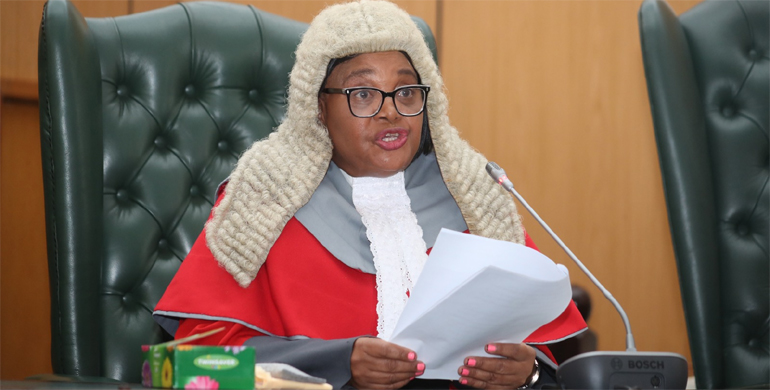
Patrick Chitumba, [email protected]
THE 15 newly appointed High Court judges have been challenged to hit the ground running and turn the country’s biggest-ever simultaneous expansion of the High Court Bench into faster, accessible, impartial and quality justice for Zimbabweans.
Chief Justice Elizabeth Gwaunza said the appointments represented a major investment in the judiciary, but warned that the increased judicial capacity would mean little unless it translated into tangible improvements for people seeking justice.
Speaking yesterday at the induction programme for the new judges in Gweru, Chief Justice Gwaunza said the record number of appointments came with equally significant expectations from the public.
“This particular induction is significant for at least two reasons. Firstly, this cohort represents the highest ever number of judges of the High Court appointed at the same time. Fifteen judges have been appointed to the High Court in this cohort. That fact carries with it a considerable responsibility,” she said.
The Chief Justice said Zimbabweans would expect the increased judicial capacity to improve the administration of justice.
“The people of Zimbabwe will quite properly expect that this investment in the Judiciary will translate into more accessible, efficient, impartial and high-quality justice,” she said.
“Each of you has individually been entrusted with judicial office, but collectively you also represent a significant addition to the judicial capacity of this country.”
The new judges bring varied professional experience from the magistracy, court registries, enforcement of court processes, public and private legal practice, as well as corporate and institutional legal practice.
Chief Justice Gwaunza said their induction was an important foundation as they assumed an office carrying extensive constitutional responsibilities.
“You therefore occupy an extraordinarily powerful constitutional office. But constitutional power and constitutional responsibility are two sides of the same coin,” she said.
“The greater the authority entrusted to you, the greater the obligation to exercise it with restraint, discipline, humility and fidelity to law.”
The Chief Justice said the High Court’s broad jurisdiction made the judges’ responsibilities particularly weighty.
The court deals with civil and criminal matters throughout Zimbabwe and has supervisory and review jurisdiction over subordinate courts, as well as jurisdiction over constitutional matters subject to the Constitutional Court.
Chief Justice Gwaunza urged the new judges to make their judicial oath the cornerstone of their work, stressing that it was not merely a ceremonial undertaking made at their swearing-in.
“The oath is not merely ceremonial language which ceased to matter when the swearing-in ceremony ended. It is an abiding promise,” she said.
“It is a promise you made to Zimbabwe. It is a promise you made to every person who will appear before you, including the powerful and the powerless, the popular and the unpopular.”
Chief Justice Gwaunza also challenged the judges to protect the integrity of the bench, saying the constitutional requirement for judges to be fit and proper persons was a continuing obligation.
She said judicial integrity extended beyond the correctness of judgments to include punctuality, preparedness, reliability, impartiality, fairness and respect for litigants and court staff.
The Chief Justice also warned against delays in handing down judgments, saying prolonged waits could leave people’s lives in limbo.
“Judges should ensure that judgments are delivered within the timeframes communicated to litigants, noting that people’s lives could remain in limbo while waiting for court decision,” she said.
Chief Justice Gwaunza also cautioned the judges to ensure their conduct even outside the courtroom does not affect public confidence in the judiciary.
“Your conduct in your personal and professional interactions, your associations, your use of social media, your treatment of staff, your management of conflicts of interest and your conduct in public spaces can all affect confidence in judicial office,” she said.
Chief Justice Gwaunza urged the judges to familiarise themselves with the Judicial Service (Code of Ethics) Regulations, 2012 and use the regulations as a constant guide in discharging their responsibilities.
She said judges should go beyond asking whether their conduct was legally permissible and consider whether it was consistent with the dignity and integrity expected of judicial office.
Chief Justice Gwaunza also urged judges to remain humble despite the status attached to judicial office.
“I urged you to remain humble despite the status attached to the judicial office. Your titles and forms of address should never be interpreted as personal exaltation, but as symbols of the constitutional office and public trust they had been entrusted with,” she said.
Judicial Service Commission (JSC) Secretary Dr Walter Chikwana said the appointment of the 15 judges was a boost to the High Court’s capacity to deal with its workload.
He said the new judges will strengthen the institution’s ability to discharge its civil, criminal, supervisory and constitutional responsibilities.
“We will also have an induction workshop for the judges who were appointed to the Labour Court in due course,” said Dr Chikwana.