

 Online Reporter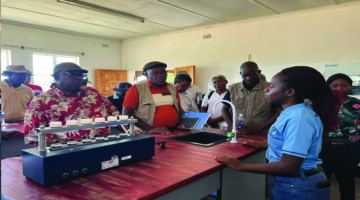
Sukulwenkosi Dube-Matutu, [email protected]
ESIGODINI Agricultural College, in Umzingwane District has established a new laboratory at its innovation centre, which is expected to play a key role in enhancing animal health through effective disease surveillance and analysis.
Umzingwane District, located in Matabeleland South Province, widely regarded as a cattle-rearing region, has in recent years been adversely affected by tick-borne diseases such as January Disease and gall sickness.
 The innovation centre, established last year, comprises a feed analysis laboratory and a goat housing station. Disease surveillance activities have already commenced at the facility, while feed analysis is set to begin shortly.
The initiatives are expected to improve animal health for both cattle and goats, and will also facilitate the analysis of the nutritional content of farm-produced fodder for goats.
The innovation platform was set up under the Building Climate Resilience of Vulnerable Agricultural Livelihoods in Southern Zimbabwe Green Climate Fund (GCF) programme.
During a recent visit by officials from the Ministries of Environment, Climate and Wildlife; Lands, Agriculture, Fisheries, Water and Rural Development; as well as the United Nations Development Programme (UNDP), Esigodini Agricultural College laboratory technician, Ms Mitchell Nhoro, said the new laboratory has been fully equipped for disease surveillance, with equipment for feed analysis being installed.
“This innovation centre is like a chain where we have a lab complementing the goat production centre. Under the feed analysis section, we have various equipment at the lab such as fat extractors, water extractors and cold extractors, among others.
“We can perform protein analysis, fibre analysis, fat extraction, fat analysis and test for mineral elements and moisture — all in a bid to ensure quality fodder production. On the animal health side, we have microscopes and other equipment for disease surveillance,” said Ms Nhoro.
She added that farmers would be bringing feed produced in their communities for analysis at the lab, at an affordable fee. Recommendations on how to improve their feed mixtures will be provided.
 Umzingwane District Veterinary Officer, Dr Tsitsidzashe Maravanyika, said the laboratory would benefit the entire district by ensuring timely detection and diagnosis of diseases, allowing for swift response.
“The lab has microscopes and there are some diseases that can be diagnosed and confirmed using these. The lab has already begun receiving and analysing samples.
In Umzingwane, we face tick-borne diseases such as gall sickness and January Disease. With this lab, these diseases can now be confirmed by taking peripheral blood smears, which are then examined under microscopes.
“It will ensure early diagnosis. Prompt disease investigation will help in controlling and mitigating outbreaks across the district. Previously, we had to rely on the veterinary labs in Gwanda or Bulawayo,” she said.
Permanent Secretary in the Ministry of Environment, Climate and Wildlife, Ambassador Tadeous Tafirenyika Chifamba, said the programme complements Government efforts to enhance livestock production across the country. He stressed that the benefits of the innovation platform should be felt nationwide.

“We look forward to seeing this project contributing to the Presidential Goat Scheme, which has been rolled out by Government. This project already has a direct impact on livelihoods.
It also strengthens the link between farmers, innovation platforms and markets. A framework has been created to allow farmers to run their operations as businesses. In farming, if there is no link to the market, then there is no business.
“Projects like this will go a long way in advancing our country towards Vision 2030, particularly in achieving middle-income status. This project takes a scientific approach while incorporating our indigenous knowledge systems to ensure we make the most of the valuable genetic resources from our local goat breeds, while also cross-breeding with other varieties,” he said.

Esigodini Agricultural College is one of five innovation centres under the project.
Among the objectives of the Building Climate Resilience of Vulnerable Agricultural Livelihoods in Southern Zimbabwe programme are improved climate-resilient agriculture and enhanced market linkages for smallholder farmers.
The Green Climate Fund project aims to strengthen climate resilience in agriculture by empowering communities with resources, training and support to mitigate the effects of climate change. The initiative is being implemented in 14 districts across three provinces.


