


 Sundaymail Editor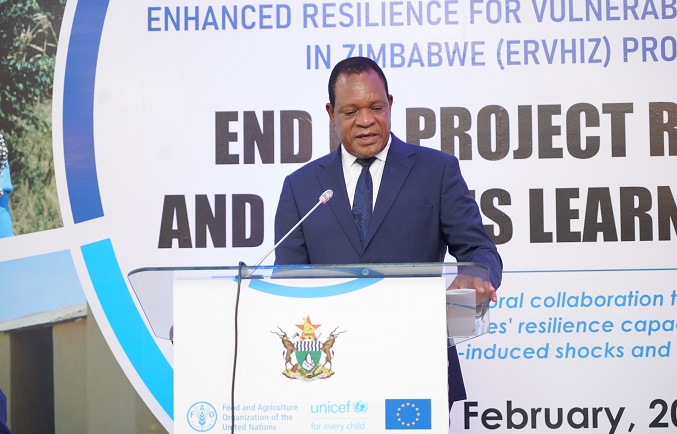
Theseus Shambare in BULAWAYO
The culmination of the four-year Enhanced Resilience for Vulnerable Households in Zimbabwe (ERVHIZ) project in Bulawayo underscored a pivotal realisation that sustainable development requires more than just infrastructure and resources, it demands robust market linkages.
The ERVHIZ project is a collaborative, EU-funded initiative by the Government, FAO and UNICEF to enhance the resilience of vulnerable households in Matabeleland South through integrated interventions in agriculture, nutrition, WASH and crisis response.
For the past four years, over 345 000 people in Matabeleland South benefited from the initiative.
The two-day closing review of ERVHIZ project, which ends today, highlighted the project’s successes and also illuminated the critical need for connecting beneficiaries to viable markets to ensure long-term prosperity.
Lands, Agriculture, Fisheries, Water and Rural Development Minister Dr Anxious Masuka, pinpointed this gap: “One of the aspects that we also wanted was that we wanted market linkages and that was prominently missing in this and it’s a major lesson learned.”
He emphasised the necessity of pairing resilience-building interventions with pathways for farmers to sell their produce.
“What we are looking for increasingly is not aid. What we are looking for is to being enabled so that we can do things ourselves… so that beyond the project lifespan we are able to sustain it and we are actually able to trade which is why we said the market linkages are so critical,” he said.
Matabeleland South Minister of State for Provincial Affairs and Devolution, Dr Evelyn Ndlovu, detailed the project’s positive impact, noting and highlighted improvements in water access and school gardens.
“We advocate for a unified approach, promoting the ‘village business unit concept’ to foster sustainability beyond the project’s lifespan.
“We want to see communities transitioning from subsistence to surplus production through market integration, aligning with Zimbabwe’s Vision 2030,” she said.
FAO Sub Regional Coordinator, Dr Patrice Talla spoke on sustainability.
“Looking ahead, there are ample opportunities to further strengthen this collaborative spirit. As the project nears its conclusion, stakeholders are already exploring ways to sustain and scale up the successful models and approaches developed over the past four years,” said Dr Talla.
He emphasised government ownership, stating, “All the interventions fall within existing and running Government programmes, this project only being a catalyst to those programmes and hence key Ministries, Departments and Agencies can ensure that the gains made in these critical areas are maintained and further strengthened.”
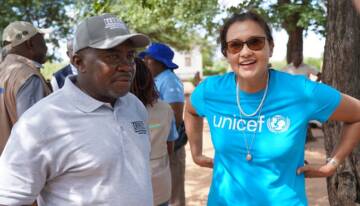
UNICEF Deputy Country Representative, Zeinab Adam, echoed this sentiment.
“As we transition ERVHIZ into Government ownership, we must ensure that the gains we have made are sustained and expanded.”
“Continuing to empower communities to lead and sustain these solutions, ensuring they last for generations,” she said.
Ms Adam expressed confidence in the government’s commitment.
“To the Government of Zimbabwe, we commend your leadership and trust that you will carry this work forward with the same dedication and determination,” she said.


 Online Reporter