


 Sundaymail Editor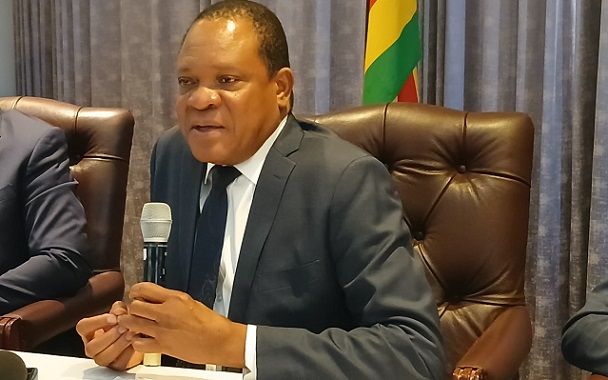
Theseus Shambare in BULAWAYO
The Enhanced Resilience for Vulnerable Households in Zimbabwe (ERVHIZ) project has elevated the livelihoods of over 345 000 individuals in Matabeleland South.
Funded by the European Union and implemented through a collaborative effort between the Zimbabwean Government, the Food and Agriculture Organization (FAO), and the United Nations Children’s Fund (UNICEF), the project’s successes were celebrated today at a recent event in Bulawayo.
Officially opening the two-day event on Thursday, Lands, Agriculture, Fisheries, Water and Rural Development Minister Dr Anxious Jongwe Masuka commended the project’s profound impact.
“This project has built a robust foundation for sustainable and resilient rural development.
‘Communities are now empowered to navigate future challenges, generating consistent nutrition and income from these valuable initiatives,” said Dr Masuka.
Key achievements underpinning this transformation include the rehabilitation of 40 dip tanks, crucial for livestock health, and the establishment of 50 farmer field schools, empowering farmers with vital agricultural knowledge.
Furthermore, the project facilitated the development of 300 hectares of climate-smart irrigation, enhancing agricultural productivity and resilience.
UNICEF Deputy Country Representative, Zeinab Adam emphasized the project’s focus on child welfare.
“The EU’s investment in ERVHIZ has significantly improved the lives of countless children.
“Over 22 500 households now enjoy access to clean and safe water, freeing children from arduous journeys and ensuring they can attend school without the risks previously faced,” she said.
She also highlighted the project’s agility, noting the activation of a crisis modifier to swiftly address emergencies such as the cholera outbreak and the El Niño-induced drought.
FAO Sub Regional Coordinator and Country Representative Dr Patrice Talla underscored the power of collaboration.
“The Resilience for Vulnerable Households in Zimbabwe project exemplifies the strength of united efforts in tackling the complex challenges of climate change and food insecurity,” he said.
He highlighted a 53 percent improvement in the climate resilience index score among targeted farmers and the establishment of 75 rangeland reclamation demonstration sites as pivotal achievements.
“This indicates that over half of the beneficiaries are now better equipped to withstand climate and economic shocks, validating the effectiveness of our interventions,” he said.



 Online Reporter