Conrade Mupesa
Mashonaland West Bureau
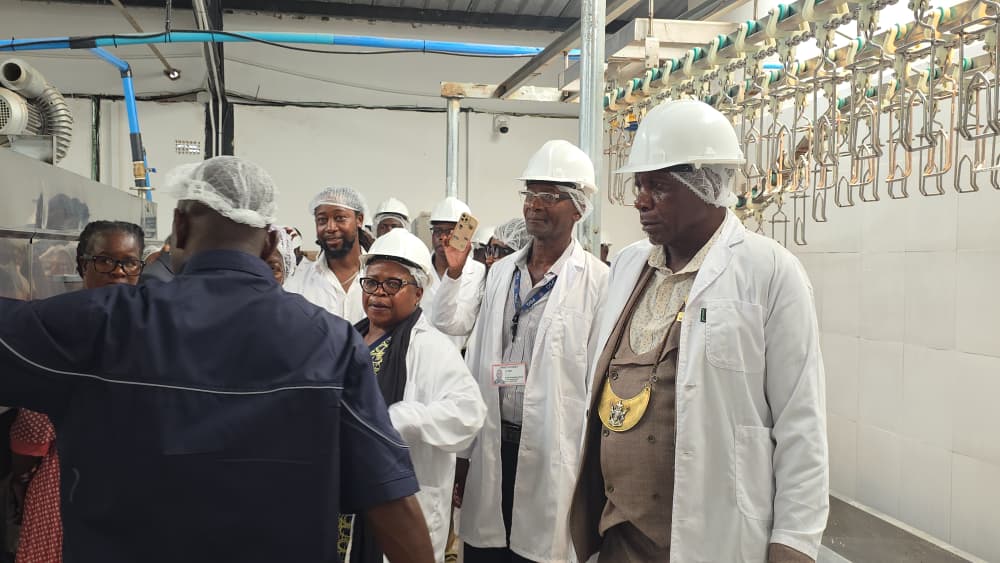
A US$350 000 poultry abattoir in rural Chegutu is emerging as a catalyst for industrialisation and employment creation, transforming the Seruwe area into a growing agricultural processing hub.
The Tiru Fresh Abattoir, located in Ward 13 under Chief Chivero, has created employment opportunities for local people while opening up prospects for increased poultry production and value addition.
The facility, which was officially commissioned by Mashonaland West Provincial Affairs and Devolution Minister Marian Chombo last Friday, has the capacity to slaughter 10 000 chickens daily and store between 250 and 300 tonnes of frozen poultry products.
They also offer slaughtering services to other farmers and players who are into poultry production.
The investment dovetails with the Second Republic’s rural industrialisation agenda and the objectives of the Second National Development Strategy (NDS2), which emphasises economic transformation, value addition, employment creation and the development of productive rural economies.
Speaking at the commissioning ceremony, Minister Chombo said private-sector investments were critical to the country’s development, adding that the project demonstrated how rural communities could benefit from industrial activity.
“His Excellency President Mnangagwa has always emphasised the importance of the private sector in building our nation,” she said.
“These are the people who are coming forward to help develop Zimbabwe. This is rural transformation at its best.
“We are witnessing an investment that will change the poultry industry in this area, create employment for our young people and contribute to the economic development of our province.”
She said Mashonaland West’s agricultural potential, supported by fertile soils and water resources, provides a strong foundation for investment in crop and livestock production.
Agricultural and Rural Development Advisory Services (ARDAS) provincial director, Mrs Evelyn Ndoro, said the investment reflected the Government’s drive to transform rural economies through agricultural production and value addition.
“Under NDS2, the Government is promoting food systems transformation and rural industrialisation,” she said.
“This project demonstrates how farmers can move beyond primary production to processing and value addition, thereby generating more income and employment.”
Mrs Ndoro encouraged investors to link with surrounding farmers by contracting them to produce maize, soya beans, and sunflower for the poultry value chain.
“This farm has the potential to become a major poultry production hub in Chegutu. By engaging surrounding farmers to supply feed ingredients, the business can create a market for local produce while strengthening agricultural value chains,” she said.
Farm owner Mr Tinashe Muzirwa said the investment was part of efforts to develop the property into a productive enterprise capable of sustaining employment and supporting the local economy.
“We acquired this farm in 2012, and although we faced challenges along the way, we remained determined to develop it,” he said.
“We have invested US$350 000 in the project, and the investment is ongoing. Our goal is to continue creating employment and contributing to the development of this area.
“We believe the project will grow and provide more opportunities for the surrounding community.”
Tiru Fresh operations manager Mr Aluis Kaseke said the abattoir had the capacity to process about 1 000 birds per hour, with its cold-storage facilities enabling the business to handle large volumes of poultry products.
“The slaughtering plant can process approximately 1 000 birds per hour, while our cold-storage facilities can accommodate between 250 and 300 tonnes of frozen chicken,” he said.
He said the facility had created 57 jobs at the abattoir, with additional employment opportunities across the wider farming operation.
The farm also has a poultry facility capable of accommodating 54 000 chickens, providing a supply base for the slaughtering plant.
Chief Chivero Mwendamberi welcomed the investment, saying it had brought much-needed development to his community.
He said the employment opportunities created by the project would help keep young people productively engaged and contribute to efforts to address drug and substance abuse and early child marriages.