admin
admin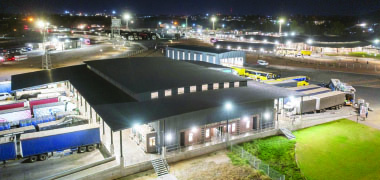
Thupeyo Muleya, Beitbridge Bureau
Zimbabweans have lauded the Second Republic for implementing the Beitbridge Border Post modernisation which has also seen the Government constructing a new sewer oxidation dam to address service delivery challenges in the country’s fastest growing border town.
The sewer oxidation dam, a new water reservoir, an animal and quarantine centre, 220 houses and flats for civil servant and a fire station are some of the major developments in the town, away from the actual border post. The projects were implemented by Government and its partner, Zimborders Consortium as part of the US$300 million border post transformation.
Prior to the latest development, the cash strapped and opposition-run local authority had been struggling to address water reticulation and sewer reticulation challenges.
At some point, the local authority was taken to court by the Environmental Management Agency for failing to manage the sewer system.
Streams of raw or semi-processed sewage had become a common feature in the town until the Government intervened.
Former mayor, Councillor Munyaradzi Chitsunge said the construction of the sewer oxidation dam which has since been handed over to the Government would go a long way in addressing perennial service delivery challenges in the town.
“The new oxidation plant will increase the sewer reticulation capacity of the town. What it means is that, the more we have houses constructed, we are not going to have an overwhelmed sewer reticulation system,” he said.
“The other benefit is that we have a sewer farm to promote urban agriculture and are allocating some farmers plots at the farm. So this modern infrastructure is a boost for irrigation water at these planned horticulture projects.”
Beitbridge-based business consultant Mr Sam Chimere said the new sewer reticulation infrastructure was a milestone achievement for the town which is rapidly expanding in terms of housing and business properties.
The facility would improve service delivery in the town in terms of low operational and maintenance costs. The oxidation dams provided effective treatment with minimal threat to the environment compared to other methods of waste management.
“The unprecedented pace of population growth and transit population means that the old waste stabilisation ponds were overwhelmed and we applaud the construction of this new facility,” said Dr Nicholas Muleya, a town planning expert.
“According to the 2022 Census, the population was standing at 58 574 people and has drastically grown since the last census.
“So, the oxidation pond project is a positive development towards service delivery although there is a need to plan for infrastructure that meets the needs of the project’s population growth”.
Chairman of the Beitbridge Informal Traders Association Mr Mafios Macheka said since that project was a timeous intervention on the part of the government. Sewer management was a critical component for service delivery in any urban settlement.
Zimbabwean born Dr Clement Chipenda, who is South African Research Chair in Social Policy (SARChI-SP) at the University of South Africa (Unisa), said the development of a state of the art and adequate sewer system highlighted an important milestone in National Development Strategy 1 (NDS1).
“This is a commitment to an improvement in infrastructure development, investment and expansion in critical areas particularly water and sanitation as well as social amenities,” he said.
“In fact, this comes in a background where NDS1 acknowledges that sanitation systems and services in many urban and rural areas have deteriorated with the majority of the sewerage systems having experienced large-scale blockages and water treatment plants are dysfunctional.
Having this infrastructure in place highlights progress towards addressing an often overlooked challenge in urban areas”.
Dr Chipenda said the latest sewer infrastructure will ensure Zimbabwe’s progress towards attaining three of the 17 SDGs namely – SDG 3 on Good Health and Well-being – SDG 6 on Clean Water and Sanitation and SDG 11- Sustainable Cities and Communities.



 Online Reporter