


 Online Reporter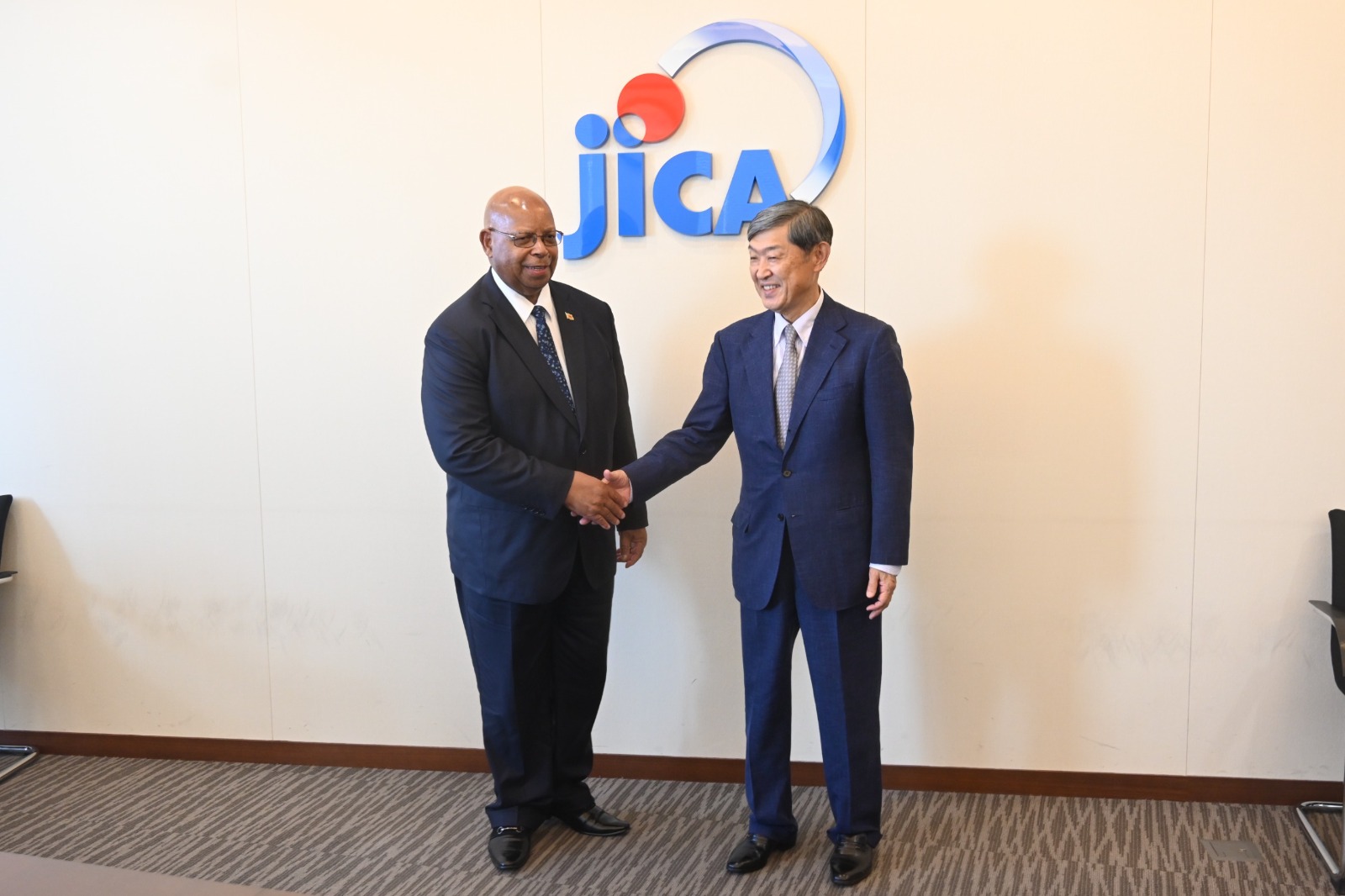
Harmony Agere
SPEAKER of the National Assembly Advocate Jacob Mudenda has concluded a successful working visit to Japan marked by high-level engagements aimed at deepening parliamentary diplomacy and expanding socio-economic cooperation between Harare and Tokyo.
The highlight of the visit was Advocate Mudenda’s meeting with Fukushiro Nukaga, Speaker of the House of Representatives of Japan.
The two leaders held what was described as a fruitful discussion, with Mr Nukaga assuring his counterpart that Japan remains committed to bolstering socio-economic cooperation with Zimbabwe through vehicles such as the Japan International Cooperation Agency (JICA).
Economic cooperation
Discussions also touched on potential areas of economic partnership following the Speaker’s visit to Japan-African Union Parliamentary Friendship Association, led by its chairperson Mr Yamagiwa Daishiro.
Mr Daishiro noted Zimbabwe’s vast mineral wealth and abundant tourist attractions, stressing their potential to drive economic growth.
Speaker Mudenda highlighted mineral exploration, mining and beneficiation as critical areas where Japan’s expertise and technological advancements could be of immense benefit.
He noted that Zimbabwe has more than 40 known mineral types.
He also encouraged Japan to expand its role in mineral development.
In response, Mr Daishiro commended Zimbabwe’s exports of petalite, a mineral widely used in the manufacture of Japanese cooking pots.
Advocate Mudenda also met with Mr Masakazu Sekiguchi, President of the House of Councillors of Japan.
The discussions centred on strengthening parliamentary relations, with both sides emphasising knowledge sharing and the exchange of experiences as vital for enhancing democratic processes.
Speaker Mudenda reaffirmed that Parliament is the citadel of democracy and the rule of law, and underscored Zimbabwe’s readiness to cement relations with the Japanese legislature.
Both parties expressed commitment to boosting legislative cooperation for the mutual benefit of their nations.
Investment and governance
On investment, Advocate Mudenda reassured his hosts that Zimbabwe is a constitutional democracy that respects property rights as enshrined in the Constitution.
He highlighted the one-stop investment model under the Zimbabwe Investment and Development Authority (ZIDA) designed to improve the ease of doing business, in line with President Mnangagwa’s mantra that “Zimbabwe is Open for Business”.
He further stressed that Parliament is ready to review any laws that may hinder investment, sending a clear signal to potential Japanese investors.
The engagements also explored cooperation in education, innovation and digital transformation.
Speaker Mudenda also encouraged JICA to support partnerships with local universities and vocational training centres.
Drawing on global trends, he cited Microsoft’s US$30 billion investment into artificial intelligence in the United Kingdom as an instructive example of the importance of digital economies, suggesting that Zimbabwe could benefit strategically from Japan’s e-governance expertise, particularly in agriculture and public administration.
Japan’s Kaizen philosophy, which promotes inclusive, bottom-up economic development, was highlighted as another model Zimbabwe could adapt to strengthen entrepreneurship.
In terms of regional integration, the meeting agreed on Zimbabwe’s participation in the Nakala Railway project, which will link Zimbabwe, Mozambique and Malawi, improving trade and connectivity.
Turning to energy, Speaker Mudenda urged JICA to invest in solar-power development to help Zimbabwe upscale electricity generation to 5 000 megawatts, a key requirement for accelerating industrialisation.
To conclude the visit, Speaker Mudenda and his delegation toured the iconic National Diet Building in Tokyo, constructed in 1936.
The Speaker drew parallels between Japan’s Parliament and Zimbabwe’s own new Parliament building in Mt Hampden, describing both as enduring symbols of democracy and national heritage.



