Online Reporter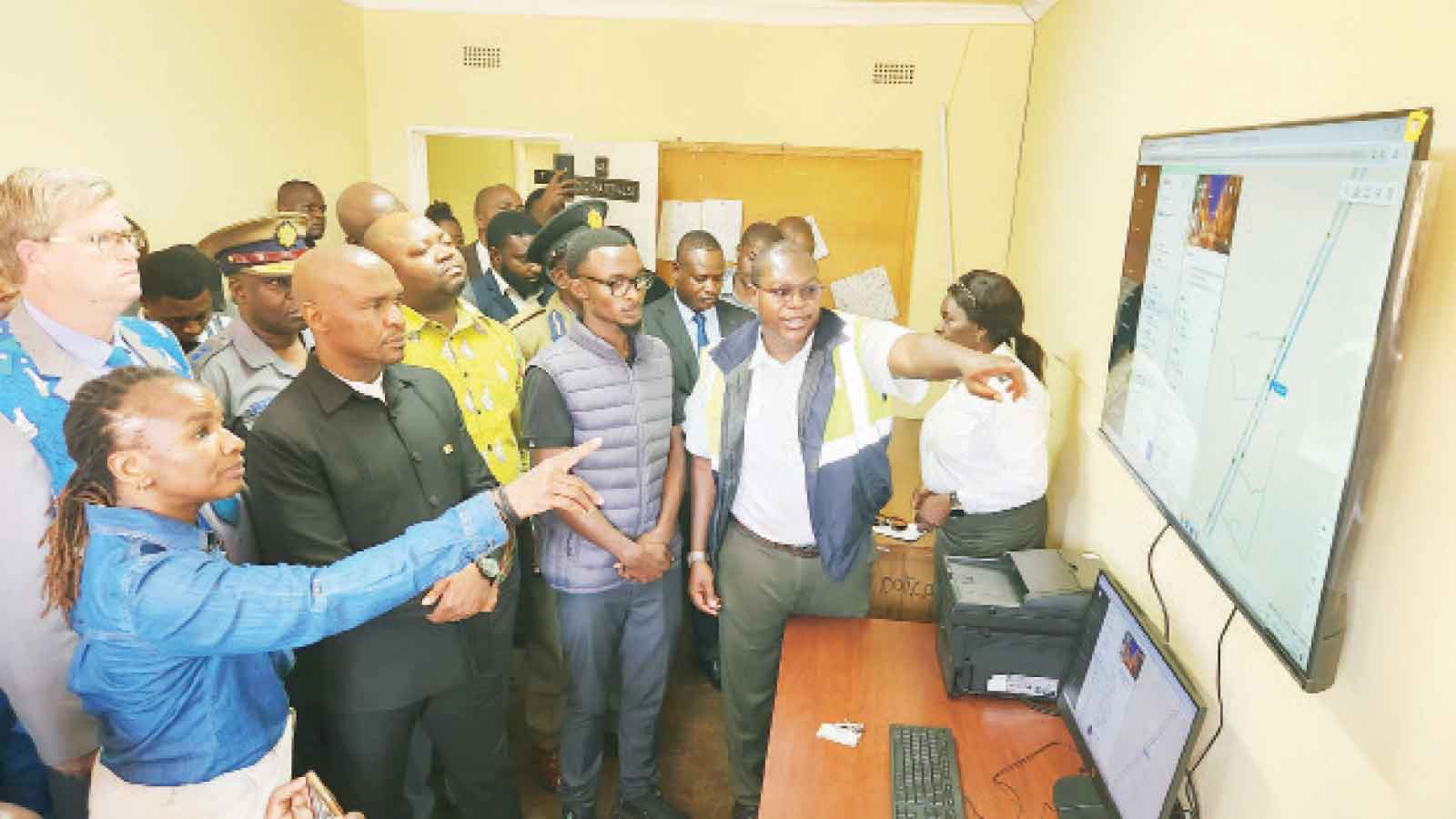
Freeman Razemba-Senior Reporter
THE Government yesterday launched the National Speed Monitoring System in Harare, a modern technology-driven initiative expected to enhance the enforcement of speed limits for public service vehicles.
To give all public service vehicle operators sufficient time to comply, the Government will grant a grace period of three to six months.
The new system also supports law enforcement agencies in promoting responsible road use and protecting the lives of motorists, passengers, pedestrians and other road users.
Transport and Infrastructural Development Minister Advocate Felix Mhona launched the system, accompanied by his deputy Joshua Sacco, Permanent Secretary Engineer Joy Makumbe, Permanent Secretary in the Ministry of Local Government and Public Works Engineer Tafadzwa Muguti, national police spokesperson Commissioner Paul Nyathi, legislators and various stakeholders.
The development follows a 2023 Government directive requiring all public service vehicles to be fitted with speed limiting devices capped at a maximum of 100km per hour, in a bid to control speed and reduce carnage on the country’s highways.
Drivers of the vehicles were also compelled to keep all data and records relating to speed monitoring for a period of not less than six months for inspection by an inspecting officer.
This was announced in Statutory Instrument 118 of 2023 of the Road Traffic Act (Speed Limiting and Monitoring Devices) Regulations, 2023.
In his address, Minister Mhona said the initiative was aimed at strengthening the safety, accountability, efficiency and oversight of public service vehicles.
“Undeniably, the transport sector plays a critical role in the daily lives of our people. Every day, thousands of passengers depend on public service vehicles to travel to various destinations. With that reliance comes an equally important obligation: to ensure that public transport services operate in a safe, orderly, accountable and compliant manner.
“Today’s launch represents a significant step towards meeting that obligation. It is also an occasion that calls upon us to work hand-in-hand with our transport operators, whose cooperation is indispensable to the success of this system,” he said.
Minister Mhona said the Government, through the Ministry of Transport and Infrastructural Development, introduced Statutory Instrument 118 of 2023, which requires that public service vehicles be fitted with speed limiting and speed monitoring devices.
“The National Speed Monitoring System is being introduced as part of our commitment to ensuring compliance with this Statutory Instrument. It provides an important technological mechanism through which public service vehicles can be monitored and managed in accordance with the requirements governing their operation.
“This initiative is not simply about tracking vehicles on a map. It is about saving lives, improving accountability and strengthening public confidence in our transport system. It also contributes directly to the country’s objective of reducing road fatalities by 25 percent by 2030.
“Through this system, the relevant authorities will have access to better information on the movement and operation of public service vehicles on our roads. This will support more effective regulatory oversight, facilitate timely interventions where necessary, and provide valuable data for planning and improving public transport services,” Minister Mhona said.
He said for transport operators, the system presents an opportunity to strengthen operational discipline and demonstrate compliance with the law, while for drivers, it reinforces the importance of responsible conduct on the roads. For passengers, it represents an additional layer of protection and accountability.
Minister Mhona emphasised that the monitoring tool should not be viewed merely as an enforcement mechanism.
“It is a partnership for safer and more efficient public transportation. Government recognises that successful implementation will require the cooperation of all stakeholders. Transport operators, drivers, regulatory authorities, technology providers and members of the public all have a role to play.
“Our visionary leader, His Excellency, the President of the Republic of Zimbabwe, Cde Mnangagwa, has consistently reminded us that road safety is a shared responsibility, and that we must at all times safeguard human life.
“In keeping with that shared responsibility, I encourage our transport operators to embrace this system and to ensure that their vehicles and operations comply with the applicable requirements. Compliance should be understood not merely as a legal obligation, but as part of our collective responsibility to protect passengers and other road users,” Minister Mhona said.
He said Zimbabwe recently introduced the Integrated Transport Management Information System (ZIMTIS) project, moving away from legacy, paper-based systems.
The ZIMTIS Project is a public-private partnership between the Government of Zimbabwe and 1010 Technologies (Pvt) Ltd.
It’s overall strategic objective is to create a robust Electronic Integrated Transport Management System.
The system integrates various modules for vehicle registration, licensing, and crucially, inspection data, creating a more streamlined and transparent process.