malvernmugadzikwa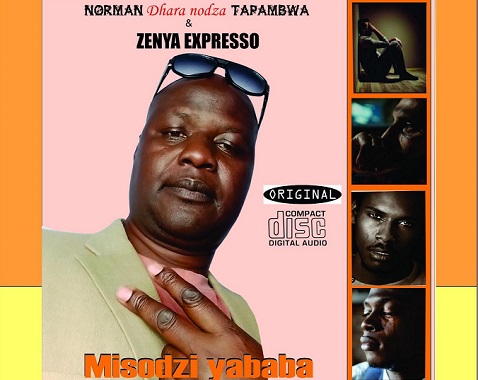
Online Reporter
Movember, the month formerly known as November, which focuses on men’s health and well-being, may have gone, but veteran sungura musician Norman Tapambwa has come up with an album focusing on men’s issues.
The album was launched recently with songs that seek to uplift men, giving them life lessons in the process.
The album is aptly titled: Misodzi Yababa. (The father’s tribulations).
During November, all focus is on men as the world raises awareness and funds for their health – specifically prostate cancer, testicular cancer, mental health and suicide prevention.
Tapambwa, also known as Dhara Nodza in music circles, is a veteran in the local music industry who has many talents including being a music producer, music engineer, music teacher, session musician, composer, arranger and music writer.
He holds various qualifications in these areas, including a Bachelor’s in Ethnomusicology from the Africa University-affiliated Zimbabwe College of Music.
“Many songs have been sung by different musicians supporting women, but not much has been said or sung about the pains a man goes through,” said Tapambwa.
“Many men die because of stress and some commit suicide because of problems they go through and they don’t have people who can understand their situations. “This album is raising an alarm for men to get attention. It has always been taught that men are evil and women are angels, but sometimes it’s the other way around. I wrote this album not because I hate women, but because I wanted them to know their duties and responsibilities.”
Tapambwa, who has seen it all in the local music industry, bemoaned the direction that local music is taking, which he described as a threat to progress in the industry.
“The local music industry is growing in the wrong direction,” he said. “There are so many musicians in Zimbabwe, but most of them are losing our values.
“Vulgar lyrics have become very common. The society today is influencing the musicians. Many people now resist good music, following music that does not sometimes make any sense.”
Tapambwa notes that sungura artists were trying, against all odds, to maintain good lyrics that promote good moral values in society.
“The disadvantage with sungura is that we now have very few popular artists, unlike in the times of artists like John Chibadura, Leonard Dembo, James Chimombe, Khiama Boys and many yesteryear musicians,” he said.
“In those days, we could have so many sungura musicians being hit makers in the same season. They were creative, they sounded different, unlike these days where sungura musicians tend to sound the same.”
Misodzi Yababa has seven songs – Vanoguta Here, Man Don’t Cry, Musoro Wemba, Mukadzi Monya, Parwendo, Chiyedza neRima and Kufunga Nyobvo.
On Vanoguta Here, Tapambwa sings about the importance of communication in a marriage.
“As husband and wife we both need to open up to each other,” he said. “If one is not happy with the other he or she needs to tell his or her partner that they must change such that they both are happy.”
On Man Don’t Cry, Tapambwa demystifies the societal expectation that men must not be vocal about their problems and bottle up their tears.
He says many men ended up committing suicide or dying of stress because they did not share their problems or seek help.
Musoro Wemba emphasised the biblical teaching that the man is the head of the home, while Mukadzi Monya is about a father teaching his son about dating and marriage.
On Parwendo, Tapambwa calls for fewer conflicts among partners to ensure they travel a smooth journey together in marriage.
Chiyedza neRima encourages people to lead honourable lives, while Kufunga Nyobvo urges people not to focus too much on the negatives.
Tapambwa’s biography
- Born in Mhondoro Ngezi at Kumire village near Manyewe township
- Did primary and secondary education at Benhura School.
- Learnt playing the banjo from his uncle Edmore Chavhunduka at 13 in 1988 and later joined him to form a band
- Learnt playing the acoustic standard guitar at 15 in 1990 from an uncle called Nhengo
- Joined Legal Lions Band led by Taurai Pekiwe in 1995
- Joined Murambinda hitmaker Paul Mpofu’s Zambuko Band in 1996
- Joined Zimbabwe Cha Cha Cha Band in Gweru in 1998 under David Ziome.
- Joined Six Kings band led by George Fero (former Simon Chimbetu lead guitarist)
- Later joined Michael Jambo as a bassist in Gweru
- Came back to Harare in 2000 joined Elias Musakwa and Fungisai Zvakavapano as a bassist.
- Enrolled at the Zimbabwe College of Music in 2001 for a national certificate in music
- Started work for Zimbabwe Music Corporation as a music engineer in 2003
- Was promoted to Engineer and Producer at ZMC/Gramma Records in 2005
- Engineered/produced many artists including big names like Paradzai Mesi, Alick Macheso, Somandla Ndebele, Joseph Garakara, Fungisai Zvakavapano, Biatta Mangete and Orchestra Dendera Kings (under Allan Chimbetu).
- Was nominated Producer of the Year (ZIMA AWARDS) in 2006
- Since 2003, he has recorded 15 albums under different names
- He has recorded different genres of music like sungura, dendera, smoko and gospel under his name and other names.
- In May 2024, he graduated with Bachelors Degree in Ethnomusicology from the Africa University-affiliated Zimbabwe College of Music.



 Online Reporter