Online Reporter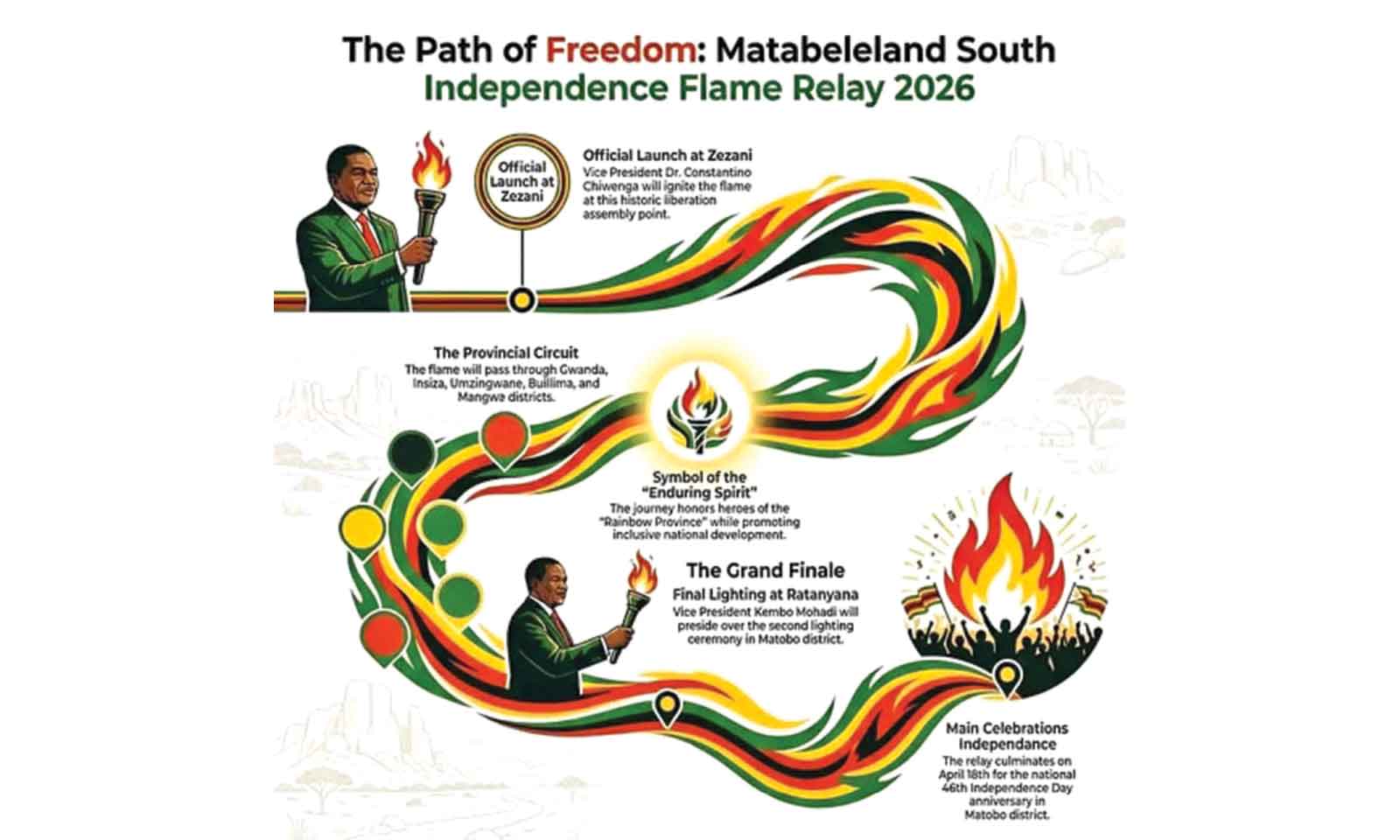
Anashe Mpamombe
Each year, as the Independence Flame Relay moves across provinces, it does more than mark the countdown to Independence Day celebrations.
It rekindles a national memory. In 2026, the relay begins in Zezani in Matabeleland South, where Vice-President Constantino Chiwenga ignites the symbolic flame of liberation.
From there, it travels through districts such as Gwanda, Insiza, Umzingwane, Bulilima and Mangwe before culminating in Matobo, where Vice-President Kembo Mohadi will preside over the final lighting.
To some, the flame may appear ceremonial, simply marking the approach of Independence Day. But for Zimbabweans who understand the country’s history, the Independence Flame represents something far deeper: the sacrifices, courage and determination that led to the birth of an independent Zimbabwe in 1980.
The flame symbolises memory, responsibility and continuity. Most importantly, it represents the ongoing task of safeguarding the gains of the liberation struggle.
Zimbabwe’s independence was not achieved easily. It came after years of sacrifice by thousands of men and women who fought against colonial rule. Many lost their lives, while others endured imprisonment, exile and hardship. The Independence Flame, therefore, stands as a reminder that the nation’s freedom came at a high price.
Lighting the flame in different districts also reconnects communities with the history of the liberation struggle. Many of these areas served as operational zones or support bases for freedom fighters. Rural communities played a critical role by providing shelter, food and information to those fighting for majority rule.
The relay’s journey through districts in Matabeleland South is therefore not merely geographical but historical. Each stop acknowledges the contribution of ordinary citizens to the liberation struggle and reminds the nation that independence was a collective achievement.
More than four decades after independence, some young Zimbabweans may question why such symbols still matter. The answer lies in the understanding that freedom is not self-sustaining. Independence is not a permanent guarantee; it must be protected and strengthened by every generation.
The Independence Flame reminds Zimbabweans of the gains of the liberation struggle, including political independence, sovereignty over national resources and the right of citizens to determine their own future.
The struggle for independence was not only about ending colonial rule. It was also about restoring dignity, reclaiming land and creating opportunities for the majority who had been marginalised under colonial policies.
Yet history shows that the gains of liberation can be weakened if citizens become disconnected from their past. For this reason, the Independence Flame Relay offers important lessons, especially for younger generations.
One key lesson is the importance of understanding history. Many young Zimbabweans were born long after independence and did not experience colonial rule or the liberation war. As a result, the sacrifices made by previous generations may seem distant.
However, understanding that history helps young people appreciate the freedoms they enjoy today, freedoms that were once denied to the majority of Zimbabweans.
The Independence Flame also carries a message of patriotism. Patriotism goes beyond celebrating national holidays. It involves actively working to build and protect the nation.
For young Zimbabweans, defending the gains of the liberation struggle means contributing positively to national development, promoting unity and supporting initiatives that strengthen the country’s economy and institutions.
The flame also reminds the nation about the importance of unity. The liberation struggle succeeded because Zimbabweans from different regions, cultures and backgrounds united around a common goal: freedom.
That unity remains vital today. Zimbabwe’s development depends on the ability of its people to work together despite political or regional differences.
The Government’s approach to the flame relay, moving it through various districts, reflects the principle of inclusivity. It reinforces the idea that independence belongs to every Zimbabwean and that no community should feel excluded from the national story.
The Independence Flame also connects the past with the country’s current development agenda. Independence laid the foundation for national programmes aimed at economic growth, industrialisation and improved living standards.
Government initiatives focused on development, infrastructure and economic transformation are part of fulfilling the aspirations of the liberation struggle: building a prosperous and self-reliant Zimbabwe.
Defending the gains of liberation therefore means supporting efforts that strengthen national development and ensure that the ideals of the struggle—equity, justice and opportunity—remain central to the nation’s progress.
Remembering the liberation struggle should not only happen during national ceremonies.
The most meaningful way to honour the heroes of Zimbabwe’s independence is through action. This includes building strong institutions, promoting responsible leadership and creating opportunities for future generations.
Young people have a particularly important role to play in shaping Zimbabwe’s future. They possess the creativity, energy and innovation needed to drive national transformation.
However, that transformation must be guided by the values that defined the liberation struggle: resilience, sacrifice and commitment to the national interest.
As the Independence Flame travels across Matabeleland South—from Zezani to Gwanda, Insiza, Umzingwane, Bulilima and Mangwe before reaching Matobo—it carries with it a powerful message.
The flame symbolises freedom, but it also symbolises responsibility. It reminds Zimbabweans that independence was achieved through struggle and must therefore be protected with the same determination.
For the younger generation, the flame represents a call to action—to learn from history, embrace patriotism and actively contribute to building the nation.
The Independence Flame is therefore more than a ceremonial torch. It is a living symbol of Zimbabwe’s past, present and future, reminding citizens that the spirit of liberation must continue to guide the nation’s journey toward unity, prosperity and lasting sovereignty.