Online Reporter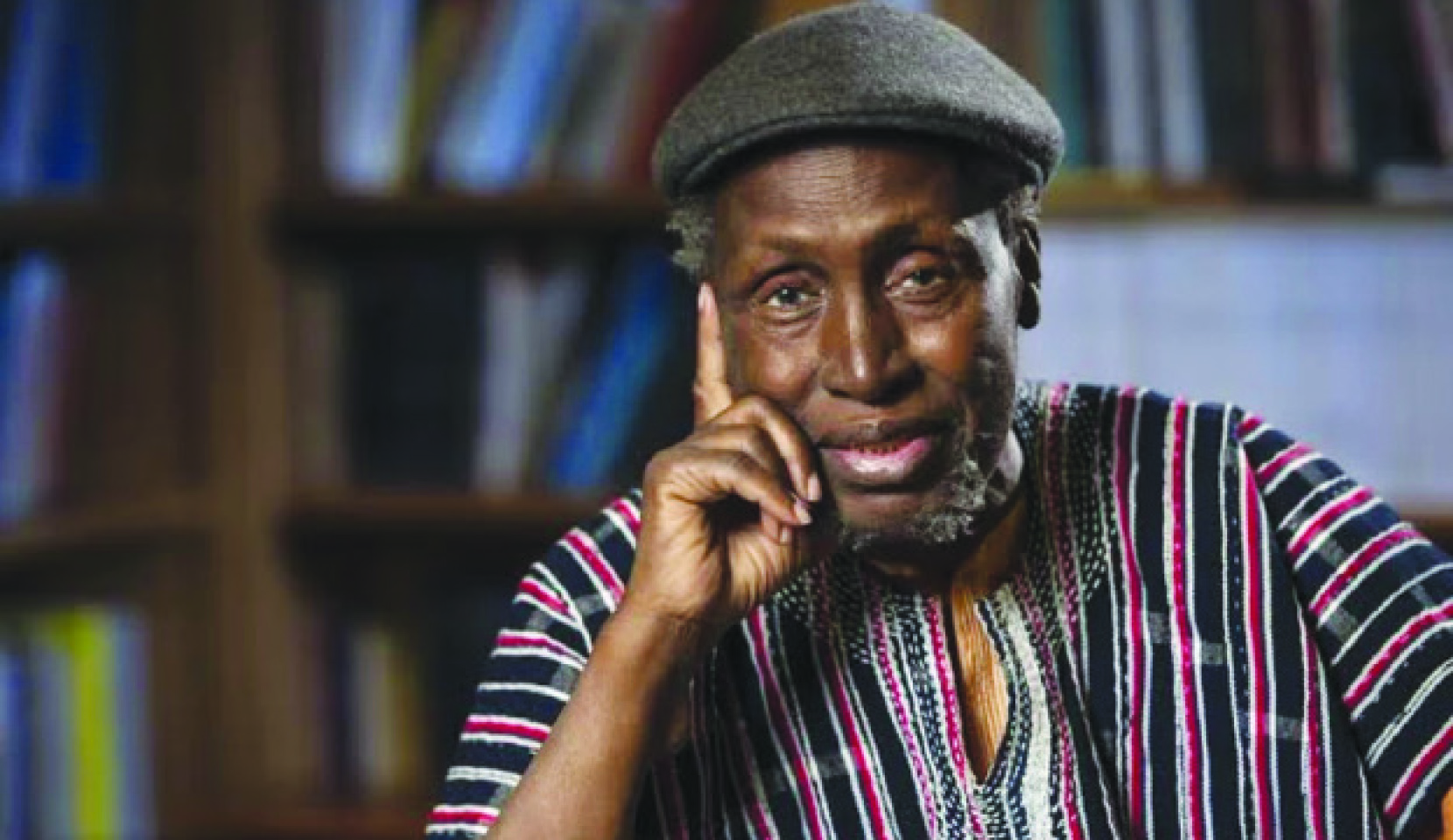
Ranga Mataire-Group Political Editor
MY heart would have remained painfully distended had I not decided to pour my heart over the death of a man I regard as an inimitable revolutionary author whose writings have shaped the thinking of many across the globe.
Writing about Ngugi, knowing that I am never going to read anything new from his pen, shreds my heart.
I guess writing about him is the only way I can exorcise the pain of losing someone I regarded as my hero.
We never met in person, but we constantly and vigorously interacted through his writings. Ngugi had become more than a writer, he was phenomena, a godfather of African literature, a Griot.
The Kenyan author who died on May 28, 2025 in Buford, Georgia, United States at the age of 87 was many things to different people.
Those who adored him regarded him as an uncompromising anti-colonial, anti-imperial African writer and an avid critic of what had become of contemporary Kenya in particular, and Africa in general.
To a legion of his followers, Ngugi was like a “rich gourd” that one would constantly partake for inspiration to navigate a maladjusted world, much influenced by the vestiges of slavery and colonialism.
Like the Negritude movement of the 1930s, Ngugi’s writings were a cultural, political, social and literary movement that had the effect of inculcating a sense of black pride and belonging to alienated African souls both living on the Africa continent or those in the Diaspora.
He is among the pioneering African authors whose writings sought to “Write Back” to empire by deconstructing the racist colonial depiction of Africans like those found in European Travelogues, like the “Heart of Darkness” by Joseph Conrad.
At the centre of Ngugi’s writings was the “eulogisation” of an African – his language, his culture, his social, economic and political organisation.
Ngugi reaffirmed and reasserted Africa’s humanity.
His mission was to give back what Africa lost during slavery and colonialism.
Of course, he had his critics. But it was mostly superficial rather than substantive or ideological criticism. They criticised his exile flight into the “Belly of the Beast” – the United States, a country routinely lampooned in his narratives as an imperial power still seeking to undermine Africa’s struggle for complete independence.
His critics also point out to the rigidity of his beliefs and that while he later decided to write in his native Gikuyu language, his texts were all translated to English and other European languages.
This they said was hypocritical in that he failed to appreciate how other languages had assumed “universality” status by default of design.
There is, however, a point at which both his admirers and critics meet. They meet at the confluence of his compendium of texts. His books prominently feature in most university libraries and in some cases are compulsory for students undertaking English Literature.
It is the power of his narrative prowess, the relevance or contemporariness of his themes and his incisive critic of global politics that make or made Ngugi a phenomenal figure of academic inquiry.
My first encounter with Ngugi’s books was in Grade 7. My teacher, a Mr Chitiyo, may God continue to bless that man, had assembled “a small library” in the front corner of the classroom. Much of the books were by African authors.
This was the time of the Pacesetter Novels, a popular series of African English Literature novels published in the 1970s and 1980s. The novels often explored themes of love, crime, and social issues and were especially a go-to by girls and young boys looking for some romantic series to kill time.
Within the menu of Pacesetters were other books not so popular among young readers. For some strange reasons, Mr Chitiyo gave me a book titled, “The River Between” written by an author I had never had of, Ngugi waThiong’o. He encouraged me to read the book and come back with a summary.
The book did not make much sense to me. My brain had not fully developed to understand the issues that Ngugi was grappling with. But I had to do something which impressed by teacher.
I managed to cram (memorise) word for word the whole first chapter. I recited in class two first pages and the teacher had to donate the book to me, a copy that I have preciously kept like a holy grail over the years.
My second encounter with Ngugi was at Mavhudzi High School in Nyazura where I began my Form One. Our teacher was a German expatriate, a Mrs Telge. She was an avid consumer of African literature and encouraged us to do the same. As fate would have it, the first book she instructed the class to read was “The River Between” by Ngugi.
You can imagine my elation as she requested someone to volunteer reading the first chapter.
For some, this was their first ever encounter with an African novel of this nature written by a Kenyan author. None knew Ngugi. I shot my hand up and volunteered to read.
What followed after made me a legend of the class and the centre of inquisitive attraction from the girls. I went to the front of the class, with the novel clasped in my hands and started reciting from head the first pages;
“The two ridges lay side by side. One was Kameno, the other was Makuyu. Between them was a valley. It was called the valley of life. Behind Kameno and Makuyu were many more valleys and ridges, lying without any discernible plan. They were like many sleeping lions which never woke. They just slept, the big deep sleep of their Creator. A river flowed through the valley of life . . . The river was called Honia, which meant cure, or bring-back-life. Honia river never dried: it seemed to possess a strong will to live. Scorning droughts and weather changes.”
I was still trying to catch my breath as my mind unwrapped the crammed words when the whole class suddenly erupted into frenzy of ululation, shouting and clapping and beating desks with open palms.
It was quite an unusual scene for new Form one pupils. By the corner of my eye, I caught Mrs Telge smiling. What an entry into Form One! It was on that day that I got the moniker Ngugi.
The third time I got into contact with Ngugi was when I got enrolled at the University of Zimbabwe’s English Department for English Literature Honours undergraduate studies. My favourite lecturer was Memory Chirere. Much to my delight, Ngugi was again part of the literary milieu we needed to explore among African writers. Chirere was chuffed by my unrestrained admiration of Ngugi.
Reading Ngugi ceased being just an educational endeavour. It became a pilgrimage and his text my Holy Grails. Reading “Petals of Blood”, “Devil on the Cross”, “Matigari”, “I will Marry When I Want” and “Decolonising the Mind” became more of a revolutionary spiritual journey.
And as you rightly guessed, my dissertation was on Ngugi, something close to: “A deconstruction of Western colonial narratives’ depiction of Africa – the Case for Ngugi waThiongo’s anti-colonial & anti-imperial stance.” I am proud to say despite being blatantly biased in favour of my hero, I got a distinction.
I have followed Ngugi over the years and was particularly gratified when he made a decision that going forward he would write in his mother-tongue of Kikuyu. I have read most of his critical scholarly non-fiction work. I have watched him speak, in a measured voice with a tinge of a stammer, always consistent and uncompromising in his call for Africans to love their languages. His belief that language has a dual purpose, a carrier of culture and a medium of communication.
For close to half a century, Ngugi has been an eloquent voice in championing the African cause. Despite not being awarded the Nobel Prize for literature, Ngugi is regarded as one of Africa’s most significant postcolonial, social and cultural thinkers. He occupies a unique place in Africa’s oral performance, cultural criticism and political activism.
He often touted himself as a “literary artist with a political bent”. He argued that “tribe” was a colonial invention of a group of African people. He questioned how 250 000 Icelanders could be regarded as a nation and yet 15 million Yorubas would be labelled a tribe. To Ngugi, tribe connotes a bunch of savages.
Many will remember Ngugi for his “rivalry” with the late Nigerian author Chinua Achebe on what constitutes Africa Literature.
A conference of African Writers of English Expression” held at Makerere University, Uganda in June 1962 grappled and failed to come up with a definitive answer to who qualified being an African writer and what constituted African writing.
Two camps emerged, one led by Achebe and another led by Ngugi. Achebe advanced the view that those who have inherited the English language may not be in a position to appreciate the value of inheritance.
“We may go on resenting it because it came as part of a package deal, which included many other items of doubtful value and the positive atrocity of racial arrogance and prejudice, which may yet set the world on fire. But let us not in rejecting the evil throw out the good with it,” Achebe argued.
On the other hand, Ngugi argued that the continued use of English language had the effect of enriching other cultures and language.
“Africa’s relationship to the West has always been that of donor. Africa has sacrificed her human capital, natural resources, and languages/cultures to the West,” Ngugi said as an encouragement to other writers to use their own indigenous languages.
He further developed his views in “Decolonising the Mind: The Politics of Language in African Literature” (1994), where he articulates the damaging effects of colonialism on African literature, education and culture. This text has become the go-to book for any African seeking to “renew” himself or herself from the colonial shackles of self-doubt.
As the world mourns this iconic African writer, let us not forget that the son of Kenyan peasants born on January 5, 1938 never experienced peace in his own native country after embarking on a writing career. He was often hounded and imprisoned until he fled to the United States and adopted as; An Amnesty International Prisoner of Conscience.
Until we Meet Again, Adieu Son of Africa. You made us Proud.