

 admin
admin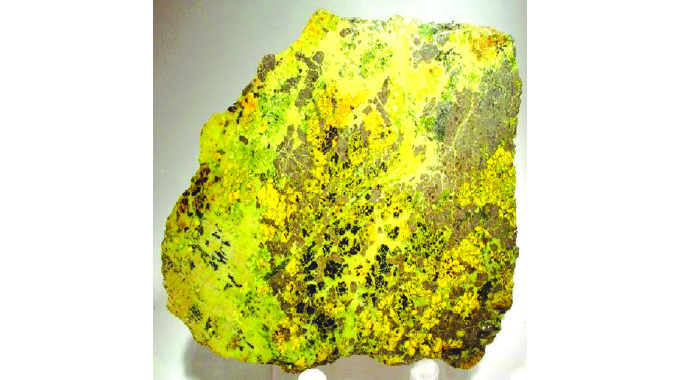
Niamey. – Western Africa’s Niger is in global spotlight since last week’s coup in capital Niamey when pro-West President Mohamed Bazoum was overthrown by his own presidential guards.
The coup in Uranium-rich Niger, which forms a key part of Africa’s Sahel region — a land belt that stretches from the Atlantic Ocean to the Red Sea — has drawn global condemnation.
While a bloc of West African leaders has threatened ‘intervention’ if Mohamed Bazoum is not reinstated within a week, the French – who were an imperial power in present-day Niger until 1960 – have also warned of action in the country if “France and its interests” in Niger are attacked.
The immediate attention goes to the investments the French and the European Union have made to equip Niger’s military to fight jihadist violence in the region. But there is more to the story.
Niger holds the world’s seventh-largest Uranium deposits. In 2019 only, about 2 982 tonnes of uranium was produced by the two operating mines of the country.
According to reports, the current Uranium production occurs from the open-pit operations of SOMAÏR (Société des Mines de l’Aïr), near the town of Arlit, about 1 100 km north of the capital Niamey.
SOMAÏR is 63.4 per cent owned by French company Orano and 36.66 per cent owned by Sopamin (Société du Patrimoine des Mines du Niger), a Niger state-owned company.
According to data from the World Bank, uranium is Niger’s second-largest export in monetary terms after gold.
The military regime in Niger, led by General Abdourahamane Tchiani, has, banned the export of uranium to France, reports in multiple dailies from the region said.
Over 50 per cent of the uranium ore extracted from Niger is used for fueling the French nuclear power plants. About 24 per cent of uranium imports in the European Union come from Niger.
France derives 70 per cent of its electricity from nuclear energy, according to World Nuclear Association. The European Union as a whole derives about one-quarter of its electricity from nuclear energy. Half of the European Union’s nuclear energy is produced just in France, according to World Nuclear News.
The French dependence on Niger for the supply of Uranium to power its nuclear plants holds significance in the wake of instability in the country.
With the eruption of a coup in Niamey leading to the cessation of uranium supply to France, added with a degree of anti-France sentiment in the country due to its contested history of colonial exploits in the region, has sent shockwaves both in Paris and Brussels.
French President Emmanuel Macron said France will respond “immediately” to any violence against French interests.
The French government “will not tolerate any attack on France and its interests” in Niger, Macron said on July 30.
Macron, however, did not specify the exact French interests he was referring to.
EU foreign policy chief Josep Borrell over the weekend said the bloc was suspending security cooperation and financial support for Niger and declared that it will not recognise the leaders of the “putsch” that ousted the democratically elected president.
“This unacceptable attack on the integrity of Niger’s republican institutions will not remain without consequences for the partnership and cooperation,” Borrell said.
Thousands of people were seen demonstrating in front of the French embassy in Niamey where the crowds in front of the French embassy were reportedly shouting “Long live Putin” and “Down with France” slogans.
In an address on state television on July 31, Colonel Amadou Abdramane, one of the coup plotters, said that the ousted government had authorised France to carry out strikes in Niamey through a statement signed by Bazoum’s foreign minister, Hassoumi Massoudou, acting as prime minister.
He, however, did not specify what kind of strikes were authorised by the ousted government and did not give any evidence to back up his assertion.
The French foreign ministry has neither confirmed nor denied the accusation. It said that Paris recognised only Bazoum as a legitimate authority in the West African country and was focused on protecting its own interests in the country.
The presence of Uranium deposits in Niger and French dependence on the same for its energy needs further complicates the situation in poverty-stricken but resource-rich Niger. While the French and European Union have invested in previous years to boost Niger’s military capabilities, the optics of anti-French demonstrations in Niamey do not direct to the success of those efforts.
The cessation of Uranium supply from Niger previously designated to the nuclear power plants in France and elsewhere in the European Union nations may threaten European energy security that Brussels tried hard not to let plummet even by the risks posed by the war in Ukraine.
The coup in Niger could do what Moscow’s imposition of war in Ukraine could not: Decisively threaten two-thirds of the energy supply in France and a fourth of the energy supply in European Union. – Agencies



 Online Reporter