

 admin
admin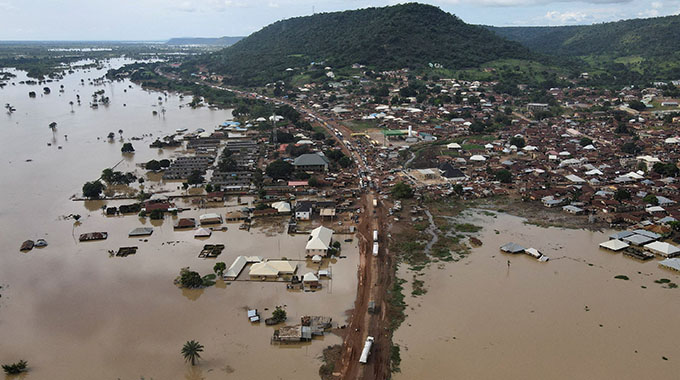
ABUJA. – Usman Musa had spent more than US$1 300 on his 10-hectare rice farm in Nigeria’s Kogi state, now submerged by the worst floods in a decade in the country.
In a wooden canoe, the 38-year-old father of four paddled his way through the murky waters, passing by his and relatives’ houses, the local hospital and school.
Only the roofs were visible.
Across Africa’s most populous country, communities and crops of sorghum, maize, rice and vegetables are under water, with farmers and aid workers warning of a possible food crisis. The country, home to more than 200 million people, was already grappling with high inflation and worrying levels of food insecurity.
Now, the situation will worsen, with nearly 110,000 hectares of farmland completely destroyed by flooding since August according to the latest government figures. The World Food Programme (WFP) estimates the total area of flooded cropland could be almost seven times higher.
“Flooding is still ongoing but we can safely say that between 60 to 75 percent of the yield we expected is going to be lost,” said Kabir Ibrahim, president of All Farmers Association of Nigeria. “It’s monumental. So many people are crying.”
More than 600 people have died and 1.3 million others were forced to leave their homes according to the latest figures given by the Minister of Humanitarian Affairs Sadiya Umar Farouq.
Floods are not uncommon in Nigeria during the rainy season from May to November but they have been extreme this year.
Officials and residents blame climate change but also poor planning and the release of excessive water from dams, a process that is meant to ease pressure.
“If you don’t open the water through the spillways, then dams will break,” said Ibrahim, and then “it would be like Pakistan. All of Nigeria would be under water like Pakistan.”
Farmers were warned ahead of time but it wasn’t enough.
“We used the predictions and avoided planting along flood prone areas,” said Ibrahim, “but now you can see that the devastation is all over.”
As a result, Ibrahim, whose organisation represents 20 million farmers, believes “there will be more hardship towards the end of the year and beginning of next year.”
Food inflation year-on-year was already at 23.3 percent last month, in part because of ripple effects on the import-dependent country from the coronavirus pandemic and the Russia-Ukraine war. – AFP



 Online Reporter