

 admin
admin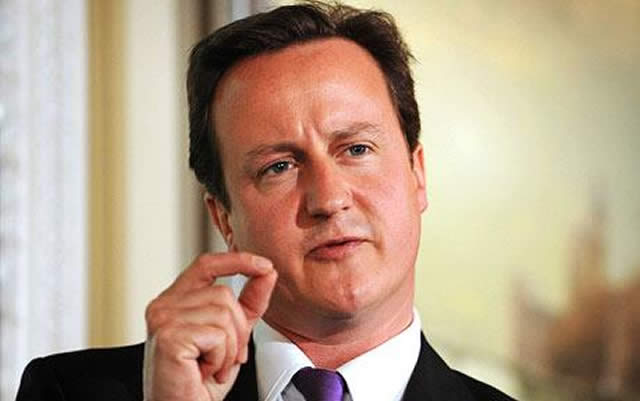
Nigeria’s government has rejected comments by the UK prime minister that it is “fantastically corrupt,” calling the remarks “embarrassing” and not reflective of modern Nigeria.
The response came after David Cameron was caught on tape saying in front of Queen Elizabeth II that “some leaders of some fantastically corrupt countries [are] coming to Britain” for an anti-corruption summit.
“Nigeria and Afghanistan, possibly the two most corrupt countries in the world,” Cameron said as Nigerian President Muhammadu Buhari and Afghanistan’s President Ashraf Ghani were due to attend the meeting.
Garba Shehu, a spokesperson for the Nigerian president, took to Twitter on Tuesday to rebuke the British leader. “This is embarrassing to us, to say the least,” he posted. “The prime minister must be looking at an old snapshot of Nigeria. Things are changing with corruption and everything else.”
Nigeria, which ranks 136 out of 168 countries in Transparency International’s Corruption Perception Index for 2015, has struggled for years to fight corruption among its political elite.
But since Buhari was elected to power in 2014 on a campaign that vowed to root out corruption, anti-fraud agencies have arrested several senior politicians accused of embezzlement.
Asked whether Cameron regretted his comments, a Downing Street spokesperson said: “Both leaders have been invited to the summit because they are driving the fight against corruption in their countries. The UK stands shoulder to shoulder with them as they do so.”
Cobus de Swardt, Transparency International’s managing director, said the UK is actually “a big part of the world’s corruption problem”.
“There’s no doubt that historically, Nigeria and Afghanistan have had very high levels of corruption, and that continues to this day,” de Swardt said. “But the leaders of those countries have sent strong signals that they want things to change.
“This affects the UK as much as other countries. We should not forget that by providing a safe haven for corrupt assets, the UK and its overseas territories and crown dependencies are a big part of the world’s corruption problem.”
In a stinging letter to Cameron last month, 95 reform groups in Nigeria urged the UK to do more to prevent corrupt officials from laundering stolen money through the UK’s property market.
“Civil society in Nigeria is calling on you to take serious action to end the UK’s role as a safe haven for our corrupt individuals, who steal our wealth for their own private gain,” the letter said.
Salaudeen Hashim from the West Africa Civil Society Forum said corruption and money laundering are direct causes of poverty in Nigeria. “You see poverty staring at you on the street — simply because money that is meant to stimulate the economy is being used by individuals to build homes [in London], to take care of their own immediate families. All of this going on, at the expense of the people,” he said.
Babies and children have died in squalid conditions in a military detention centre in northeast Nigeria, where suspected Boko Haram members are being held, often without any evidence, according to an Amnesty International report.
The UK-based human rights group said 149 people, including at least 12 children and babies, have died in the Giwa Barracks, the main military prison in Maiduguri, because of appalling and unsanitary conditions, since the beginning of this year.
The Nigerian military dumps bodies of detainees who died in the barracks in the Gwange Cemetery nearby, Amnesty said. Thousands of Boko Haram gunmen and suspected fighters have been detained in the Giwa Barracks since the battle between the armed group and the Nigerian army began six years ago. In its report, Amnesty said evidence gathered through interviews with former detainees and eyewitnesses, and supported by video and photographs, shows that many detainees may have died from disease, hunger, dehydration, and gunshot wounds.
“We’ve spoken to former inmates. They’ve given us eyewitness accounts of seeing children dying in detention,” Colm O Cuanachain, senior director of the office of the secretary general at Amnesty International, said. “Overcrowding and the conditions there were clearly contributing to a situation where children were dying,” he said.
The Nigerian military says most of the detainees in Giwa are “terror suspects”. But, Amnesty said more than 120 of the approximately 1,200 detainees who are currently being held in the facility are children, some as young as age five.
“Many of the young children were detained when their mothers were arrested, while others were born in detention,” the group said in its report.
Amnesty also said operations by the Nigerian military against Boko Haram have led to thousands of people being arbitrarily rounded up, arrested, and thrown into Giwa Barracks with no evidence against them. Earlier this year soldiers released 50 children.
“The Nigerian government and military forces are determined to destroy Boko Haram and prosecute its fighters,” said Al Jazeera’s Yvonne Ndege, reporting from Abuja. “Some Nigerians fear deaths of innocent people, including children, are an inevitable consequence of the violence.
“This is not the first time concerns have been raised about Giwa Barracks,” she added, “A report from June last year said in the past five years, 7,000 detainees have died from starvation, thirst, disease and torture while in military detention.”
Al Jazeera approached the Nigerian military and government for comment without getting a response. — AFP


 Online Reporter
 derick.khumalo