admin
admin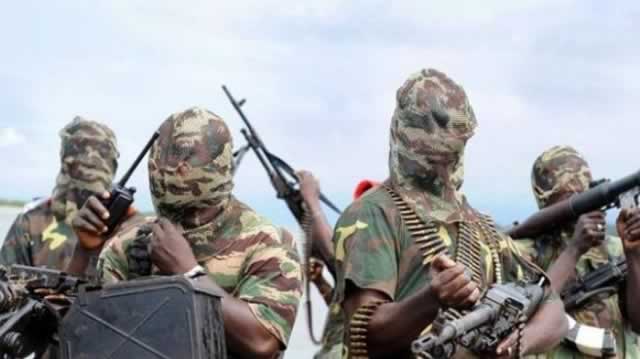
Abuja — The leader of Nigeria’s Muslims yesterday called for followers of the faith to unite against Boko Haram extremists, pledging the government full support to ensure their defeat. But the Sultan of Sokoto, Muhammad Sa’ad Abubakar III, also said the government should address issues of inequality towards Muslims, which have been seen as factors in fuelling the five-year insurgency.
“Terrorism has no place in Islam,” he told a congregation, including Nigeria’s Vice-President Namadi Sambo, clerics and traditional rulers, at the National Mosque in the capital, Abuja.
“We must rise up, as always, with one voice to condemn all acts of terrorism, condemn those terrorists wherever they are and try our possible best as Muslims to ensure peace reigns in our community.”
The Sultan, who is president of Nigeria’s Supreme Council for Islamic Affairs, has come under pressure to speak out against Boko Haram, who have killed thousands in their quest for an Islamic state in the north.
In his first public comments since the militants kidnapped more than 200 schoolgirls from the remote northeastern town of Chibok last month, he said Muslims were disturbed by the bloodshed.
“We are committed to helping the government at all levels to bring peace in Nigeria. Whatever we can do, as long as it is not against Islam, we are ready to do it 100 percent,” he added.
“We have to make it very clear… that the situation in the country is very serious. You are fighting enemies with no boundary. Terrorists are everywhere. They are among us but we don’t know them.”
Abubakar said the situation was worse than during Nigeria’s brutal civil war from 1967 to 1970 because of the shadowy nature of Boko Haram’s fighters and their guerilla campaign. “In this case, you don’t know the enemy. The person sitting next to you might be one of those terrorists. You don’t know,” he said.
“It is a very serious situation and we have to close ranks as Muslims, we have to close ranks as Nigerians, irrespective of ethnic or political divide, and not play politics with insecurity.”
Nigeria’s north is majority Muslim and is poorer than the oil- and gas-rich, largely Christian south.
Years of social and economic blight have been seen as a recruiting tool for marginalised and disaffected young men to Boko Haram’s cause.
The Sultan said addressing inequality would help tackle the problem.
“Muslims want and also demand to be treated with equality, with justice, with fairness and, Inshallah [god willing], things will turn around,” he added.
Meanwhile, a non-governmental organisation handed out pamphlets at President Jacob Zuma’s inauguration on Saturday, calling for the release of over 200 kidnapped Nigerian schoolgirls.
The Concerned Young People of SA (Cypsa) handed out pamphlets at the Union Buildings titled Umphakathi Ukhathazekile (The society is concerned).
“Now Nigeria. Who’s next?”, read a message on the pamphlet. “Where can we hide our girls from Boko [Haram]?” read another excerpt on the pamphlet.
The schoolgirls were abducted on April 14 from their dormitory in Borno by militant group, Boko Haram.
Nigerian president Goodluck Jonathan attended the inauguration ceremony.
In a related incident, the United Nations blacklisted and imposed sanctions on Boko Haram as an al-Qaeda-linked terror group, a month after it claimed the kidnapping of more than 200 Nigerian schoolgirls.
The designation, which was immediately welcomed by Britain and the United States, came into effect after no objections were raised by the Security Council’s 15 members.
The move subjects Boko Haram to UN sanctions, including an arms embargo, asset freeze and travel ban.
The group, which was created 10 years ago, demands the creation of an Islamic state in mainly Muslim northern Nigeria. Their attacks have left thousands dead since 2009.
US ambassador Samantha Power hailed the move as “an important step” in support of Nigeria’s efforts “to defeat Boko Haram and hold its murderous leadership accountable for atrocities”.
Nigeria, criticised by the United States for failing to react quickly enough to the rise of Boko Haram, had asked the al-Qaeda sanctions committee to blacklist the group and impose sanctions.
“It is [a] significant step,” Nigerian ambassador Joy Ogwu told reporters in anticipation on Wednesday. “The important thing is to attack the problem and that is terrorism,” she added.
Experts question whether sanctions will have any real impact on a group based in a part of Nigeria that operates on a cash economy.
The imposition of UN sanctions was recommended last Saturday at a conference in Paris that brought together Benin, Britain, Chad, Cameroon, France Niger, Nigeria and the United States.
The United States and a number of other countries have already designated Boko Haram as a terrorist organisation in an attempt to cut off any overseas funding for the group.
Power said the United States would continue doing everything possible to help bring back the kidnapped schoolgirls and to work with the government of Nigeria to eliminate Boko Haram. — AFP/Sapa



 Online Reporter