Andrew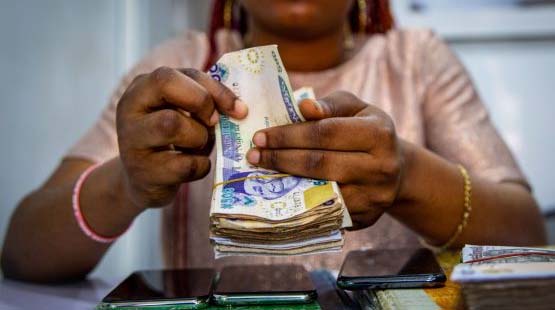
Nigeria’s currency is poised for the biggest weekly drop in eight months, signalling the central bank’s tolerance for more flexibility in the exchange rate.
The naira traded at 418,55 to the greenback as of 11:48 a.m. on Friday in Lagos, the commercial hub. The official rate plunged to a record 420,40 naira on Tuesday before recovering. The measure has depreciated 0,8 percent in the past seven days, the most since the week ended February 26.
The Central Bank of Nigeria closely manages the spot exchange rate of the naira keeping it within a desired range.
Nigeria’s Vice President Yemi Osinbajo has called for the currency to be traded more freely, adding that the central bank’s approach favours those able to obtain dollars at the official rate, because they can then sell the foreign currency in the more expensive parallel market where the greenback is freely traded around 575 naira. There has been more flexibility in the spot rate since the vice president’s comments.
The depreciation “seems to reflect a CBN bias for relatively more foreign exchange flexibility,” said Samir Gadio, London-based head of Africa strategy at Standard Chartered Bank.
“The market is still trying to ascertain the scope and end-goal of this FX adjustment.”
A more market responsive exchange rates would ease the pressure on the naira, Shubham Chaudhuri, the World Bank’s country director for Nigeria, said this week. “This will reduce the effective exchange rates that most Nigerians deal with,” he said.
Africa largest economy hopes that the completion of a 650 000 barrel a day refinery by Aliko Dangote would save 30 percent of the foreign exchange currently used to import refined petroleum products and ease the pressure on the naira, Minister of Finance Zainab Ahmed said on Tuesday.
“The export of refined products will also earn the country foreign exchange,” Ahmed said. — Bloomberg.


 Online Reporter