Stanford Chiwanga, [email protected]
FOR a brief moment, Africa dared to dream.
A record nine African nations reached the Round of 32 at the expanded 2026 Fifa World Cup, underlining the continent’s growing strength on the global stage. It was a historic achievement and further proof that African football is no longer content with merely making up the numbers.
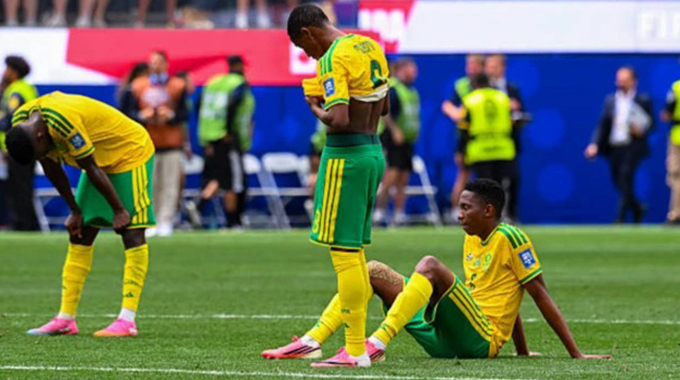
However, the knockout stage has so far delivered a mixture of pride and heartbreak. Five of Africa’s representatives have already bowed out, with South Africa, Côte d’Ivoire, DR Congo, Senegal and Algeria all falling at the first knockout hurdle. Morocco, meanwhile, successfully progressed to the Round of 16 after eliminating the Netherlands on penalties, while Egypt (the result was not available by the time the paper went to bed), Ghana and Cabo Verde were still awaiting their Round of 32 assignments at the time of writing.
Yet for South Africa, Côte d’Ivoire, DR Congo and Senegal, the manner of their exits was particularly painful. All four nations conceded decisive goals late in their matches, turning what looked like memorable victories or hard-earned draws into heartbreaking defeats.
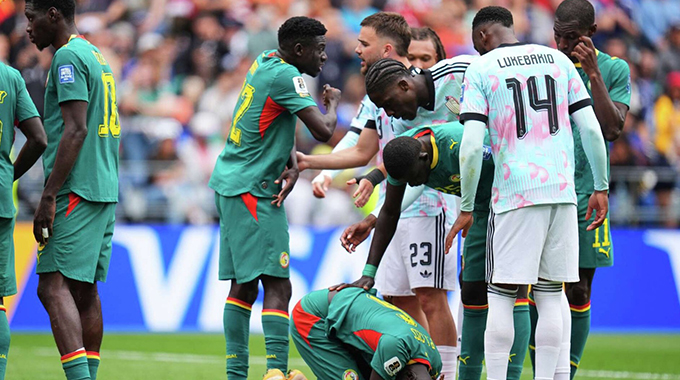
The exits were painful, but they should not obscure how well the teams performed against some of the biggest names in world football.
South Africa ran out of resistance
Bafana Bafana’s defeat to Canada was perhaps the cruellest of all. For more than 90 minutes, South Africa frustrated their North American opponents with disciplined defending and tactical organisation. Extra time appeared within reach as Hugo Broos’ men continued to repel wave after wave of Canadian attacks.
Then came the sucker punch. Stephen Eustáquio struck deep into stoppage time to hand Canada a 1-0 victory and break South African hearts.
The defeat highlighted one of the recurring weaknesses among African teams at major tournaments: protecting concentration levels until the final whistle. South Africa’s defensive approach worked for much of the match, but sustained pressure eventually told.
Côte d’Ivoire undone by Haaland
The Elephants looked capable of taking Norway into extra time. After falling behind, they showed tremendous character to fight back, with Amad Diallo scoring an equaliser that swung momentum their way. At that stage, Côte d’Ivoire appeared the more dangerous side.
But elite players punish the smallest mistakes. With extra time looming, Erling Haaland found space inside the Ivorian defence and struck in the 86th minute to secure a 2-1 victory for Norway.
There was little shame in the defeat. Rather, it exposed the fine margins that separate good teams from great ones. Against players of Haaland’s calibre, even a brief lapse can prove fatal.
DR Congo lacked experience in key moments
Few expected DR Congo to trouble England. Yet the Leopards produced one of the performances of the round, taking an early lead through Brian Cipenga and then defending bravely for over an hour. Goalkeeper Lionel Mpasi was outstanding as England struggled to break down a determined Congolese side.
Unfortunately for DR Congo, Harry Kane was waiting. The England captain equalised in the 75th minute before adding the winner in the 86th minute to complete a 2-1 comeback.
The match showed how far the Leopards have come. However, it also demonstrated the importance of tournament experience. The best teams know how to manage momentum shifts, while DR Congo appeared to retreat too deep after taking the lead.
Senegal suffered the biggest collapse
Senegal’s defeat against Belgium will haunt them for years. The Lions of Teranga had one foot in the Round of 16 after establishing a 2-0 lead through Habib Diarra and Ismaïla Sarr. With only minutes remaining, they appeared to be cruising towards qualification.
Then disaster struck. Romelu Lukaku sparked Belgium’s comeback before Youri Tielemans scored a dramatic equaliser in the 90th minute. In extra time, Tielemans converted a penalty to complete an astonishing turnaround and send Senegal crashing out.
Unlike the other African exits, this was not simply a case of being edged out by a stronger opponent. Senegal lost control of a winning position. Game management, composure and leadership were missing when they were needed most.
Algeria bowed out quietly
Algeria’s exit may not have come with the same dramatic twist as the other four, but it was nevertheless disappointing.
The Desert Foxes had done well to negotiate a difficult group and reach the knockout stages. However, they found Switzerland too strong in the Round of 32, suffering a 2-0 defeat to bring their campaign to an end.
Unlike South Africa, Côte d’Ivoire, DR Congo and Senegal, Algeria were not undone by a late collapse. Instead, their defeat highlighted the challenge of maintaining consistency against Europe’s top sides over 90 minutes.
Why did Africa fall short?
A pattern emerges from the four dramatic defeats. The issue was not talent. Neither was it tactics.
South Africa matched Canada, Côte d’Ivoire pushed Norway, DR Congo rattled England and Senegal had Belgium on the ropes. The problem was what happened in the closing stages.
Africa’s representatives were not lacking in talent or tactical organisation. Instead, their downfall often came in the crucial moments that decide knockout football. Several teams struggled to maintain their concentration in the closing stages of matches, protect leads after taking control, and respond when momentum shifted in favour of their opponents. Just as costly was their inability to make their dominance count, with missed opportunities allowing opponents to stay in contests and mount late comebacks. In the end, it was not a question of ability, but of game management, composure and ruthlessness under pressure — qualities that often separate teams that compete from those that progress.
Those are not technical shortcomings. They are lessons usually learned through repeated exposure to high-pressure knockout football.
Reasons for optimism
While the exits were painful, they should not be viewed as failures. Nine African nations reached the Round of 32, an unprecedented achievement that reflects the growing competitiveness of African football on the world stage.
The fact that Morocco have already progressed to the Round of 16 ensures Africa’s presence in the next phase of the competition, while Egypt (the result was not available when the paper went to press), Ghana and Cabo Verde still have an opportunity to add to the continent’s success story.
The performances of South Africa, Côte d’Ivoire, DR Congo, Senegal and even Algeria showed that African teams can compete with elite opposition. What remains is learning how to finish the job when the pressure is greatest.
The gap between Africa and the traditional powers is no longer measured in talent. At this World Cup, it has largely been measured in moments. And unfortunately for several brave African sides, those moments came at the worst possible time.